




Phone:
+86-187-5829-6389

Views: 0 Author: Site Editor Publish Time: 2026-11-10 Origin: Site
Hospital ventilators operate as mission-critical assets in any acute care setting. Unexpected downtime compromises patient care directly. It also exposes medical facilities to severe regulatory scrutiny. When vital life support systems falter, seconds matter immensely for patient safety. Relying on reactive purchasing for replacement components causes cascading failures. It leads to expedited shipping premiums, prolonged equipment unavailability, and serious compliance gaps. Hospitals frequently risk violating Joint Commission standards or Original Equipment Manufacturer (OEM) guidelines when delaying scheduled upkeep. Transitioning to a proactive inventory strategy solves this. It requires balancing capital allocation carefully against clinical readiness. We need streamlined systems designed for precision and accountability. This guide outlines the framework for structuring, evaluating, and implementing a preventive inventory system. You will learn how to guarantee equipment reliability without creating unnecessary stock bloat in your facility.
A structured inventory prevents compliance failures by ensuring OEM-mandated preventive maintenance (PM) schedules are never delayed by part shortages.
Distinguishing between high-turnover ventilator accessories and long-lifecycle repair parts is critical for optimizing capital tied up in stockrooms.
Modernizing inventory requires evaluating CMMS or IIoT solutions based on automated reordering capabilities, audit trail integrity, and cross-departmental usability.
Successful implementation hinges on standardized naming conventions and overcoming departmental hoarding behaviors.
Balancing clinical risk against capital efficiency remains a daily challenge. Hospital administrators constantly evaluate these metrics. Overstocking parts ties up critical budget dollars. Understocking directly endangers patient lives. If a ventilator fails during a respiratory surge, the clinical team needs immediate access to functional replacements. Delays here simply cannot happen. We must view inventory as a clinical safeguard.
The hidden costs of stockouts extend far beyond the basic price tag. Reactive purchasing forces facilities into terrible financial positions. They pay massive expedited freight charges to secure next-day deliveries. Biomedical technicians divert their valuable time away from scheduled repairs. They spend hours managing crises and tracking packages. Facilities often resort to expensive temporary equipment rentals while awaiting shipments. These cumulative expenses drain department budgets rapidly.
Common Mistake: Many departments view holding costs as the enemy. They slash inventory blindly. This ignores the exponential cost of diverted labor and emergency sourcing.
Missing OEM-recommended preventive maintenance (PM) windows triggers immediate red flags. When auditors from organizations like ECRI or the Joint Commission review records, they look closely at PM compliance. A missing part is never a valid excuse for delayed maintenance. Failing these audits invites regulatory penalties. It also severely damages institutional reputation. Furthermore, delaying PM increases the likelihood of catastrophic mid-use failures.
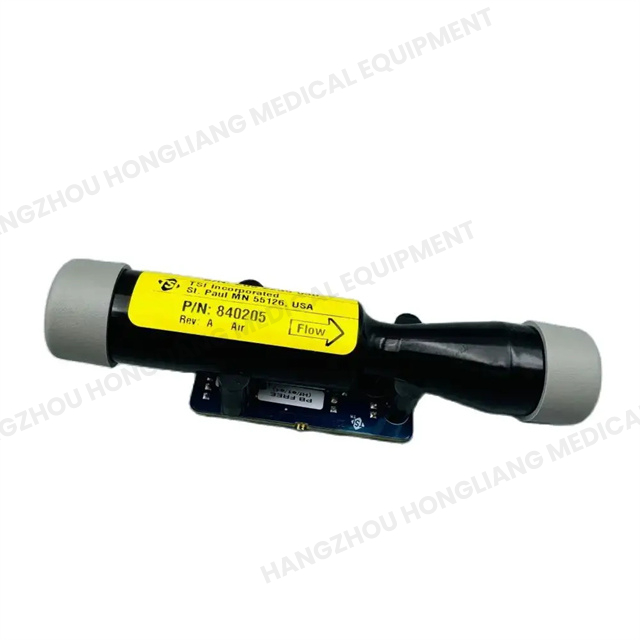
Building an effective inventory demands clear tiering. You must differentiate between routine consumables and internal repair elements. High-turnover items like patient circuits, filters, and exhalation valves qualify as Ventilator Accessories. These require frequent replacement between patients. They form the bulk of daily usage. Conversely, internal repair parts include oxygen sensors, blowers, and internal batteries. They have longer life cycles but represent critical failure points.
Establishing par levels requires robust data analysis. Setting minimum and maximum thresholds prevents both shortages and hoarding. Use Mean Time Between Failures (MTBF) alongside historical usage data. Factor in specific OEM PM frequencies.
Table 1: Data-Driven Par Level Methodology
Inventory Category | Turnover Rate | Par Level Determinant | Review Frequency |
|---|---|---|---|
Patient Circuits & Filters | Very High | Daily admissions volume + 20% buffer | Weekly |
Oxygen Sensors | Medium | Shelf-life expiration dates + MTBF | Monthly |
Internal Blowers | Low | OEM recommended hour-meter intervals | Quarterly |
Backup Batteries | Low/Medium | Annual PM schedules + cycle testing | Quarterly |
Managing shelf-life expirations demands strict oversight. Many sensitive hospital ventilator spare parts degrade over time. Batteries lose charge capacity while sitting dormant. Oxygen sensors expire even sitting on climate-controlled shelves. You must track lot numbers and expiration dates meticulously.
Best Practices for Expiration Management:
Implement a First-In-First-Out (FIFO) physical storage method.
Set digital alerts 60 days before any sensor expiration.
Conduct quarterly purge audits to remove degraded items.
Holding degraded stock gives a false sense of security. It severely jeopardizes patient safety during emergency deployment.
Manual tracking simply cannot support a modern biomedical spare parts inventory. Spreadsheets suffer from rapid data decay. Manual entry errors compound quickly across shifts. They offer no real-time visibility across different hospital campuses. Relying on paper or basic Excel sheets practically guarantees missed maintenance windows.
Modern Computerized Maintenance Management Systems (CMMS) map directly to better clinical outcomes. They transform raw data into actionable insights. Consider these feature-to-outcome mappings:
Predictive Alerts: Advanced systems utilize Industrial Internet of Things (IIoT) sensors. Prognostics and Health Monitoring (PHM) algorithms trigger orders long before actual failure occurs. This keeps equipment running seamlessly.
Automated Reordering: Integration into supply chain Enterprise Resource Planning (ERP) software eliminates procurement delays. The system automatically generates Purchase Orders (POs) when parts hit defined minimum thresholds.
Audit Trails: Regulatory compliance demands immutable logs. A robust CMMS proves PM completion. It verifies technicians used the correct, certified parts.
Evaluating software also requires strict attention to security. It must support high-level interoperability. If the system handles patient-linked device data, HIPAA compliance becomes non-negotiable. Vendors must provide proof of encryption protocols. Furthermore, the platform must offer robust API integration capabilities. It needs to sync smoothly into your existing hospital supply chain infrastructure. Isolated systems only create more administrative burdens.
Dirty data derails new system rollouts instantly. Data standardization presents a massive hurdle during initial implementation. Establishing strict naming conventions prevents messy, duplicate entries. You cannot list the exact same OEM part number under five different vendor abbreviations. Clear taxonomy ensures accurate tracking. We strongly recommend assigning one data steward to oversee all nomenclature entry.
Physical execution must align perfectly with digital records. Barcode and RFID tagging offer fantastic technological advantages. However, the software remains only as reliable as physical scanning discipline. If a tech grabs a filter without scanning it out, the entire digital inventory becomes corrupted. The system will report stock exists when shelves are actually empty.
Common Mistake: Installing expensive RFID gates but failing to train staff on manual overrides during power outages. Always maintain secondary tracking procedures.
Effective change management prevents the dangerous reality of "shadow inventory." Technicians often hoard critical parts in personal lockers out of fear. They worry central stockrooms will run empty during night shifts. Building trust in automated system reliability cures this behavioral challenge. You must prove the new process works consistently. Transparent reporting helps ease these transition anxieties. Let technicians see the automated POs generating successfully.
Deciding between Original Equipment Manufacturer (OEM) parts and Independent Service Organization (ISO) components requires an objective framework. OEM parts guarantee exact specifications. They come highly recommended but carry premium price tags. Certified ISO parts offer significant cost savings. However, they demand careful warranty review. You must weigh upfront savings against potential liability.
Evaluating supplier reliability keeps your equipment running smoothly. When vetting vendors for ventilator maintenance parts, look closely at their historical fill rates. Demand total backorder transparency. You also need ironclad emergency shipping Service Level Agreements (SLAs). If a vendor cannot guarantee overnight delivery for critical sensors, they pose a serious clinical risk.
Decision-makers should follow a clear shortlisting logic for next steps:
Audit the Current PM Backlog: Identify exactly which missing parts cause the most delays. Use this baseline data to prioritize procurement.
Define Integration Requirements: Map out exactly how a new CMMS must communicate with existing ERPs.
Request Proof-of-Concept Demos: Force vendors to show you their inventory control modules using your actual part numbers. Do not accept generic sales presentations.
This straightforward action plan cuts through marketing noise. It highlights true vendor capabilities effectively.
A preventive inventory strategy fundamentally shifts biomedical engineering dynamics. It transforms departments from reactive cost centers into proactive drivers of hospital reliability. Planning removes chaos from the maintenance schedule.
While no tracking system guarantees absolute perfection, a data-backed framework drastically reduces stockout severity. Proper preparation ensures respiratory teams always have the tools they need. Fewer delays mean better patient outcomes.
Review your current preventive maintenance completion rates today. Identify your largest inventory gaps immediately. Consider scheduling a consultation with a specialized inventory management provider to secure your facility's future readiness.
A: Ideal safety stock does not rely on a flat percentage. It depends on vendor lead times, historical usage rates, and specific OEM preventive maintenance schedules. Calculate it by multiplying the maximum daily usage by the maximum lead time, then subtracting average daily usage multiplied by average lead time.
A: A CMMS transforms inventory by automating reordering processes and tracking Mean Time Between Failures (MTBF). It eliminates manual entry errors and provides immutable audit trails. This guarantees compliance reporting accuracy and ensures technicians always have parts for scheduled maintenance windows.
A: You can often use third-party parts, but it requires careful warranty review. "Right to Repair" regulations provide some flexibility. Always verify the supplier holds active ISO 13485 certification. Using uncertified components risks voiding OEM warranties and introduces severe patient safety liabilities.
A: Transition away from disruptive annual physical inventories. Implement continuous cycle counting strategies instead. Counting high-priority items weekly and lower-tier consumables monthly ensures high accuracy. Cycle counting identifies discrepancies early, maintains digital alignment, and prevents massive operational shutdowns.