


Phone:
+86-187-5829-6389


Views: 0 Author: Site Editor Publish Time: 2026-09-15 Origin: Site


The efficacy of a mechanical ventilator fundamentally depends on the integrity of its conduit. Even the most advanced intensive care ventilator cannot compensate for a poorly manufactured ventilator breathing circuit. Substandard circuits introduce severe failure points across the respiratory support system. These failures range from lost tidal volume due to excessive tubing expansion to increased work of breathing from high airflow resistance. Inadequate condensate management also creates severe infection risks. Selecting the right circuit requires moving far beyond basic dimensional checks. Procurement specialists and clinical engineering teams must evaluate thermodynamic properties, material science, system interoperability, and the rigorous quality control standards of the manufacturer. A comprehensive evaluation ensures patient safety, optimizes respiratory mechanics, and maintains operational reliability in high-acuity clinical environments. We must look at the exact engineering tolerances that separate clinical-grade equipment from unreliable alternatives.
Material Compliance Dictates Accuracy: The structural rigidity of the tubing directly impacts the accuracy of tidal volume delivery; high-compliance materials rob the patient of intended pressure and volume.
Dead Space Impacts Gas Exchange: Circuit design at the patient interface directly affects carbon dioxide (CO2) clearance, a critical factor for patients with compromised respiratory or neurological function.
Condensate Management is Critical: Superior circuit design mitigates "rain-out" (condensation) during active humidification, significantly reducing the risk of Ventilator-Associated Pneumonia (VAP) and sudden airway occlusion.
Lifecycle Analysis Drives the Reusable vs. Disposable Decision: Choosing between single-use plastics and a reusable ventilator circuit requires a holistic analysis of upfront costs, sterilization capabilities, and environmental impact.
Supplier Vetting is Non-Negotiable: Partnering with an ISO 13485-certified ventilator accessories supplier ensures consistent manufacturing tolerances and mitigates supply chain disruptions.
Circuit compliance defines the physics of tubing expansion under peak inspiratory pressure. When a ventilator delivers a breath, the internal pressure pushes outward against the tubing walls. A highly compliant patient breathing circuit acts as a reservoir. It traps a portion of the delivered volume within the expanding plastic. That trapped volume never reaches the patient's lungs. This physical limitation distorts the accuracy of mechanical ventilation.
Excessive compliance manifests as visible movement or stretching of the plastic material during the inspiratory phase. This stretching creates significant risks of hypoventilation. In pediatric patients or adults suffering from Acute Respiratory Distress Syndrome (ARDS), precise tidal volume delivery dictates lung-protective ventilation strategies. Even a minor loss of volume per breath leads to inadequate oxygenation and poor clinical outcomes. We calculate compliance by dividing the change in volume by the change in pressure (C = ΔV / ΔP). If a circuit has a compliance factor of 2.0 mL/cmH2O, and the peak inspiratory pressure reaches 30 cmH2O, the circuit absorbs 60 mL of the intended tidal volume. For a patient requiring strict volume control, this loss is catastrophic.
Clinical engineering teams must evaluate compliance metrics rigorously. Look for circuits with low compliance ratings documented in the manufacturer's technical data sheets. These ratings measure in milliliters per centimeter of water pressure (mL/cmH2O). Lower values indicate a more rigid structure capable of delivering precise volumes regardless of airway resistance.
Circuit Material Type |
Average Compliance (mL/cmH2O) |
Primary Clinical Application |
Volume Loss Risk at High PIP |
|---|---|---|---|
Standard PVC (Disposable) |
1.5 - 2.5 |
Short-term transport, post-op recovery |
High |
Polyethylene/EVA (Disposable) |
0.8 - 1.5 |
General ICU mechanical ventilation |
Moderate |
High-Grade Silicone (Reusable) |
0.4 - 0.8 |
ARDS, strict volume control, NICU/PICU |
Low |
The internal topography of the tubing dictates airflow resistance. Corrugated designs provide flexibility and prevent kinking, but they introduce turbulence to the gas flow. Smooth-bore circuits minimize this turbulence. They allow gas to travel with significantly less friction. The length of the circuit also plays a direct role. Longer tubing inherently generates higher resistance, requiring more pressure to push the same volume of gas. The principles of fluid dynamics dictate that even a slight narrowing of the internal diameter exponentially increases the resistance to flow.
Excessive resistance distorts the data reaching the ventilator's embedded flow sensors. Modern ventilators rely on these sensors to detect patient effort and trigger breaths. When resistance alters the flow dynamics, it causes patient-ventilator asynchrony. The breathing pattern fails to match the caregiver's exact settings. This leads to missed triggers, double triggering, or delayed cycling. In pressure support ventilation (PSV), high resistance can cause the ventilator to terminate the breath prematurely, leaving the patient air-hungry.
This resistance has severe implications during the weaning process. It forces the patient to expend more energy during spontaneous breathing trials. An increased Work of Breathing (WOB) exhausts the respiratory muscles. This exhaustion delays extubation and prolongs the patient's stay in the intensive care unit. Reviewing resistance charts at varying flow rates provides a clear picture of how the circuit performs under different clinical demands.
To troubleshoot high resistance issues at the bedside, respiratory therapists should follow these steps:
Inspect the entire length of the tubing for physical kinks or external compression from bed rails.
Check all inline water traps for excessive fluid accumulation that narrows the internal diameter.
Verify that the inline bacterial and viral filters are not saturated with moisture.
Confirm the selected tubing diameter matches the patient's ideal body weight and inspiratory flow demands.
Mechanical dead space within the patient breathing circuit refers to the volume of rebreathed gas located between the Y-piece and the patient's artificial airway. This segment contains gas that has already participated in gas exchange. When the patient takes their next breath, they first inhale this oxygen-depleted, carbon dioxide-rich gas before receiving fresh gas from the ventilator.
Excessive dead space severely impairs the removal of carbon dioxide. This poses extreme risks for patients with traumatic brain injuries or spinal cord injuries. These patients require strict PaCO2 management to control cerebral blood flow and intracranial pressure. Minimizing extensions and utilizing low-dead-space Y-pieces are essential design features for maintaining effective alveolar ventilation.
Clinicians monitor this clearance using continuous end-tidal capnography. If CO2 levels rise unexpectedly, the capnography waveform often loses its distinct alveolar plateau. The first troubleshooting step involves removing unnecessary catheter mounts or flexible extensions between the Y-piece and the endotracheal tube to reduce the rebreathed volume.
Disposable circuits manufactured from medical-grade thermoplastics offer distinct operational advantages. They provide zero risk of cross-contamination between patients. This eliminates the need for complex sterilization protocols. Facilities avoid the overhead associated with autoclaving, including labor, equipment maintenance, and biological indicator testing. Single-use systems present a lower initial unit cost. This simplifies inventory management and rapid deployment during high-census periods.
However, these systems carry inherent trade-offs. The environmental impact of generating continuous medical waste is substantial. From a performance standpoint, lower-grade plastics often exhibit greater structural compliance compared to elastomeric materials. This tubing stretch under pressure compromises the precision of volume-controlled ventilation modes. Clinicians must adjust settings to compensate for the lost volume.
Common materials include Polyvinyl Chloride (PVC), Polyethylene (PE), and Ethylene Vinyl Acetate (EVA). PVC offers clarity and flexibility but often requires plasticizers that can leach over time. PE and EVA provide better rigidity and lower compliance, making them preferable for strict volume delivery in disposable formats. The extrusion process for these plastics must occur in highly controlled environments to prevent structural weak points.
A reusable ventilator circuit engineered from high-grade silicone delivers exceptional durability and performance. Silicone offers superior thermal stability. It withstands repeated high-temperature autoclave cycles without degrading. Its chemical inertness prevents reactions with anesthetic gases or cleaning agents. Most importantly, a silicone breathing hose set maintains excellent structural rigidity under high peak inspiratory pressures. This ensures consistent tidal volume delivery over its lifespan.
Calculating the return on investment for reusable systems requires a comprehensive lifecycle analysis. Facilities must factor in the number of validated autoclave cycles the material can endure against the ongoing costs of sterilization labor, water, and equipment depreciation. While the upfront acquisition cost is higher, long-term utilization often yields significant operational efficiency. Medical-grade silicone undergoes a rigorous vulcanization process that cross-links the polymer chains, giving it the ability to survive standard 121°C or even 134°C sterilization cycles.
Implementing reusable systems necessitates strict lifecycle tracking protocols. Hospitals must monitor usage cycles meticulously to prevent material fatigue. Over time, repeated sterilization causes micro-tears or loss of elasticity at the connection points. Tracking ensures components are retired before they fail during active patient ventilation. Visual inspection stations in the sterile processing department are mandatory to catch these defects.
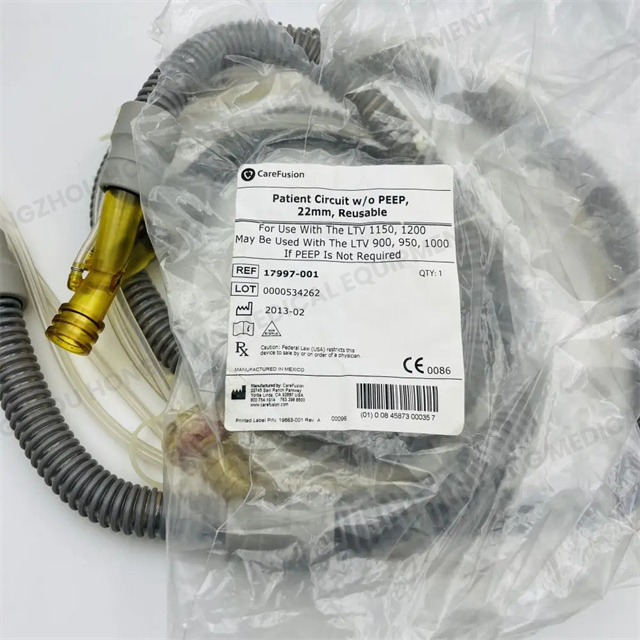
Compliance with ISO 5367 standards is non-negotiable for respiratory conduits. These standards dictate the exact dimensions and performance criteria required for safe operation. The 22 mm breathing circuit serves as the universal standard for adult mechanical ventilation. This standardization ensures seamless interoperability across different ventilator brands, humidifiers, and bacterial filters. It allows hospitals to maintain flexible equipment fleets without worrying about mismatched connections.
Engineering precision at the connection points determines the safety of the entire system. Connector tolerances at the Y-piece and the machine ends must be exact. Poor tolerances lead to micro-leaks. These leaks trigger continuous false alarms in the ventilator's control system. This causes alarm fatigue among clinical staff. In worst-case scenarios, loose connections result in catastrophic accidental disconnects, completely halting respiratory support.
Respiratory therapists verify these tolerances daily during the ventilator pre-use check. The machine pressurizes the system to detect any loss of volume. If the 22 mm connectors lack precise tapering, the circuit will fail this automated test, rendering it unusable for patient care. The ISO standard also mandates specific pull and bend tests to ensure the tubing does not occlude when draped over a bedrail or subjected to tension.
The physics of rain-out presents a constant challenge in mechanical ventilation. Ventilators provide clean, heated, and humidified oxygen to protect the patient's airway mucosa. As this heated gas travels through the cooler ambient air of the intensive care unit, it loses temperature. This cooling causes the suspended moisture to reach its dew point and condense into liquid water inside the tubing.
Facilities manage this through active or passive humidification. Passive systems rely on Heat and Moisture Exchangers (HMEs) placed at the patient Y-piece. These capture the patient's exhaled heat and moisture. Active heated humidifiers require specialized circuits to manage the resulting condensation. Traditional circuits utilize strategically placed water traps. These require manual emptying by nursing staff, which breaks the closed system and drops airway pressure.
Advanced systems utilize embedded heated wire circuits. These wires maintain the gas temperature throughout the inspiratory and expiratory limbs. They prevent excessive condensate formation by keeping the gas above the dew point. Effective condensate management directly correlates to clinical efficacy. It reduces the risk of bacterial colonization within pooled water and prevents accidental fluid lavage into the patient's lungs during routine repositioning.
Humidification Strategy |
Circuit Requirement |
Condensate Risk |
Best Clinical Use Case |
|---|---|---|---|
Passive (HME) |
Standard non-heated tubing |
Low |
Short-term ventilation, transport |
Active (Water Traps) |
Tubing with inline drainage traps |
High (requires manual intervention) |
Standard ICU care, budget-constrained environments |
Active (Heated Wire) |
Embedded dual or single heated wires |
Very Low |
Long-term ventilation, severe ARDS, thick secretions |
Material purity is a critical evaluation dimension. Respiratory circuits must be entirely free from Di(2-ethylhexyl) phthalate (DEHP), Bisphenol A (BPA), and natural rubber latex. Prolonged exposure to DEHP and BPA poses risks of endocrine disruption. This is particularly dangerous in vulnerable neonatal and pediatric populations. Latex-free construction prevents severe allergic reactions and anaphylaxis.
Compliance with ISO 10993 standards verifies the biological safety of medical devices. This rigorous testing evaluates cytotoxicity (Part 5), sensitization, and irritation (Part 10). It ensures the circuit materials are safe for prolonged, indirect contact with mucosal and airway tissues. This prevents inflammatory responses that could complicate the patient's respiratory recovery.
Manufacturers must provide certificates of analysis proving their resin batches meet these biocompatibility thresholds before extrusion begins. Procurement teams should reject any batch that lacks full traceability back to the raw material provider.
Condensate pooling inside the tubing acts as a dangerous breeding ground for pathogens. Biofilms can form rapidly along the corrugated ridges of the plastic. If a circuit is lifted improperly during routine nursing care or patient repositioning, this contaminated fluid lavages directly into the patient's lungs. This event is a primary catalyst for Ventilator-Associated Pneumonia (VAP). VAP is a severe complication that drastically increases mortality rates and hospital length of stay.
Mitigating this risk requires strict adherence to handling protocols. Tubing must always remain positioned below the level of the patient's airway. Gravity must pull condensate away from the endotracheal tube. Utilizing closed-suction systems prevents breaking the circuit during airway clearance. Breaking the circuit drops positive end-expiratory pressure (PEEP), leading to alveolar derecruitment and increasing contamination risks.
Facilities must adhere to evidence-based circuit change intervals. Replace them only when visibly soiled or mechanically compromised, rather than on arbitrary schedules. Frequent, unnecessary circuit changes increase the risk of introducing external pathogens into the sterile respiratory tract.
Mechanical failure halts ventilation instantly. Material fatigue in reusable circuits, or poor manufacturing tolerances in disposables, leads to cracks, leaks, or complete disconnection at the Y-piece. A compromised circuit does more than stop gas delivery. It disrupts the ventilator's embedded control systems. The machine cannot accurately measure flow or pressure. This leads to erratic breath delivery and dangerous pressure spikes.
To mitigate mechanical failures, respiratory therapy departments must mandate routine automated pressure-leak testing. Modern ventilators feature built-in pre-use check algorithms. These tests pressurize the circuit against an occlusion to measure compliance and detect micro-leaks. The machine typically pressurizes the system to 50 cmH2O and measures the pressure drop over time to calculate the exact leak rate. Connecting a patient without passing this automated diagnostic check introduces unacceptable clinical risk.
Visual inspections remain equally important. Clinicians must examine the tubing for stress fractures, especially near the rigid plastic connectors where bending forces are highest.
A reputable ventilator accessories supplier must hold active ISO 13485 certification. This internationally recognized standard specifies requirements for a quality management system. The organization needs to demonstrate its ability to provide medical devices that consistently meet customer and applicable regulatory requirements. It proves the manufacturer adheres to strict design, production, and surveillance protocols.
Procurement teams must audit the supply chain actively. Request documentation verifying cleanroom manufacturing environments. ISO Class 7 or 8 cleanrooms prevent particulate contamination during extrusion and assembly. A reliable ventilator spare parts supplier provides transparent batch-testing protocols. They prove that each production run meets the specified compliance and resistance metrics before shipment.
Inventory stability is just as critical as product quality. Evaluate a supplier's lead times, domestic warehousing capabilities, and historical fulfillment rates during demand surges. Respiratory pandemics and seasonal flu spikes strain global logistics. A supplier with robust domestic reserves ensures your facility will not face critical shortages of life-sustaining equipment.
Frame the supplier relationship as a strategic partnership rather than a transactional purchase. Evaluate the operational value they bring to your clinical engineering teams. This includes providing ongoing technical support, comprehensive clinical training materials for respiratory therapists, and strong warranty backing for reusable silicone components. A dedicated partner actively helps optimize your respiratory care infrastructure.
When evaluating vendors, consider these operational factors:
Minimum order quantities and bulk shipping logistics.
Availability of emergency overnight shipping for critical shortages.
Dedicated account management for rapid troubleshooting.
Clear return policies for defective or non-compliant batches.
Take the following immediate actions to upgrade your respiratory equipment procurement strategy:
Request technical data sheets (TDS) from current vendors to verify compliance and resistance metrics across different flow rates.
Demand independent ISO 13485 and ISO 10993 compliance certificates from all potential manufacturing partners.
Acquire sample sets from shortlisted suppliers and conduct rigorous in-house pressure and leak testing using your facility's specific ventilator models.
Audit your current inventory to identify high-resistance or high-compliance circuits that require immediate phase-out.
A: Circuit compliance refers to the tubing's tendency to expand under pressure. Highly compliant tubing stretches during inspiration, trapping a portion of the delivered gas. This prevents the full tidal volume from reaching the patient's lungs. It leads to dangerous hypoventilation, especially in patients requiring precise volume control.
A: Mechanical dead space is the volume of rebreathed gas located between the Y-piece and the patient's airway. Because this gas has already participated in gas exchange, inhaling it impairs the clearance of carbon dioxide. Minimizing dead space is critical for patients needing strict CO2 management.
A: The lifespan depends on the material and the sterilization method. High-quality silicone circuits typically withstand 50 to 100 autoclave cycles. Facilities must track usage meticulously and inspect for micro-tears or loss of elasticity to determine exactly when a circuit should be retired.
A: The 22 mm dimension is an ISO 5367 standard designed to ensure universal interoperability. It allows adult circuits to connect seamlessly to different ventilator brands, humidifiers, and filters. This standard diameter provides an optimal balance between minimizing airflow resistance and maintaining manageable tubing weight.
A: Embedded heated wire circuits are the most effective solution. They maintain the temperature of the humidified gas as it travels through both the inspiratory and expiratory limbs. By preventing the gas from cooling, they stop moisture from condensing into liquid water inside the tubing.
A: Silicone offers exceptional thermal stability for repeated autoclaving and remains chemically inert. Clinically, it provides superior structural rigidity under high peak inspiratory pressures compared to standard plastics. This low compliance ensures highly accurate tidal volume delivery and reliable ventilator triggering.
A: Request their active ISO 13485 certification, which proves they utilize a compliant medical device quality management system. Additionally, ask for documentation detailing their cleanroom manufacturing environments (ISO Class 7 or 8) and their batch-testing protocols for resistance and compliance metrics.