




Phone:
+86-187-5829-6389

Views: 0 Author: Site Editor Publish Time: 2026-09-16 Origin: Site
The pneumatic pathway serves as the critical lifeline for automated oscillometric blood pressure measurement. Diagnostic accuracy for systolic, diastolic, and mean arterial pressures relies entirely on the integrity of air transmission. This connection between the monitor and the patient must remain flawless. Mismatched connectors, degraded tubing, and invisible micro-leaks introduce severe operational risks. These failures lead directly to false readings, delayed clinical interventions, and frustrating equipment downtime. Intermittent monitoring of critically ill patients leaves no room for pneumatic errors.
Biomedical engineers and clinical procurement teams need exact standards to maintain equipment fleets. You must decode technical specifications and verify connector compatibility across different OEM ecosystems. We provide actionable criteria to help you select reliable pneumatic components designed specifically for high-stress clinical environments.
Connector Compatibility is Proprietary: Monitor-end connectors vary significantly by manufacturer (e.g., bayonet, quick-connect, threaded), requiring precise matching to prevent air leaks and equipment damage.
Patient Population Dictates Hose Specifications: A neonatal NIBP hose requires different flow dynamics, lengths, and safety standards compared to adult or bariatric hoses.
Material Integrity Impacts Accuracy: Medical-grade, latex-free TPU (Thermoplastic Polyurethane) offers superior resistance to kinking, chemical degradation, and burst pressure compared to legacy PVC options.
Supplier Vetting is Critical: Partnering with a certified patient monitor accessories supplier ensures ISO/CE compliance, reducing the liability associated with counterfeit or substandard pneumatic components.
An NIBP hose functions as the essential air conduit for non-invasive blood pressure monitoring. It transmits pneumatic pressure directly from the patient monitor's internal pump to the occluding upper-arm cuff. The oscillometric method relies on a precise sequence of events. The pump inflates the cuff above the patient's expected systolic pressure to fully occlude the brachial artery. As the monitor's internal valve releases air in controlled step-down increments, blood begins to flow back through the artery. This blood flow creates tiny volumetric pulsations, or oscillations, against the cuff bladder.
The hose performs a secondary, highly sensitive role during this deflation phase. It relays these minute pressure oscillations back to the monitor's internal pressure transducer. The transducer identifies the point of maximum oscillation amplitude, which corresponds to the Mean Arterial Pressure (MAP). The monitor's software algorithms then calculate the systolic and diastolic values based on this MAP reading. Any volume loss, wall expansion, or elasticity change within the pneumatic pathway alters the oscillation waveform. If the hose absorbs the pulse energy by stretching, the monitor receives a dampened signal, resulting in inaccurate clinical readings or complete measurement failure.
A standard pneumatic hose assembly consists of several structural components engineered to maintain system integrity under physical stress. Each part plays a specific role in the clinical environment.
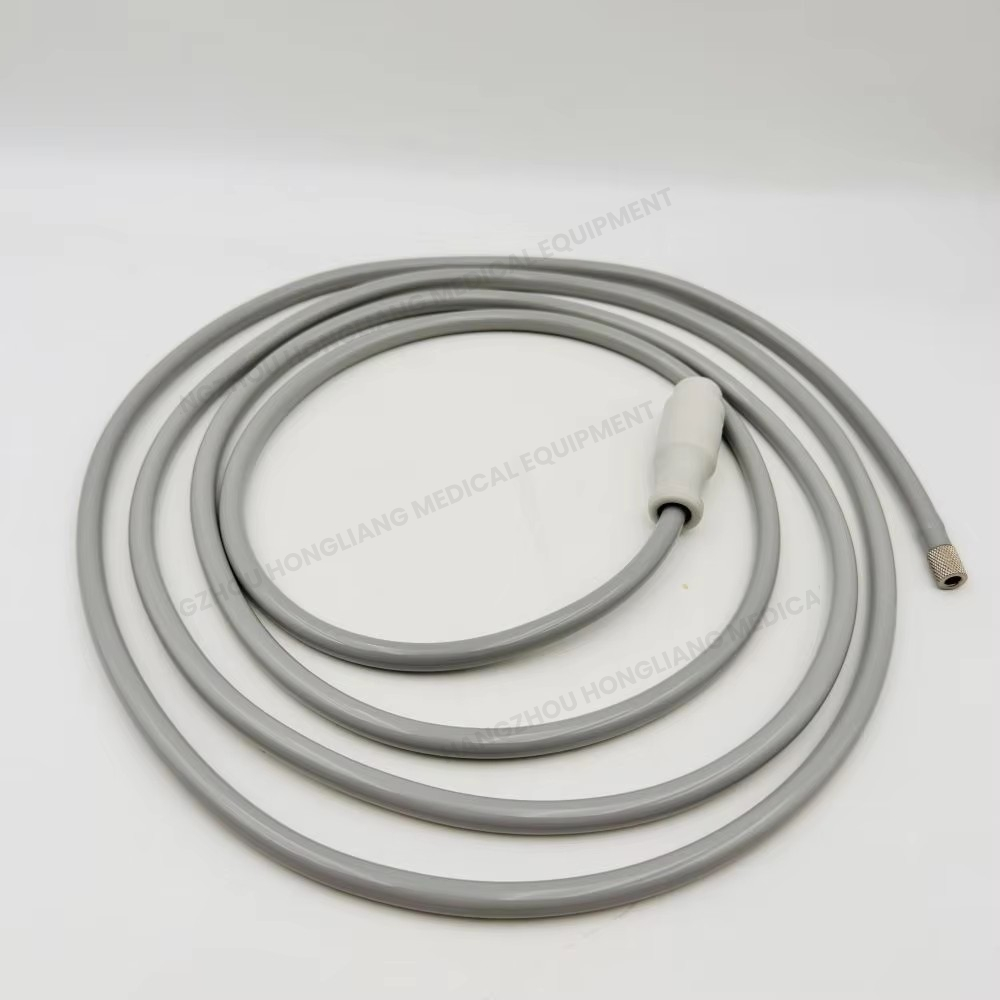
Monitor-End Connector: This rigid interface plugs directly into the patient monitor's front panel. It houses internal O-rings and locking mechanisms (such as metal pins, threads, or spring-loaded clips) to maintain a hermetic seal against the monitor's internal manifold.
Strain Relief Boots: These flexible rubber or plastic guards sit at both ends of the tubing. They prevent sharp bends and reduce mechanical stress at the exact point where the flexible tube meets the rigid connector housing.
Tubing (Air Conduit): This is the flexible, pressure-resistant line. Lengths typically range from 1.5 meters for compact transport setups to 3.0 meters for boom-mounted intensive care configurations. The wall thickness determines its resistance to kinking and pressure expansion.
Cuff-End Connector: This distal interface attaches directly to the blood pressure cuff. It must endure high-frequency connection cycles as clinical staff rapidly swap cuffs between different patients throughout a shift.
Understanding the technical difference between single-lumen and dual-lumen systems prevents equipment mismatch at the bedside. Single-tube systems remain the most common configuration in standard hospital monitors. They use one shared air pathway to handle both the inflation volume and the sensing of pressure oscillations. This design simplifies connections and reduces cable bulk.
Dual-tube systems utilize two separate lumens extruded within the same cable assembly. One tube handles rapid inflation and controlled deflation. The second tube acts exclusively as a static sensing line for the pressure transducer. This separation provides advanced artifact rejection. It allows the monitor to detect pressure changes with extreme precision, even if the inflation line experiences minor flow restrictions or patient movement. You must match the hose configuration exactly to the specific pneumatic architecture of your patient monitor.
Feature | Single-Tube System | Dual-Tube System |
|---|---|---|
Pneumatic Pathway | One shared lumen for inflation, deflation, and sensing. | Two distinct lumens: one for air volume, one for static sensing. |
Artifact Rejection | Standard baseline filtering. Susceptible to movement artifacts. | Advanced rejection. Isolates the sensing line from pump turbulence. |
Monitor Compatibility | Standard on most general ward and transport monitors. | Required for specific high-acuity ICU and operating room monitors. |
Bedside Footprint | Lighter, more flexible, easier to route around bed frames. | Slightly bulkier and stiffer due to the dual-extrusion manufacturing. |
Adult and pediatric monitoring requires robust pneumatic systems capable of handling significant pressure loads. Standard adult inflation pressures routinely reach up to 300 mmHg during hypertensive crises or initial calibration cycles. The tubing must feature specific inner and outer diameter specifications, along with a high durometer (hardness) rating, to manage this volume without expanding. If the tube walls stretch under high pressure, the pneumatic volume changes dynamically. The monitor will register an artificial drop in the oscillation amplitude, skewing the MAP calculation.
Durability remains a primary concern in high-traffic clinical environments. Emergency departments and intensive care units subject these hoses to extreme physical stress. Heavy hospital bed frames pinch them against walls, rolling ultrasound machines crush them on the floor, and clinicians frequently stretch them to their absolute limits during patient transport. High-quality adult hoses utilize reinforced walls to prevent permanent deformation after crush incidents. They must also maintain flexibility in cold transport environments without becoming stiff or brittle.
Neonatal care demands entirely different pneumatic engineering. A neonatal NIBP hose features critical differences in micro-bore tubing requirements. The internal diameter is a fraction of the size of an adult hose. This design restricts flow rates intentionally. Rapid inflation can severely damage fragile neonatal vasculature and cause localized hematomas. The smaller internal volume also allows the monitor's pump to control step-down pressure increments with micro-precision, which is necessary for reading low neonatal blood pressures.
Safety standards dictate strict physical and visual barriers for neonatal equipment. Color-coding conventions (often light blue or pink) visually separate neonatal hoses from standard adult inventory. More importantly, the connectors feature distinct physical indexing. This prevents a clinician from accidentally connecting a neonatal cuff to an adult high-pressure monitor port. Such an error bypasses the monitor's software limits and causes catastrophic over-inflation. Biomedical teams must ensure these safety indexing features remain intact during routine maintenance and never attempt to modify a connector to fit a mismatched port.
The physical locking mechanism dictates how securely the hose mates with the monitor's internal manifold. Engineers design these interfaces to withstand thousands of insertion cycles. Understanding these mechanisms helps biomedical teams diagnose connection failures quickly and train clinical staff on proper handling.
Bayonet-Style / Twist-Lock: This push-and-twist mechanism provides a highly secure, leak-proof seat. It often features a machined metal collar for added durability against side-load stress. Clinicians align the indexing pins, push inward against an internal spring, and twist clockwise to lock. This style is standard on many Philips IntelliVue systems.
Quick-Connect (Push-Pull): These connectors allow for rapid deployment. They utilize spring-loaded metal or heavy-duty plastic housings. Common variations include Female Mono Plugs and Male Quick-Connects. They snap into place instantly, making them ideal for fast-paced emergency settings. However, the internal retention springs can fatigue over years of heavy use.
Threaded / Luer-Lock: Legacy systems or highly specialized transport monitors sometimes use screw-type connections. While they offer an exceptional pneumatic seal, they require more time and manual dexterity to connect and disconnect. Cross-threading remains a common failure point, which can permanently strip the monitor's plastic manifold threads.
Major original equipment manufacturers (OEMs) utilize proprietary ecosystems to ensure system integrity and control the accessory market. You cannot mix a Philips bayonet connector with a GE Healthcare quick-connect port. The internal O-rings, seating depths, and pin alignments differ by fractions of a millimeter. Forcing a mismatched connector damages the monitor's internal manifold, turning a simple accessory replacement into a costly hardware repair.
When sourcing replacements, third-party hoses must match OEM tolerances perfectly. For example, integrating Drager NIBP accessories requires exact dimensional matching. If the connector seating is too shallow, micro-leaks occur during the high-pressure inflation phase. If it is too deep, it can crack the monitor housing or crush the internal check valve. Exact tolerance matching ensures accurate systolic and diastolic readings by maintaining a flawless pneumatic seal from the pump to the patient.
The distal connection point requires equal engineering attention. Cuff-end connectors typically utilize slip-fit, threaded, or locking clip designs. They must endure constant manipulation as clinicians swap cuffs between patients of different sizes. A worn cuff-end connector, specifically a degraded internal O-ring, is the most common cause of spontaneous air leaks in the field.
Intermediary cuff adapters play a vital role in fleet standardization. These small, rigid connectors bridge the air path seamlessly between the main hose and various cuff designs. They allow a single monitor setup to accept a disposable neonatal cuff for an isolation patient, or a heavy-duty reusable NIBP cuff for a standard admission, without changing the entire hose assembly. Proper adapter selection reduces bedside clutter, streamlines clinical workflows, and prevents staff from hunting for compatible equipment during emergencies.
The material composition of an NIBP connecting hose dictates its lifespan, flexibility, and safety profile. Legacy hoses often relied on PVC (Polyvinyl Chloride). While inexpensive to manufacture, PVC hardens over time, develops permanent memory kinks, and degrades rapidly when exposed to harsh hospital disinfectants. Modern medical environments demand better performance to reduce replacement frequency.
TPU (Thermoplastic Polyurethane) represents the current gold standard for pneumatic tubing. TPU offers exceptional flexibility, zero memory retention, and high resistance to chemical breakdown. It withstands aggressive cleaning protocols, including quaternary ammonium compounds and bleach wipes, without embrittlement. Furthermore, TPU is inherently latex-free and DEHP-free. This ensures patient safety, prevents severe allergic reactions, and meets strict global regulatory compliance standards for medical devices.
Performance Metric | TPU (Thermoplastic Polyurethane) | PVC (Polyvinyl Chloride) |
|---|---|---|
Flexibility & Memory | High flexibility, zero memory retention. Lays flat immediately. | Stiffens over time, retains kinks after being coiled for storage. |
Chemical Resistance | Excellent resistance to hospital-grade disinfectants and UV light. | Degrades, cracks, and becomes brittle with repeated chemical exposure. |
Burst Pressure Tolerance | Superior structural integrity under high inflation cycles. | Prone to micro-tears and ballooning under repeated high-pressure stress. |
Biocompatibility | 100% Latex-free and DEHP-free. Safe for all patient demographics. | Often contains plasticizers (DEHP) which pose long-term safety risks. |
Pneumatic integrity is non-negotiable for diagnostic equipment. Manufacturers test hoses rigorously to define acceptable tolerances for pressure decay. A high-quality hose should exhibit a pressure drop of less than 1 mmHg per second when isolated under maximum inflation (typically tested at 250 mmHg). Anything higher indicates a micro-leak that will trigger monitor errors or artificially lower the MAP calculation.
Burst pressure ratings guarantee longevity and patient safety. Engineers subject these hoses to continuous inflation cycles in laboratory settings, simulating years of clinical use in a matter of weeks. A hose must withstand pressures far exceeding the 300 mmHg clinical maximum without structural failure. This safety margin protects patients during unexpected monitor malfunctions, ensuring the tubing will not rupture if the pump fails to shut off.
Managing multiple monitor brands across a large hospital network creates inventory chaos. Standardizing your pneumatic connections reduces this complexity. Biomedical teams should audit their current fleet and identify the dominant monitor platforms in each department. By standardizing the hose lengths and utilizing specific cuff-end adapters, hospitals can drastically reduce the number of unique SKUs they keep in stock. This strategy prevents bedside connection delays, simplifies the ordering process for procurement teams, and ensures clinicians always have the right equipment available.
A failing patient monitor NIBP hose presents specific clinical symptoms that staff must recognize. Clinicians will notice the monitor's pump cycling continuously as it struggles to reach target pressures. The screen will eventually display "NIBP Timeout", "Air Leak", or "Cuff Loose" errors. More dangerously, a partial leak might not trigger a hard error but will result in inaccurately low Mean Arterial Pressure (MAP) readings, potentially masking patient deterioration.
Biomedical engineers must perform routine pneumatic leak tests during scheduled preventative maintenance. This involves wrapping the cuff around a rigid metal or plastic cylinder, inflating the system manually via the monitor's service mode to 250 mmHg, and observing the pressure drop over 60 seconds. Visual inspections should also target the areas immediately adjacent to the connectors. The strain relief boots hide the most common failure points, as this is where kinking and micro-punctures most frequently occur from repeated bending.
Infection control protocols require aggressive chemical cleaning between patients to prevent healthcare-associated infections. However, these chemicals pose a significant threat to hose longevity. Wiping down a hose with heavy bleach or alcohol solutions strips the plasticizers from inferior materials. This leads to connector embrittlement, radial cracking along the tube jacket, and eventual pneumatic failure.
You must balance infection control with equipment preservation. Staff should use only OEM-approved disinfectants and follow the specified contact times. They must also avoid fluid ingress into the lumen at all costs. If cleaning fluid, blood, or saline enters the air path, the pump will draw it directly into the monitor's internal manifold. This causes catastrophic hardware failure, requiring a complete teardown of the monitor to replace the pneumatic block.
Sourcing unverified aftermarket hoses introduces severe financial and clinical risks. Substandard components often feature poor O-ring tolerances, weak connector housings, and thin-walled tubing. They fail prematurely, leading to constant replacement cycles that consume biomedical labor hours. Furthermore, using unapproved accessories can void the warranty on expensive patient monitors. The most significant risk remains compromised patient care. Delayed interventions due to equipment errors cost far more than the marginal savings gained from purchasing cheap pneumatic components.
Procurement teams must verify regulatory credentials before purchasing any pneumatic accessories. A reliable patient monitor accessories supplier will hold active ISO 13485 certification. This standard guarantees that their quality management system meets strict medical device manufacturing requirements. Additionally, ensure the products carry FDA 510(k) clearance or CE marking, depending on your regional jurisdiction. These certifications prove the manufacturer has validated the safety, efficacy, and biocompatibility of their designs through independent testing.
Medical device manufacturing requires absolute transparency. Evaluate suppliers based on their lot traceability. If a defect occurs in the field, the supplier must be able to trace the component back to the specific batch of raw materials and the exact date of assembly. Ask potential suppliers about their rigorous pressure-testing protocols. They should provide documentation showing that every single hose undergoes a pneumatic integrity test before leaving the factory floor, rather than relying on random batch sampling.
Robust warranty terms indicate a supplier's confidence in their product engineering. Look for warranties that cover premature material degradation, O-ring failures, and connector cracking. Furthermore, a strong supplier will provide exact-match samples for biomedical validation prior to bulk purchasing. This allows your internal engineering team to test the hoses on your specific monitor fleet, ensuring perfect physical compatibility and accurate pressure readings before committing to a large-scale facility rollout.
The NIBP hose is not a generic commodity. It is a highly specific pneumatic instrument that directly dictates the accuracy of automated blood pressure monitoring. Mismatched components, degraded materials, and invisible leaks compromise patient safety and disrupt clinical workflows. You must treat these connections with the same technical scrutiny as the monitors themselves.
To ensure system integrity, always match the connector to the exact OEM monitor specifications. Select the correct hose type based on the patient demographic, paying special attention to neonatal flow restrictions and safety indexing. Finally, mandate medical-grade TPU materials to guarantee longevity and chemical resistance in harsh hospital environments.
Take the following actionable steps to secure your monitoring fleet:
Conduct an immediate audit of your current NIBP hose inventory to identify mismatched connectors and degraded tubing.
Implement a standardized 60-second pneumatic leak test into your quarterly preventative maintenance schedule.
Standardize cuff-end adapters across your facility to reduce inventory complexity and prevent bedside delays.
Request technical specification sheets and material safety data from your current suppliers to verify TPU construction.
A: Replace hoses every 12 to 24 months depending on clinical volume. High-traffic intensive care units wear out pneumatic gear faster than standard outpatient wards. You must replace the assembly immediately if it fails a standard 60-second pneumatic leak test, exhibits visible radial cracking along the tubing, or if the monitor-end connector fails to lock securely into the manifold port.
A: No. Adult monitor ports output high pressure and rapid flow rates designed for large bladder volumes. Connecting a neonatal cuff to an adult system bypasses built-in safety mechanisms. This mismatch causes rapid over-inflation, which can severely damage fragile neonatal blood vessels and cause localized hematomas. Always use dedicated neonatal ports and settings.
A: Single-tube systems use one shared pneumatic pathway for both bladder inflation and pressure sensing. Double-tube systems separate these functions into two distinct lumens within the same cable. One tube handles the air pump volume, while the second acts as a dedicated sensing line. This separation provides advanced artifact rejection for specific monitor architectures.
A: Wipe the exterior jacket with hospital-grade disinfectants approved by your facility's infection control protocol. Never submerge the assembly in liquid. Fluid ingress into the lumen will travel directly into the monitor's internal pump, causing catastrophic hardware failure. Avoid autoclave sterilization entirely unless the specific component is explicitly rated for high-heat exposure.
A: This error indicates a loss of pneumatic pressure during the inflation or step-down deflation cycle. Common failure points include cracked cuff-end connectors, worn O-rings on the monitor-end interface, or invisible micro-punctures along the tubing jacket. A ruptured internal bladder within the blood pressure cuff itself will also trigger this specific hardware alarm.
A: While the distal cuff-end might utilize a universal slip-fit design, the monitor-end connector remains highly specific. Drager monitors require exact OEM-matched connectors to ensure proper seating depths and O-ring alignment. You must use either an exact OEM match or a certified compatible adapter designed specifically for that hardware ecosystem to prevent leaks.