




Phone:
+86-187-5829-6389

Views: 0 Author: Site Editor Publish Time: 2026-06-08 Origin: Site
Anesthesia machines demand rigorous, frequent oxygen sensor replacements to protect patients. Clinical engineering teams rely on these components to maintain precise FiO2 monitoring during every surgical case. Any delay or failure directly threatens patient safety. Original Equipment Manufacturer (OEM) sensors deliver proven reliability and exact fitments. However, they consistently strain operational budgets and often fall victim to unpredictable supply chain bottlenecks. Procurement teams and biomedical technicians urgently need dependable alternatives. This article provides a clinical-grade, decision-focused framework for evaluating compatible replacements. You will learn how to verify essential electrochemical specifications, assess strict regulatory certifications, and properly validate these units in your fleet. We aim to help you navigate this transition seamlessly. By following this guide, you ensure optimal machine functionality and strict regulatory compliance.
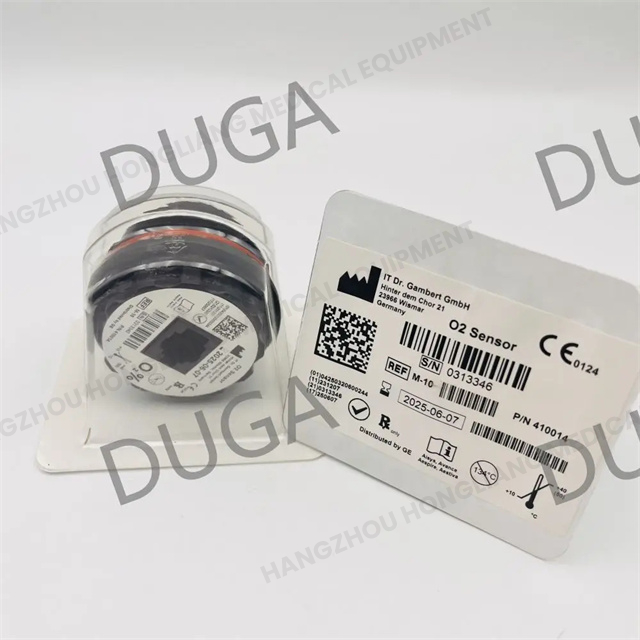
Direct Compatibility: High-quality compatible sensors must precisely match the physical and electronic specs of the OEM GE M-10, specifically for the threaded interfaces of GE 7100/7900 Smart Vent series.
Evaluation Criteria: Reliable third-party sensors are validated by ISO 13485 certifications, stable galvanic cell response times, and zero calibration drift upon installation.
Cost vs. Reliability: Switching to validated compatibles reduces annual consumable spend, provided buyers strictly vet manufacturer quality control and warranty terms.
Vendor Consolidation: Sourcing M-10 sensors from a comprehensive biomedical supplier allows facilities to streamline procurement for other vital parts across mixed-fleet equipment.
The GE Datex-Ohmeda 7100 and 7900 anesthesia machines operate as critical life-support systems in modern operating rooms. They rely on the GE M-10 Oxygen Sensor for continuous, real-time oxygen concentration measurements. Anesthesiologists depend on these exact readings to mix gases safely during complex procedures. You cannot compromise on sensor accuracy under any circumstances. If a sensor drifts or reacts slowly, the breathing circuit risks delivering an incorrect hypoxic mixture.
Despite this critical clinical requirement, hospitals face a significant procurement bottleneck. Sole-sourcing exclusively from OEMs frequently leads to premium pricing models. Procurement teams also face severe backorder risks during global supply chain disruptions. When OEMs experience shipping delays, hospital inventory depletes rapidly. This intense pressure forces clinical engineering directors to identify reliable, scalable alternative parts. They need readily available solutions.
However, exploring alternative parts introduces serious implementation risks. Unvetted, cheap solutions lacking proper documentation pose severe dangers to the facility. Inferior sensors risk sudden calibration failures and trigger frustrating ventilator error codes during the morning checkout. Ultimately, these unverified parts compromise patient safety in the OR. You must aim for cost-efficiency through quality equivalency. Raw price-cutting is never the primary goal. Thoroughly vetting your replacement parts protects both your patients and your equipment fleet.
Finding a true compatible replacement requires you to verify strict technical specifications. Form factor and physical fit come first. The replacement sensor must feature the exact threaded design required by the OEM. This ensures secure seating inside the Smart Vent series. A perfect threaded fit prevents dangerous anesthetic gas leaks. It also stops ambient air from mixing into the circuit and causing false concentration readings.
Electrochemical performance must match the original unit perfectly. The compatible sensor must utilize equivalent galvanic fuel cell technology. The chemical reaction inside the cell generates a precise electrical output proportional to the oxygen level. Its response time, commonly known as T90, must align strictly with OEM benchmarks. Typically, the sensor must reach 90% of its final stable reading in under 15 seconds. Furthermore, the signal output in ambient air must match the expected millivolt (mV) range. The GE 7100/7900 automated calibration sequence depends entirely on this specific mV baseline to pass diagnostic checks.
You must also cross-reference part numbers carefully before purchasing. A true compatible directly replaces established OEM part numbers without physical modifications. Look for exact functional matches to P/N 6050-0004-110 or R112P10. The installation process should never require physical thread adapters. It must never need dangerous software overrides to function properly.
Specification Category | OEM Baseline Requirement | Compatible Sensor Target |
|---|---|---|
Technology Type | Galvanic Fuel Cell | Equivalent Galvanic Cell |
Physical Interface | Threaded (Smart Vent series) | Exact Threaded Match |
Response Time (T90) | < 15 seconds | < 15 seconds |
Output in Ambient Air | Expected mV Range Baseline | Identical mV Range Baseline |
Part Number Mapping | P/N 6050-0004-110 / R112P10 | Direct Drop-In Replacement |
You must establish a rigorous evaluation framework when reviewing third-party medical sensors. Start by verifying strict regulatory and quality standards. Shortlist only manufacturers operating under ISO 13485 medical device quality management systems. This certification proves they maintain specialized manufacturing controls for healthcare products. They must also provide clear CE or FDA compliance documentation. Transparent paperwork demonstrates their production process meets clinical safety standards consistently.
Next, evaluate warranty terms and lifespan guarantees. A standard galvanic cell has an expected operating life dictated by chemical depletion. In typical ambient hospital conditions, a high-quality unit lasts 12 to 15 months. A trustworthy vendor confidently backs their compatible sensor. They should offer a minimum 12-month defect warranty upon purchase. This comprehensive warranty protects your hospital budget against premature cell depletion or hidden manufacturing flaws.
Finally, ensure strict traceability and intellectual property compliance. The compatible sensor must be legally manufactured and clearly identifiable. You must avoid counterfeit units or patent-infringing clones. Look closely for clear, transparent labeling on the outer packaging. The box should explicitly state "Compatible with..." rather than falsely claiming OEM status. Honest, accurate labeling indicates a reputable, professional manufacturer dedicated to long-term medical supply partnerships.
Most modern hospitals do not run exclusive GE equipment fleets. The mixed-fleet reality creates complex logistical challenges for procurement teams. Hospital buyers manage multiple anesthesia platforms and diverse ventilator brands daily. Each device requires highly specialized, consumable sensors. Buying these parts individually from dozens of different OEMs creates massive administrative burdens. It generates excessive purchase orders and unmanageable delivery schedules.
You can unlock powerful sourcing synergies through vendor consolidation strategies. Select a reliable B2B vendor capable of supplying high-turnover respiratory and anesthesia components simultaneously. Consolidating your orders drastically reduces administrative overhead. It simplifies inventory tracking for the biomedical department. Leveraging a single supplier also opens doors to volume-based pricing discounts across your entire fleet.
Consider these specific component examples to optimize your strategic consolidation efforts:
Sourcing a reliable Drager Oxygen Sensor alongside your GE compatibles. This supports mixed Intensive Care Unit (ICU) environments seamlessly under one delivery schedule.
Procuring a Datex-Ohmeda Flow Sensor or a precise Mindray Flow Sensor to standardize your ventilator maintenance routines across different hospital wings.
Bundling essential preventive maintenance parts directly into the primary order. You can easily add a Drager Service Kit Lamp LED into the same purchasing contract to eliminate separate shipping fees.
Transitioning to compatible sensors requires strict clinical engineering oversight. Biomedical technicians must follow structured validation procedures to mitigate operational risks. Introducing unverified parts without a formal protocol jeopardizes the daily checkout process. You need a systematic approach to prove the replacement sensor performs exactly like the original.
Follow these structured steps to ensure safe, compliant implementation across your equipment fleet:
Pre-Installation Testing: Biomeds must verify physical integrity immediately upon unboxing the unit. Check the sensor body carefully. Ensure no electrolyte leakage occurred during transit, as potassium hydroxide spills ruin machine connectors.
Calibration Protocol: Execute the step-by-step calibration logic on the 7100/7900 machine interface. You must successfully complete the mandatory 21% room air calibration first. Follow this immediately with the 100% pure oxygen calibration. Both must pass without hesitation.
Mitigating Rejection Errors: Learn to identify standard baseline mV outputs on the diagnostic screen. If the machine rejects the sensor during morning checkout, start systematic troubleshooting. Assess the threaded O-ring seal for potential gas leaks before assuming an internal chemical cell failure.
Rollout Strategy: Never replace the entire hospital fleet simultaneously. Run a controlled 30-day pilot program first. Use non-critical training machines or dedicate a single operating room bay. Validate output stability fully before proceeding to hospital-wide adoption.
Following this systematic approach protects the healthcare facility. It ensures the new consumable parts integrate perfectly into your daily clinical workflows. Proper validation builds trust between the biomedical staff and the anesthesiologists using the machines.
Transitioning to a compatible GE M-10 Oxygen Sensor is a mathematically sound decision for hospital budgets. However, you must execute this shift strictly under clinical engineering oversight. Patient safety always remains the absolute top priority. Thoroughly vetting your suppliers ensures you achieve significant cost-efficiency without sacrificing measurement accuracy.
To move forward successfully, buyers should request comprehensive technical specification sheets from potential vendors. Always verify active ISO 13485 certifications before adding a new supplier to your approved list. We recommend securing a small initial batch of sensors for internal Biomed validation testing. Once your team confirms stable mV outputs and seamless calibration, you can safely update your standard operating procurement protocols.
A: Reputable compatible sensors do not void warranties if they meet established technical specifications. Legal protections generally support the use of third-party consumables in medical devices. You should ensure the manufacturer holds proper ISO 13485 certifications. Validated equivalents seamlessly replace OEM parts without altering the core machine. Always verify your specific service contract details, but high-quality compatibles remain a legally sound option.
A: The standard operational lifespan usually ranges from 12 to 15 months under normal conditions. It generally carries a similar unopened shelf life. Environmental factors heavily impact longevity. High ambient heat and continuous exposure to 100% oxygen will degrade any galvanic cell faster. Regular monitoring during morning checkout ensures you replace it before accuracy drops.
A: You verify this through the standard daily machine checkout process. A reliable compatible sensor seamlessly passes the automated calibration checks. It must register correctly at both 21% room air and 100% oxygen levels. If the part functions properly, it requires no manual workarounds or software overrides during the routine checkout sequence.
A: Yes. Top-tier B2B medical suppliers carry extensive cross-platform compatibility matrices. This allows your procurement team to source GE, Drager, and Mindray sensors under one purchase order. Consolidating your vendor list simplifies inventory management, leverages volume pricing, and streamlines preventive maintenance across diverse hospital equipment fleets.