




Phone:
+86-187-5829-6389

Views: 0 Author: Site Editor Publish Time: 2026-08-10 Origin: Site
Selecting accurate blood pressure cuff sizes directly dictates diagnostic reliability and patient safety on the clinical floor. Incorrect sizing leads to immediate hypertension misdiagnosis. It causes inappropriate medication dosing and creates false positive or negative labeling that follows a patient through their entire care journey. Procurement teams and clinical engineers face a distinct operational challenge. They must standardize cuff inventory across diverse patient demographics while ensuring strict compatibility with existing multi-parameter monitors. They also need to mitigate cross-contamination risks without inflating department budgets. This guide provides a definitive framework for evaluating clinical cuffs. It adheres strictly to AHA and AAMI scientific guidelines. We built this resource to help facilities select reliable suppliers for seamless, hospital-wide implementation, ensuring every reading reflects the patient's true physiological state.
Clinical accuracy is dictated by bladder dimensions: the American Heart Association (AHA) mandates a bladder width of 40% and a length of ≥ 80% of the patient's arm circumference, while clinical validation literature permits tolerances of 37–50% width and 75–100% length.
Anatomical validation is critical: the physical cuff width must cover 40% to 80% of the distance from the patient's elbow (olecranon) to the shoulder (acromion).
Facility-wide standardization requires evaluating connector compatibility across OEM systems (e.g., Drager, GE, Philips) to prevent equipment mismatch and workflow disruption.
Partnering with a specialized clinical blood pressure cuff supplier ensures access to a full continuum of sizes (Infant to Bariatric), reliable inventory, and necessary regulatory compliance.
Under-cuffing happens when a cuff is too small for the patient's arm circumference. The physiological mechanics behind this are straightforward. A small bladder requires excessive inflation pressure to occlude the brachial artery. This artificially inflates systolic and diastolic readings. Providers see these false positives and may diagnose hypertension incorrectly. Patients then receive unnecessary pharmacological interventions, such as ACE inhibitors or beta-blockers, which can lead to dangerous hypotensive episodes on the floor. Over-cuffing happens when a cuff is too large. The oversized bladder occludes the artery too easily at lower pressures. It underestimates blood pressure, creating false negatives. Hypertensive patients remain undiagnosed and unmanaged, increasing their risk for stroke or myocardial infarction.
Mislabeling normotensive patients carries heavy diagnostic and economic burdens for healthcare systems. It requires unnecessary follow-up visits and specialist referrals. It distorts electronic health record data, creating a permanent, inaccurate medical history. It increases insurance and liability costs for the facility. When clinical engineers audit monitor data, they frequently find that erratic readings stem directly from improper cuff application rather than hardware failure.
Compliance relies on strict AHA and AAMI guidelines. The AHA mandates a bladder width of 40% of the arm circumference. The length must reach 80% to 100% of that same circumference. Peer-reviewed validation ranges offer slight flexibility in fast-paced environments. Clinical studies show acceptable performance with a 37–50% width and 75–100% length. However, pushing these limits increases the margin of error.
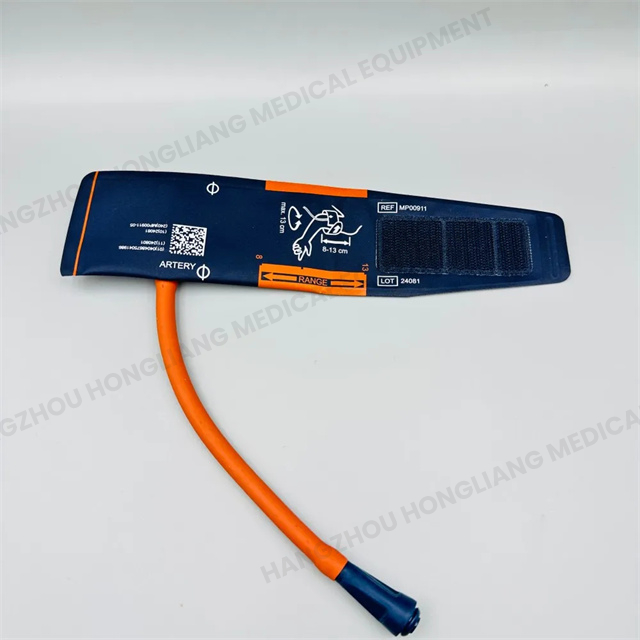
Anatomical fit verification prevents errors at the bedside. Mayo Clinic guidelines require the physical cuff width to span 40% to 80% of the vertical distance between the olecranon and the acromion. Visual index and range markings on cuffs eliminate clinical guesswork. Nurses and technicians rely on these solid indicator lines to ensure accurate application at the point of care. If the index line falls outside the printed range, the user must swap the cuff immediately.
Cuff Category | Arm Circumference Range | Primary Clinical Application |
|---|---|---|
Neonatal/Infant | 8 cm to 14 cm | NICU and early pediatric care |
Pediatric | 13 cm to 20 cm | Pediatric wards and clinics |
Small Adult | 17 cm to 25 cm | Frail or low-BMI adult patients |
Adult (Standard) | 24 cm to 32 cm | General medical-surgical baseline |
Adult Large | 32 cm to 42 cm | Muscular or high-BMI patients |
Bariatric (Extra Large) | 42 cm to 50 cm | Severe obesity cases |
Thigh | 45 cm to 56 cm | Trauma or extreme bariatric cases |
Infant and pediatric cuffs require highly specific sizing parameters. Neonatal patients need soft, biocompatible materials. Hypoallergenic surfaces prevent skin breakdown on fragile dermal layers. Vulnerable and low-birth-weight populations require gentle application. Rigid nylon edges can cause lacerations or pressure ulcers in the NICU. Clinical engineers must source cuffs with rounded corners and soft fabric backings for these units.
Adult standard cuffs represent the highest volume SKU in any hospital inventory. The 24 cm to 32 cm range dominates general medical-surgical wards, emergency departments, and outpatient clinics. Facilities must allocate inventory strategies around this baseline standard. A shortage of standard adult cuffs brings triage to a standstill. Procurement teams should maintain a robust safety stock of this specific size.
Adult large and bariatric cuffs address shifting epidemiological trends. Rising obesity rates require higher stock levels of larger sizes across all departments. Bariatric cuffs need a specific conical shape. A standard cylindrical cuff will slide down a heavily tapered upper arm during inflation. The conical design prevents slipping. It ensures even pressure distribution on tapered upper arms, allowing the monitor's algorithm to detect the oscillometric pulses accurately.
Thigh cuffs serve specific, high-acuity clinical scenarios. Providers use them during bilateral upper-extremity trauma where arm access is compromised. They aid deep-vein thrombosis evaluations in vascular labs. Extreme bariatric cases often make upper-arm measurement impossible due to tissue mass. Thigh application requires specific bladder width and length dimensions to compress the femoral artery. This ensures accurate arterial occlusion and reliable readings during critical interventions.
Reusable and single-patient disposable cuffs present distinct clinical trade-offs. Reusable cuffs offer long-term durability for high-traffic areas like triage. Single-patient use disposables eliminate cross-contamination risks in isolation wards and ICUs. They reduce hospital-acquired infections by staying with one patient throughout their stay. They also decrease reprocessing labor for clinical staff, freeing up time for direct patient care.
Material durability remains non-negotiable for any cuff entering a clinical space. Cuffs must be 100% latex-free to prevent severe allergic reactions. They must exclude DEHP and PVC to meet modern environmental and health standards. Antimicrobial coatings provide additional protection against surface pathogens. Materials must resist harsh chemical exposure. EPA-approved hospital-grade disinfectants, like quaternary ammonium compounds or bleach wipes, degrade weak materials rapidly. Strong chemical resistance extends reusable cuff bladder longevity and prevents the nylon shell from fraying or cracking.
Facilities must evaluate aftermarket cuffs against OEM specifications rigorously. Technical frameworks ensure aftermarket options meet strict validation and calibration standards. Proper calibration prevents pressure leaks at the connection point. It protects monitor algorithms from receiving distorted pneumatic signals. It maintains manufacturer warranties on expensive multi-parameter monitors. Using a poorly manufactured cuff can damage the internal pump of the monitor.
Integrating cuffs with leading monitor ecosystems requires precise hardware matching. Sourcing a compatible Drager blood pressure cuff prevents connection failures during critical monitoring phases. Universal connector designs reduce clinical workflow disruptions by allowing one cuff to move with the patient across different departments. Proprietary designs often limit flexibility, forcing nurses to swap cuffs when transferring a patient from the ER to the ICU.
Tube configurations impact technical applications directly. Single-tube and dual-tube NIBP systems serve different monitor types. Dual-tube systems often provide faster deflation rates and more accurate readings on specific high-end monitors. Common connector types include bayonet, slip-luer, and screw-type designs. Subminiature and quick-connect options streamline application for busy nurses. Micro-leaks at the connector joint compromise diagnostic inflation and deflation accuracy. A loose slip-luer fitting will cause the monitor to time out and display an error code, delaying care.
Facility-wide standardization demands a reliable vendor. The vendor must provide a complete, uninterrupted continuum of sizes. This prevents departmental silos where the ER uses one brand and the ICU uses another. It stops rogue purchasing habits by individual unit managers. A dedicated NIBP cuff supplier maintains consistent inventory levels, ensuring that even low-volume sizes like neonatal or thigh cuffs are always available when needed.
Specific clinical scenarios require custom solutions beyond the standard catalog. Specialized clinical trials and neonatal intensive care units demand unique designs tailored to specific protocols. Veterinary applications and legacy proprietary monitor integrations need tailored fits. A qualified custom medical cuff supplier provides rapid prototyping for these edge cases. They offer technical drafting and engineering support. They hold ISO 13485 medical device quality certifications, guaranteeing that custom products meet the same rigorous standards as mass-produced items.
Robust post-sale support ensures operational continuity for the biomedical engineering team. Facilities must evaluate suppliers based on their clinical equipment technical support capabilities. Services should include detailed connector-to-monitor mapping to simplify the transition process. Technicians need direct help troubleshooting leak faults and pneumatic errors. Suppliers must provide comprehensive training materials, including video guides and technical manuals, for biomedical teams to reference during preventative maintenance cycles.
Inventory management prevents sudden stockouts that cripple clinical workflows. Cuff hoarding occurs when high-demand sizes run low. Nurses stash standard adult cuffs in patient rooms or carts. Clinical staff may use incorrect sizes out of desperation when the right size is missing. Facilities mitigate this through strict par-level monitoring. Vendor-managed inventory programs establish safe stock margins, automatically triggering reorders before the supply room runs dry.
Clinical staff training reduces human error at the bedside. Rapid clinical pacing causes staff to ignore index lines and guess the fit. Facilities must standardize cuffs with highly visible indicators. Color-coded sizing prevents misapplication by allowing nurses to identify the correct size from across the room. Mandated annual competency assessments reinforce AHA and AAMI measurement guidelines. They ensure staff locate anatomical landmarks correctly, measuring from the acromion to the olecranon every time.
Accurate NIBP measurement depends entirely on proper cuff sizing and hardware compatibility. Cuff procurement represents a critical clinical engineering decision that impacts patient outcomes directly. It is not a simple administrative purchase to be awarded to the lowest bidder. Prioritize suppliers offering a comprehensive size range. Demand validated OEM connector compatibility. Require strict biocompatibility standards and transparent supply chains to protect your facility.
Audit current cuff inventory to determine accurate size distribution across all hospital departments.
Map existing monitor connector requirements to prevent hardware mismatch during the transition.
Request physical evaluation samples from shortlisted vendors to test material durability and connector fit.
Conduct clinical trials on the floor to verify index marking visibility and staff adoption rates.
A: Using a cuff that is too small causes under-cuffing. This artificially inflates both systolic and diastolic readings. It creates false positive results. Providers may incorrectly diagnose patients with hypertension, leading to unnecessary medication and treatments.
A: Locate the midpoint of the patient's upper arm. Find the exact distance between the acromion of the shoulder and the olecranon of the elbow. Wrap a flexible tape measure completely around this midpoint to determine the correct circumference.
A: Clinical guidelines dictate specific anatomical coverage. The physical width of the blood pressure cuff must cover 40% to 80% of the vertical distance from the patient's elbow to their shoulder.
A: The American Heart Association mandates strict bladder dimensions. The internal bladder width must equal 40% of the patient's arm circumference. The bladder length must cover at least 80% of the arm circumference.
A: Bariatric cuffs feature a conical shape to accommodate the natural taper of a larger upper arm. This design prevents the cuff from slipping downward during inflation. It ensures even pressure distribution for accurate arterial occlusion.