




Phone:
+86-187-5829-6389

Views: 0 Author: Site Editor Publish Time: 2026-06-02 Origin: Site
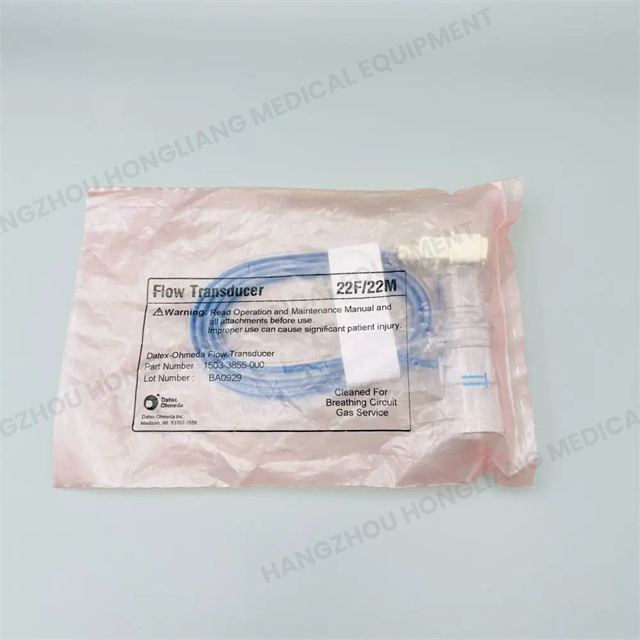
Clinical engineering teams frequently face severe operational bottlenecks when anesthesia machine components fail mid-cycle. Long OEM lead times severely compound these routine maintenance challenges. Stubbornly high replacement costs quickly strain departmental operating budgets. A fully functioning Datex-Ohmeda 1503-3855-000 Flow Sensor remains critical for precise fluid dynamics monitoring in any surgical setting. It plays a non-negotiable role in preventing patient hypoxia during complex volatile gas delivery. Medical professionals rely on this continuous data flow to adjust tidal volumes instantly.
Unfortunately, securing reliable parts often forces technicians into difficult logistical positions. We will explore the rigorous evaluation criteria for selecting high-fidelity compatible replacements. You will learn how to verify fleet compatibility matrices and assess advanced solid-state technology. We will outline the precise installation and calibration protocols necessary for success. Ultimately, you will discover how to ensure unwavering patient safety without compromising strict regulatory compliance or long-term baseline stability.
Direct Compatibility: Fully compatible with GE Datex-Ohmeda Aestiva, Aespire, Excel, and Modulus series (replaces both 1503-3855-000 and updated 2089610-001-S part numbers).
Technology Upgrade: Solid-state transducer (PVC) design eliminates mechanical wear, offering >10,000 hours of lifespan and <1ms response times.
Installation Reality: Requires strict adherence to a zero-calibration protocol and environmental readiness to prevent baseline drift.
Procurement Efficiency: Sourcing validated compatible sensors reduces equipment downtime while maintaining FDA/EU MDR data integrity standards.
Procurement errors happen frequently within clinical engineering departments. They often occur due to confusing OEM part number supersessions. Buyers must navigate minor chassis variations across various machine models. You must understand the exact relationship between legacy tags and modern identifiers. This clarity prevents costly purchasing mistakes. It ensures you receive the precise technical specification required for your medical equipment.
The legacy component typically displays as the 1503-3855-000 format. However, the manufacturer recently updated this classification. The industry now recognizes the newer 2089610-001-S designation. Understanding this transition assures buyers they are evaluating the correct replacement. They both refer to the same critical fluid dynamics transducer. You can confidently source compatible alternatives using either reference.
Confirming your specific machine model is the next critical step. A validated compatible sensor integrates seamlessly across several major product lines. Below is the validated machine roster for these transducers:
Aestiva Series: Fully supports Aestiva 5 (7100 and 7900 variants) and the specialized Aestiva MRI systems.
Aespire Series: Designed for the Aespire 7900 and the upgraded Aespire View platforms.
Advanced Workstations: Integrates accurately with Avance and Aisys digital anesthesia workstations.
Legacy Systems: Maintains backward compatibility with aging Excel SE and Modulus SE units.
We must establish a crucial assumption check here. Physical fitment is generally standardized. These components utilize standard Size 1 to 5 PVC housings. They easily click into the existing manifold receptacles. However, software-level calibration acceptance remains the ultimate test. A high-quality compatible replacement must communicate flawlessly with the main control board. It must pass the rigorous startup diagnostic tests without throwing error codes. Physical alignment means nothing if the digital handshake fails.
You must carefully evaluate how the sensor’s underlying architecture impacts clinical outcomes. This becomes exceptionally important during prolonged pediatric ventilation. Infant lungs require extremely precise volume delivery. Even minor airway resistance changes matter. Condensation inevitably builds up inside breathing circuits during long procedures. This moisture heavily impacts legacy mechanical sensors. It alters their resistance profile and skews tidal volume readings.
Traditional sensors suffer from predictable physical vulnerabilities. They rely on moving parts to measure fluid velocity. These tiny mechanical flaps or rotating vanes risk debris accumulation over time. Dust and dried condensation create physical friction. This friction forces the sensor to require frequent recalibration to combat baseline drift. Consequently, legacy mechanical designs offer only 2,000 to 5,000 hours of reliable use before demanding complete replacement.
Solid-state transducer technology completely changes this maintenance paradigm. Semiconductor-based compatible sensors eliminate physical friction entirely. They contain zero moving parts. They measure gas flow using advanced thermal or differential pressure chips. This solid-state advantage heavily extends dependable lifecycles. Clinical engineering teams routinely see these units push well beyond 10,000 hours of continuous operation. You spend less time troubleshooting drift and more time supporting surgical staff.
Anesthesia delivery demands rapid systemic adjustments. You must highlight the absolute requirement for sub-millisecond response times. A highly capable transducer detects micro-variations in flow rates almost instantly. It registers a response in under one millisecond (<1ms). This incredible speed is a crucial factor for auto-regulating proportional valves.
Slow sensors lag behind the patient's actual respiratory effort. This lag creates dangerous clinical scenarios. It drastically increases the risk of patient hypoxia. It also elevates the chances of barotrauma via over-pressurization. A solid-state compatible sensor feeds real-time data to the control board. The machine dynamically adjusts its volatile gas delivery instantly. It keeps the patient perfectly synchronized with the ventilator.
Performance Metric | Legacy Mechanical Sensor | Compatible Solid-State Sensor |
|---|---|---|
Operating Lifespan | 2,000 - 5,000 hours | > 10,000 hours |
Moving Parts | Yes (Flaps/Vanes) | None |
Response Time | 10ms - 50ms | < 1ms |
Drift Vulnerability | High (Moisture sensitive) | Extremely Low |
Installing a critical respiratory sensor requires specific handling techniques. You cannot simply plug it in and walk away. Unskilled handling causes immediate out-of-box failures. It also creates dangerous micro-leaks within the breathing circuit. Proper experience and strict risk mitigation are mandatory for biomedical technicians.
We developed a standard operating procedure specifically for BMET professionals. Follow this sequence precisely to ensure maximum component lifespan and patient safety.
Preparation: Isolate any environmental electromagnetic interference. High-frequency surgical equipment often disrupts initial baseline readings.
Power-Down: Ensure complete system electrical discharge. Unplug the machine and clear residual power from the motherboard.
Inspection: Check the manifold block thoroughly. Look for hidden condensation or microscopic biological debris. Clean the seating area entirely.
Alignment: Strictly observe the directional flow arrows printed on the sensor housing. Reversing this orientation causes immediate failure.
Seating: Apply firm, even pressure. Secure the O-rings without crimping the rubber. Pinched rings create invisible leaks.
Electrical Verification: Confirm proper pin engagement. The wiring harness must click solidly into place.
Leak Testing: Conduct a pressurized circuit test. Perform this prior to any clinical use. Ensure the bellows hold pressure.
Zero-Calibration: Initialize the software baseline. Ensure absolutely zero gas flows through the system during this step.
We must highlight a massive implementation risk here. Never skip the zero-calibration step. Many technicians rush through the process and bypass the software initialization. Skipping this protocol is the leading cause of false tidal volume alarms post-installation. The machine needs to understand what "zero flow" looks like on the new sensor. Failing to teach it this baseline guarantees frustrating troubleshooting calls later that day.
Hospital compliance officers rightfully question the origins of non-OEM parts. They express healthy skepticism regarding compatible replacements. Addressing this authoritativeness directly builds trust. You must demonstrate that alternative components meet or exceed original specifications. Medical facilities cannot risk their accreditation on unverified hardware.
Data integrity standards form the backbone of modern regulatory frameworks. High-fidelity compatible sensors meet precise data output requirements. These devices output exact voltage measurements corresponding to fluid velocity. Because the data stream matches the OEM algorithm perfectly, the devices pass routine maintenance audits. This strict data alignment satisfies both FDA Title 21 CFR Part 820 requirements and stringent EU MDR standards.
Traceability remains equally important in the procurement cycle. Hospitals must maintain extensive risk management documentation. Emphasize the importance of sourcing from highly vetted vendors. These suppliers provide comprehensive batch testing data. They certify their material compliance, proving they use true medical-grade PVC. This transparent documentation protects the hospital during unexpected clinical audits. It proves the engineering team prioritized safety alongside procurement optimization.
Modern clinical engineering leaders define business success through proactive strategy. Moving from reactive single-part purchasing to fleet maintenance sourcing changes everything. Fragmented purchasing wastes valuable administrative time. Writing a separate purchase order for one broken transducer is highly inefficient.
Cross-platform efficiencies allow departments to streamline vendor management dramatically. You can bundle high-turnover consumables across different OEM fleets. Buying parts from a single qualified supplier reduces administrative headaches. It guarantees that preventative maintenance schedules remain uninterrupted. Let us look at practical catalog integration examples that save time.
Many hospitals run mixed anesthesia fleets. Pairing GE and Datex-Ohmeda components with a Mindray Flow Sensor benefits these diverse environments greatly. You secure critical parts for multiple brands simultaneously. This proactive bundling prevents specific surgical rooms from shutting down due to isolated part shortages.
Technicians should also stock the GE M-10 Oxygen Sensor alongside their flow transducers. These two parts frequently require replacement during the same annual maintenance window. Bundling them guarantees complete preventative maintenance kits are always staged and ready in the biomedical shop.
Teams can smartly consolidate ancillary repair items as well. Adding a Drager Service Kit Lamp LED into your shopping cart covers vital visual alarm maintenance. Similarly, including a GE Printer Roller Assembly ensures the machine’s physical charting system stays functional. Combining these diverse parts into a single PO sharply reduces administrative procurement costs. It eliminates stacked shipping delays and optimizes your receiving dock's workflow.
Replacing a failing transducer with a validated compatible unit provides profound clinical and operational benefits. You achieve equal or superior performance via advanced solid-state technology. The switch completely removes mechanical wear vulnerabilities from your patient circuits. You gain exceptional data stability while heavily optimizing your departmental procurement budgets.
We encourage clinical engineers to take immediate proactive steps. Verify your anesthesia machine's current software version today. Request a detailed specification sheet or a sample unit from your trusted vendor. Stage these high-fidelity sensors in your inventory before your next preventative maintenance cycle begins. Planning ahead guarantees your surgical suites operate without frustrating technical interruptions.
A: You can perform light exterior wipe-downs. However, internal condensation or chemical degradation of the delicate transducer requires full replacement. Cleaning the interior pathways risks damaging the sensing elements. This damage destroys calibration integrity. Always replace the unit to ensure absolute patient safety.
A: Yes. The manufacturer updated the legacy catalog numbers over time. The 1503-3855-000 and the newer 2089610-001-S represent the exact same component. The compatible replacement offers complete bidirectional compatibility for both designations.
A: This failure usually stems from installation errors. First, check the directional arrows to ensure correct alignment. Next, verify the O-rings are perfectly seated without pinches. Finally, ensure you run the mandatory zero-calibration protocol with absolutely no gas flowing through the circuit.