




Phone:
+86-187-5829-6389

Views: 0 Author: Site Editor Publish Time: 2026-06-01 Origin: Site
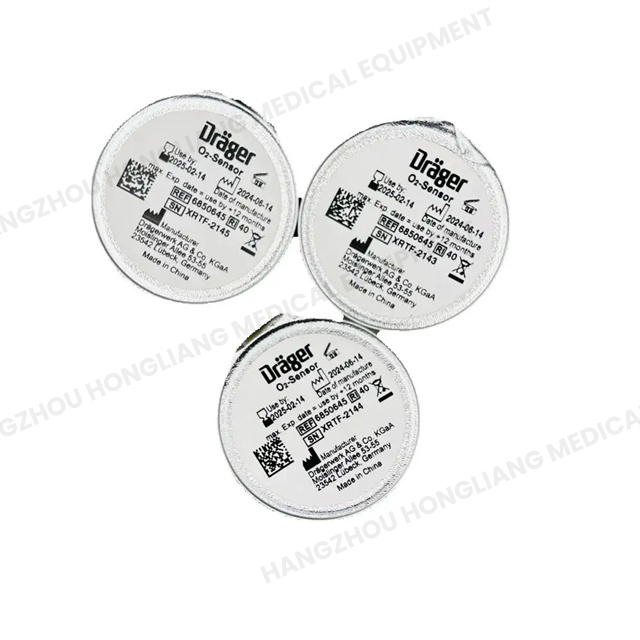
Accurate FiO2 monitoring remains non-negotiable for critical care respiratory equipment. When degrading O2 sensors slip past routine checks, they cause frequent calibration failures. This leads directly to unacceptable clinical downtime. Medical facilities cannot afford these interruptions. The decision point arrives quickly. Replacing the 6850645 Drager Oxygen Sensor requires balancing immediate availability and regulatory compliance against strict budget constraints. Above all, you must never compromise patient safety. This article delivers an objective framework tailored for clinical engineers and procurement managers. We will explore how you can accurately evaluate OEM versus compatible sensor capsules. You will learn to verify critical technical specifications seamlessly. Finally, we will outline strategies to mitigate frustrating calibration risks before they disrupt patient care workflows.
Compatibility Baseline: The 6850645 capsule is engineered specifically for Dräger respiratory devices, including Evita 2, Evita 4, and Babylog systems.
Performance Metrics: Validated replacements must meet strict millivolt (mV) output ranges and response time parameters to pass internal ventilator diagnostics.
Procurement Strategy: Sourcing validated compatible sensors can optimize hospital budgets, provided the supplier guarantees strict regulatory compliance and warranty terms.
Maintenance Efficiency: Bundling routine replacement parts optimizes hospital procurement workflows and reduces equipment downtime.
We must understand the core parameters of this essential part. The sensor operates by generating a precise electrical signal. This signal correlates directly to the oxygen concentration it measures. At 21% oxygen, which represents ambient air, a healthy sensor outputs a specific millivolt (mV) baseline. When exposed to 100% oxygen, this output scales up predictably. Clinical engineers rely on this linearity. If the voltage drifts outside the specified acceptable range, the ventilator software triggers an immediate alarm. You cannot ignore these warnings during active mechanical ventilation.
Response time matters immensely in critical care settings. The T90 metric defines how fast a sensor reaches 90% of its final stable reading. This occurs after a sudden gas concentration change. Precise FiO2 delivery relies on this rapid feedback loop. Sluggish sensors cause dangerous mechanical ventilation delays. They prevent the machine from adjusting oxygen blends quickly enough for acute patients. Below is a breakdown of the typical technical specifications you must verify.
Parameter | Standard Requirement | Clinical Significance |
|---|---|---|
Output Range (21% O2) | 9 to 14 mV (typical) | Establishes the ambient baseline for initial calibration. |
Output Range (100% O2) | 45 to 65 mV (typical) | Confirms linearity and capacity to measure pure oxygen. |
Response Time (T90) | Less than 15 seconds | Ensures rapid ventilator adaptation to changing patient needs. |
Operating Temperature | 10°C to 40°C | Guarantees stability within heated breathing circuits. |
Hardware compatibility remains remarkably strict. Dräger designed this specific capsule for their flagship models. These include the Evita 2, the Evita 4, and the delicate Babylog infant ventilators. You cannot substitute a physically mismatched unit. The internal software algorithms expect the exact voltage curves produced by this specific chemical cell. Using an incorrect model causes persistent calibration loop failures. It also poses severe risks to neonatal patients on Babylog machines.
Design dimensions must match perfectly. The capsule form factor features strict dimensional tolerances. Even a microscopic gap causes dangerous leaks in the breathing circuit. This triggers immediate low-pressure alarms. It also dilutes the delivered oxygen mixture with room air. A high-quality capsule utilizes precisely molded plastic housings. They seat firmly against the ventilator's internal O-rings.
Always inspect the physical capsule housing before installation. Look for hairline cracks or manufacturing defects near the contact pins. Verify the gold-plated contacts remain perfectly clean. Contaminants on these pins alter electrical resistance. This shifts the mV reading artificially and fails the startup sequence.
Procurement teams constantly weigh original parts against aftermarket options. The OEM standard offers undeniable peace of mind. Sourcing original Dräger parts guarantees validated performance directly from the manufacturer. It also simplifies liability tracking if an adverse event occurs. You know exactly who manufactured the component. The OEM warranty covers the part explicitly alongside the ventilator itself. Many hospital policies mandate OEM parts for life-support devices.
However, third-party compatibles offer a viable alternative today. You must vet them rigorously. Always demand to see proper CE marking. You should also request FDA 510(k) clearance documentation. Furthermore, verify the manufacturer holds an active ISO 13485 certification. These credentials prove they meet strict medical manufacturing standards. A certified compatible sensor utilizes the same galvanic cell chemistry as the original. It behaves identically within the breathing circuit.
The budget reality drives this conversation forward. Genuine parts carry a premium price tag. High-quality compatibles often cost significantly less. This price disparity adds up quickly across a large hospital ventilator fleet. You can optimize department resources without sacrificing care quality. The key involves shifting away from unknown online sellers. You must partner with established medical parts distributors who specialize in respiratory components.
Look for clear trust indicators before purchasing. Demand full lot traceability for every capsule. Ask for sample batch testing reports from their factory. Insist on explicit warranty documentation matching the OEM duration. Reliable alternative suppliers readily provide these documents upon request. Avoid any vendor who hesitates to share their compliance data.
Ignoring the FDA 510(k) status when purchasing from overseas distributors.
Failing to match the warranty terms between the OEM and the compatible supplier.
Purchasing based solely on unit price without verifying ISO 13485 manufacturing standards.
Forgetting to ask for batch testing certificates for large bulk orders.
Let us examine the actual operational lifespan closely. Chemical oxygen sensors deplete continuously over time. They consume their internal lead anode as they react with oxygen. High FiO2 environments accelerate this depletion rapidly. A sensor running continuously at 100% oxygen exhausts itself much faster than one monitoring ambient air. Elevated operating temperatures also shorten their life expectancy. High humidity in the breathing circuit degrades the hydrophobic membrane over months of use.
Proper storage extends shelf life significantly. You must master inventory management practices. Keep sensors in sealed, temperature-controlled packaging before deployment. Once you puncture the factory seal, the chemical reaction begins immediately. Never open a package until you are ready to install it. Storing opened sensors in a drawer ruins them within weeks. Ideal storage temperatures typically range between 5°C and 15°C. Avoid freezing the capsules, as this destroys the internal liquid electrolyte.
Biomedical Equipment Technicians (BMETs) often face frustrating calibration challenges. When a new sensor fails its initial 21% or 100% calibration sequence, follow a logical process. First, ensure you allowed enough stabilization time. A newly opened cell needs time to adjust. It must stabilize its chemical reaction in ambient air. Rushing the calibration immediately after opening the bag guarantees a failure code.
Learn to differentiate false failures from genuine depletion. Sometimes, a perfectly good cell fails due to a simple software glitch. Connection errors also mimic a dead sensor. Check the gold contact pins for corrosion or poor seating. A genuinely exhausted cell usually shows a gradual decline in its mV output history. A sudden failure often indicates a loose connection or moisture blocking the sensing membrane.
Wait for Stabilization: Leave the newly installed sensor exposed to room air for at least 15 minutes before running the calibration.
Inspect the Membrane: Check the white PTFE membrane for condensation. Gently wipe away any visible moisture using a sterile, dry cloth.
Verify Seating: Remove the capsule and reinstall it firmly. Ensure the gold pins make solid contact with the ventilator housing.
Run 21% First: Always complete the 21% ambient air calibration successfully before attempting the 100% pure oxygen test.
Check O-Rings: Inspect the surrounding O-rings for wear. A tiny air leak dilutes the 100% oxygen flush, causing the high-end calibration to fail.
Hospitals gain immense efficiency through careful vendor consolidation. Sourcing multiple critical care consumables from a single distributor simplifies logistics immensely. You deal with fewer invoices and streamline your receiving department. This approach builds stronger vendor relationships over time. A trusted distributor prioritizes your facility during supply chain shortages. They understand your specific fleet requirements and stock parts accordingly.
Try implementing cross-department restocking strategies. Strategically align your ventilator maintenance schedules with other monitoring equipment updates. This unified approach prevents isolated stockouts. It also reduces urgent, overnight shipping expenses. Clinical engineering departments function better when parts arrive predictably. Coordinating orders across the ICU, NICU, and surgical suites ensures uniform equipment readiness.
Create a comprehensive related components checklist. When ordering respiratory sensors, evaluate your broader inventory simultaneously. Check stock levels for the Mindray Flow Sensor used heavily in anesthesia machines. Assess your immediate need for the GE M-10 Oxygen Sensor to support alternative ventilator fleets in different wards. Do not forget routine monitor maintenance; secure the Drager Service Kit Lamp LED. Finally, verify telemetry station supplies, such as the GE Printer Roller Assembly.
Evaluate Supplier Service Level Agreements (SLAs) carefully. Set strict criteria when shortlisting vendors for critical components. Look for reasonable minimum order quantities (MOQ). You should not have to buy a three-year supply just to get a fair price. Demand expedited shipping guarantees for critical parts. Finally, insist on generous return policies for defective cells. A reputable vendor replaces a dead-on-arrival sensor without arguing.
Response Time: The vendor must confirm orders and provide tracking numbers within 24 hours.
Defect Policy: The vendor must offer immediate replacement shipping for out-of-box failures.
Compliance Documentation: The vendor must provide updated CE and FDA certificates annually.
Technical Support: The vendor must provide access to engineering support for complex calibration issues.
Replacing a sensor capsule remains a routine clinical engineering task. Yet, it carries critical patient safety implications every single time. You must apply rigorous part validation protocols consistently. This rule applies equally whether you choose OEM or aftermarket solutions. You cannot leave precise FiO2 delivery to chance. The respiratory health of vulnerable ICU and NICU patients depends on accurate measurements.
Take immediate actionable steps today. Instruct your procurement teams to verify all current ventilator fleet models thoroughly. Cross-reference required certifications with your potential suppliers before the next purchasing cycle. Always request comprehensive technical spec sheets. Review these documents thoroughly before committing to any bulk order. Proper preparation prevents costly clinical delays. It ensures your respiratory equipment stands ready for the next patient.
A: A sealed sensor typically lasts 12 to 18 months from its manufacturing date. You must store it in its original, unopened packaging. Keep the temperature between 5°C and 15°C. Heat exposure severely reduces this timeframe. Once you open the protective seal, the chemical depletion begins instantly.
A: The sensor likely needs stabilization time. Newly opened chemical sensors require 10 to 15 minutes exposed to ambient air. They must reach chemical equilibrium before testing. Alternatively, check the gold contact pins. Poor seating inside the ventilator housing prevents accurate voltage transmission, causing instant calibration failures.
A: Generally, using third-party consumables does not void the base equipment warranty. However, you must use CE-marked and FDA-cleared alternatives. If a substandard compatible part directly damages the ventilator housing, the manufacturer might contest the repair claim. Always verify your specific service contract terms regarding consumable usage.
A: Continuous 100% oxygen exposure drastically shortens operational life. While sensors can last over a year in ambient air, running at maximum FiO2 may deplete the cell within 6 to 8 months. High oxygen concentrations accelerate the consumption of the internal lead anode significantly.