




Phone:
+86-187-5829-6389

Views: 0 Author: Site Editor Publish Time: 2026-06-04 Origin: Site
Preventive maintenance on life-support and anesthesia systems is non-negotiable. Balancing OEM procurement costs against reliable clinical uptime remains a constant challenge. Clinical engineering directors face mounting pressure today. They must secure reliable components while navigating shrinking operational budgets. As hospitals strive to maintain operational excellence, finding compliant aftermarket alternatives becomes essential.
We introduce the compatible 6684697 Getinge Maintenance Kit as a highly viable solution. It perfectly aligns preventive maintenance (PM) intervals to strict compliance standards. This article provides a comprehensive technical and commercial evaluation of its core specifications. You will discover device compatibility guidelines and practical implementation strategies. We also explore the substantial financial benefits tied to its extended 24-month warranty. You can use these insights to streamline purchasing decisions. Ultimately, this approach safeguards patient safety and protects modern healthcare facility budgets.
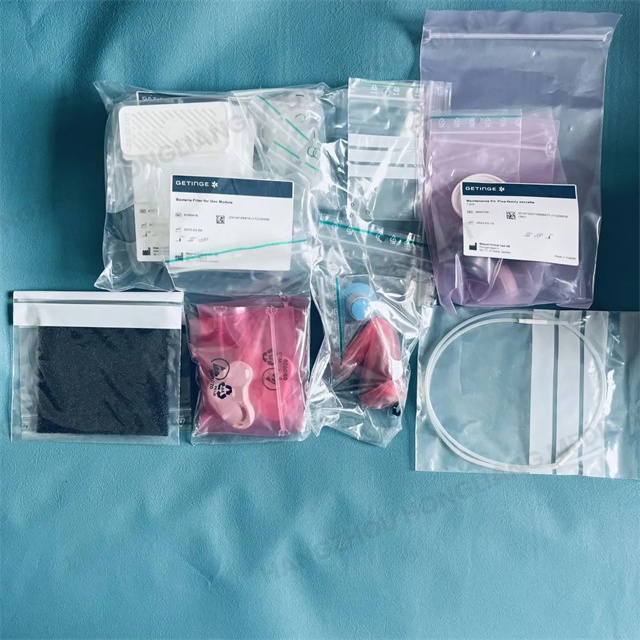
The **6684697 Getinge Maintenance Kit** is engineered to restore baseline performance during annual or 5,000-hour PM intervals for critical care and anesthesia systems.
Extended 24-month warranties on compatible kits offer a measurable cost-of-ownership advantage over standard 90-day OEM guarantees, provided the manufacturer strictly adheres to ISO 13485 standards.
Proper implementation requires installation by certified biomedical professionals to ensure CE/ISO compliance and patient safety.
Consolidating procurement for multi-vendor fleets—including Getinge, Drager, and Puritan Bennett—streamlines hospital supply chains and reduces administrative overhead.
Routine preventive maintenance acts as the primary defense against unexpected equipment failures. The maintenance kit specifically targets high-wear components inside complex pneumatic circuits. Ventilators and anesthesia machines operate continuously under high pressure. These harsh conditions degrade rubber and silicone elements over time. Proactive replacement restores pneumatic integrity and ensures strict infection control.
A comprehensive maintenance service requires specific, high-grade parts. You need reliable replacements during an annual or 5,000-hour service interval. The table below breaks down the typical BOM categories found inside these preventive maintenance kits.
Component Category | Function in Critical Care Equipment | Material Standards |
|---|---|---|
Medical-Grade Seals | Prevent internal gas leaks between manifold chambers. | Biocompatible silicone |
Specialized Filters | Block particulate matter and bacterial crossover. | HEPA / Ultrafine media |
O-Rings | Maintain airtight connections at sensor junctions. | High-durability Viton |
Approved Lubricants | Reduce friction on moving valves and pistons. | Oxygen-safe synthetic compounds |
Delaying component replacement introduces severe clinical risks. Degraded O-rings often cause frustrating leak-test failures during morning machine checkouts. Worn seals can lead to sudden pressure drops. This compromises precise tidal volume delivery to critical patients. Proactive PM schedules prevent these specific issues. Replacing these parts eliminates unplanned downtime and keeps intensive care units functioning smoothly.
Not all aftermarket kits deliver equal reliability. Premium compatible kits must originate from facilities following strict ISO 13485 guidelines. Manufacturers must secure CE certification to validate product safety. These rigorous standards ensure dimensional tolerances remain identical to original equipment parts. Identical tolerances guarantee a perfect physical fit. This prevents microscopic gas leaks and subsequent patient harm.
Best Practice: Always request material safety data sheets (MSDS) and ISO certificates from your supplier. This verifies exact manufacturing tolerances before deploying aftermarket parts.
Equipment compatibility defines the utility of any maintenance package. You must verify exact model matches before opening a kit. The components serve distinct roles depending on the clinical environment.
Surgical environments demand absolute precision. The compatible kit fully supports the Flow-i, Flow-c, and Flow-e anesthesia series. Anesthesia machines require flawless gas mixing capabilities. The kit replaces vital seals inside the breathing circuit. This maintenance guarantees precise delivery of volatile anesthetics. Surgeons and anesthesiologists rely on this stability during complex, multi-hour surgical procedures.
Critical care units present different operational challenges. Ventilators run continuously for days or weeks. The kit applies directly to critical care respiratory platforms. It offers broad cross-compatibility for legacy Maquet lines and modern Getinge Servo models. Supported models include the Servo-i, Servo-u, Servo-n, and Servo-s. Installing fresh components ensures accurate patient triggering and consistent positive end-expiratory pressure (PEEP).
Procurement teams must follow a strict methodology. They need to verify part number cross-references before authorizing a purchase order. Follow these steps to ensure complete accuracy:
Locate the OEM part number inside the specific device service manual.
Cross-reference the service manual number against the compatible kit specification sheet.
Confirm the clinical device software version. Certain physical parts require matching software baselines.
Consult your biomedical engineering lead to validate the 5,000-hour maintenance requirement.
Warranty terms heavily influence hospital purchasing strategies. Evaluating these terms provides insight into product confidence and manufacturer reliability.
Original equipment manufacturers typically offer a baseline 90-day guarantee on consumable maintenance parts. Premium compatible manufacturers disrupt this standard. They frequently offer an extended 24-month warranty. We can map out this stark contrast using a simple comparison chart below.
Warranty Metric | Standard OEM Parts | Premium Compatible Kits |
|---|---|---|
Coverage Duration | 90 Days | 24 Months |
Defect Replacement | Basic exchange | Priority replacement |
Focus Area | Hardware sales margin | Long-term service partnerships |
Many biomedical professionals initially question extended aftermarket warranties. They wonder how independent manufacturers can offer longer guarantees. The answer lies in localized supply chain control. Premium compatible manufacturers maintain specialized manufacturing focuses. They do not split resources across software development and global machine sales. Instead, they dedicate all engineering efforts to material quality and durability. This intense specialization reduces defect rates significantly.
Device failure creates an immediate financial burden. Hospitals must evaluate this risk carefully. Unplanned downtime leads to expensive emergency equipment rentals. Biomedical technicians must work costly overtime hours to troubleshoot unexpected leaks. A 24-month warranty fundamentally alters this risk profile. It provides substantial financial benefits through reduced replacement frequency. Your procurement budget remains protected against early component degradation.
Manufacturers require specific conditions to honor extended warranties. You must document these steps clearly. Standard warranty conditions usually include:
Proof of installation by an OEM-trained or certified technician.
Documentation of standard operating environments (temperature and humidity controls).
Evidence of routine pre-use checks performed by respiratory therapists.
Accurate logging of machine operating hours at the time of installation.
Modern hospitals operate highly complex equipment fleets. They rarely rely on a single manufacturer for all clinical needs.
Managing separate, siloed supply chains creates massive inefficiency. Procurement managers waste valuable time negotiating individual contracts. They must track distinct shipping schedules across various critical care brands. This fragmentation increases administrative overhead. It also complicates inventory management inside the biomedical engineering department.
Partnering with versatile suppliers solves this administrative burden. Capable vendors provide high-grade compatible parts across multiple OEM platforms. Consolidation reduces shipping costs and simplifies invoice processing. Your clinical engineering team gains a single point of contact for technical support. This streamlined approach allows technicians to spend less time tracking packages and more time repairing equipment.
A comprehensive procurement strategy bundles high-turnover consumables together. Clinical engineering teams routinely source different aftermarket parts in a single purchase order. For example, a hospital might need ventilation supplies for a Medtronic fleet. They will easily add a PB840 Exhalation Valve to their cart.
The same hospital might operate Evita or Fabius series machines in another wing. They can seamlessly source a Drager Oxygen Sensor alongside their standard kits. Surgical departments demand perfect visibility during procedures. Procurement can include a Drager Service Kit Lamp LED to maintain OR lighting. Finally, addressing SV series anesthesia machines becomes simple. Teams just add a Mindray Flow Sensor to the consolidated vendor order. This methodology protects margins and ensures total facility readiness.
Buying the right part represents only half the battle. Correct implementation dictates actual clinical success.
Maintenance kits demand strict handling procedures. You must assign these tasks to qualified biomedical technicians. They need OEM training or equivalent certification. Improper installation of O-rings causes immediate system failure. Technicians must use provided, oxygen-safe lubricants carefully. They must avoid contaminating delicate HEPA filter media during the physical swap.
Hardware replacement triggers the need for rigorous software validation. Technicians must run comprehensive pre-use checks immediately. They initiate internal system leak tests through the device interface. Anesthesia machines require vaporizer calibration checks post-service. Ventilators require precise flow sensor zeroing. These software calibrations verify hardware integrity. You cannot return a machine to clinical service until it passes every automated benchmark.
Meticulous record-keeping ensures regulatory compliance. Hospitals rely on a Computerized Maintenance Management System (CMMS). Technicians must log the new part installation immediately. They record specific lot numbers for future traceability. They also input the next expected PM date. This future date usually reflects the next 5,000 hours or a 12-month calendar cycle. Proper documentation defends the hospital during sudden regulatory audits.
Common Mistake: Failing to reset the internal PM timer on the equipment dashboard. This oversight causes continuous alarm triggers for clinical staff, despite a successful hardware service.
Maintaining critical care equipment requires strategic, evidence-based procurement decisions. Sourcing an ISO-compliant compatible maintenance kit offers undeniable advantages. A comprehensive 24-month warranty provides profound peace of mind. It shields operational budgets from premature component failure. Reliable aftermarket parts restore pneumatic integrity and maximize clinical uptime.
Clinical engineers should take proactive next steps today. Request material safety data sheets from potential vendors. Verify active ISO 13485 certificates to confirm manufacturing excellence. Finally, ask about multi-vendor bulk sourcing discounts. Bundling your ventilator, anesthesia, and surgical lighting components streamlines operations. Taking these actionable steps ensures patient safety and optimizes hospital supply chains.
A: You should install this PM kit annually or every 5,000 operating hours. Always refer to your specific machine's service manual. High-acuity environments might reach the hour threshold before a full calendar year passes.
A: Using aftermarket parts does not typically void warranties on out-of-warranty equipment. "Right to Repair" guidelines often protect hospitals. However, check your active service contracts. OEM contracts sometimes dictate specific parts usage during their initial coverage window.
A: Manufacturers require standard traceability. You must provide a valid proof of purchase and a documented installation date. Furthermore, you need proof of technician certification to confirm qualified personnel performed the maintenance.
A: Yes, compatible kits ship globally following international standards. Manufacturers use rigid, protective packaging. This prevents crushing damage to delicate filters and silicone seals. Standard lead times vary by region but generally remain highly competitive.