




Phone:
+86-187-5829-6389

Views: 0 Author: Site Editor Publish Time: 2026-08-17 Origin: Site
Mismatched blood pressure cuffs are a leading, yet entirely preventable, cause of inaccurate Non-Invasive Blood Pressure (NIBP) readings in clinical and advanced home-monitoring environments. Facilities and users often assume that if a cuff physically connects to a monitor's hose, it will function correctly. This misconception leads to clinical errors, compromised patient safety, and regulatory non-compliance due to unvalidated algorithmic pairings. Securing accurate readings requires a systematic evaluation of physical connectors, algorithmic validation, and bladder sizing. This guide breaks down how to verify blood pressure cuff compatibility and select reliable procurement partners for your monitor fleet.
Physical fit does not equal clinical accuracy: A successful connection between a cuff and a monitor hose does not guarantee the monitor's algorithm will interpret the pneumatic signals correctly.
Sizing standards are non-negotiable: Cuff bladder length must cover ≥ 80% of the patient's arm circumference, verified by precise physical measurements, to prevent artificially inflated or deflated readings.
Standardization requires validated partners: Working with a certified NIBP cuff supplier ensures cross-platform compatibility and adherence to ISO 81060-2 clinical validation standards.
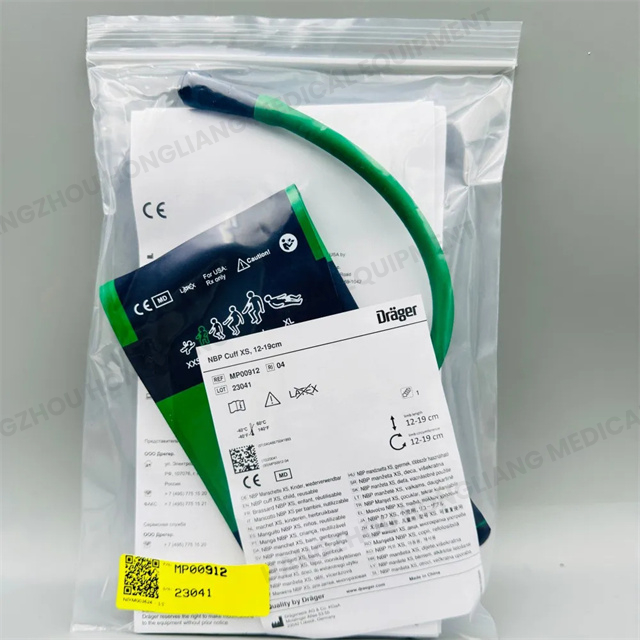
Auditing prevents procurement waste: Mapping your current monitor fleet (e.g., identifying specific needs like a Drager Infinity NIBP cuff) before purchasing prevents the accumulation of unusable inventory.
Different manufacturers use proprietary deflation rates and oscillometric algorithms to calculate systolic and diastolic values. A cuff that mechanically fits onto a monitor hose might still fail clinically if the monitor cannot correctly interpret the pneumatic signals generated by that specific cuff's bladder volume and material elasticity. This technical reality creates an illusion of interchangeability that puts patients at risk in high-acuity settings.
The clinical consequences of mismatching equipment are severe and immediate. Using incompatible cuffs often leads to significant overestimation or underestimation of blood pressure. An overestimated reading might result in administering unnecessary antihypertensive medication, causing dangerous hypotensive episodes. Conversely, an underestimated reading can cause clinicians to miss a hypertensive crisis, delaying essential intervention in emergency departments or intensive care units.
Using unvalidated accessories carries strict regulatory and liability implications. Connecting incompatible cuffs voids manufacturer warranties and violates clinical compliance standards set by regulatory bodies like the FDA and MDR. Ensuring strict compatibility protects the patient from clinical harm and shields the healthcare facility from severe compliance violations during routine audits.
Understanding the structural differences in pneumatic systems is the first step in evaluation. Single-tube and dual-tube systems operate on fundamentally different principles. A single-tube system uses one pathway for both inflation and pressure sensing. A dual-tube system separates these functions, dedicating one line to inflation and the other to sensing. You cannot safely interchange these systems without manufacturer-validated adapters, as doing so will disrupt the pressure feedback loop.
Connector typology varies widely across the industry. Standard connector styles include bayonet, slip-on, screw-type, and locking metal fittings. Forcing incompatible fittings together creates micro-leaks and sudden pressure drops. These leaks force the monitor to over-inflate, causing patient discomfort, or trigger error codes that disrupt continuous monitoring.
Hose length and material degradation further impact system accuracy. Incorrect tubing length alters the total pneumatic volume of the system. This volume change can skew the monitor's pressure calculations, leading to systematic measurement errors even if the cuff itself is the correct size. Polyurethane (PU) and Polyvinyl Chloride (PVC) hoses degrade differently over time, affecting flexibility and seal integrity.
Oscillometric algorithms are highly sensitive to pneumatic variations. Monitors are calibrated to expect specific bladder volumes, elasticity profiles, and inflation dynamics. If you attach a cuff that expands differently than the algorithm expects, the resulting waveform will be misinterpreted, leading to erratic readings.
Specific high-acuity monitors require exact accessory matches. For example, the precise pneumatic requirements for a Drager Infinity NIBP cuff differ significantly from those required by GE CARESCAPE or Philips IntelliVue systems. OEM specifications dictate exactly how the cuff must perform under pressure to yield accurate systolic, diastolic, and mean arterial pressure (MAP) values.
When mixing cuff brands with OEM monitors, third-party validation is mandatory. You must check for independent clinical validation, specifically adherence to ISO 81060-2 standards. This ensures the alternative cuff performs equivalently to the original equipment across a diverse patient population.
Accurate sizing dictates clinical success. The midpoint measurement protocol is the standard for determining arm circumference. You must use a flexible measuring tape at the midpoint between the acromion (shoulder) and the olecranon (elbow). This measurement dictates the correct cuff size range.
The industry standard relies on the 80/40 rule. The cuff bladder length must be at least 80% of the target arm circumference. The bladder width must be at least 40% of that same circumference. Anything less compromises the reading.
Different manufacturers mark their cuffs differently. Evaluating the standardization of index lines is critical. Clear, standardized range indicators prevent user error by visually confirming if the selected cuff fits the patient's measured arm circumference.
Anatomical alignment indicators guide proper placement. The physical design of the cuff includes an "Artery Mark" that must sit directly over the brachial artery. The lower edge should rest 1-2 cm above the bend of the elbow at heart level. This placement impacts both physical and algorithmic compatibility.
Specialty sizing requires additional attention. Bariatric, pediatric, and neonatal cuffs demand distinct algorithmic modes on the monitor. A standard adult algorithm cannot process the pneumatic feedback from a neonatal cuff accurately.
Cuff Size Category | Typical Arm Circumference (cm) | Bladder Width (cm) | Bladder Length (cm) |
|---|---|---|---|
Small Adult | 22 - 26 | 10 - 12 | 22 - 24 |
Standard Adult | 27 - 34 | 13 - 15 | 28 - 30 |
Large Adult | 35 - 44 | 16 - 18 | 36 - 38 |
Adult Thigh / Bariatric | 45 - 52 | 19 - 21 | 40 - 42 |
Sourcing directly from the OEM guarantees algorithmic compatibility. It simplifies warranty claims and removes all validation guesswork. The monitor and the cuff are designed as a closed system. However, OEM cuffs often present higher unit costs. They can also create supply chain bottlenecks and are notoriously difficult to manage in a multi-vendor hospital environment where different departments use different monitor brands.
Working with a specialized NIBP cuff supplier offers significant operational efficiency. It allows facilities to standardize one high-quality cuff brand across multiple monitor types using validated adapters. When evaluating a medical equipment accessories supplier, you must request detailed compatibility matrices. Always check their ISO certifications and review their clinical trial data to ensure their products meet strict accuracy standards.
Standard cuffs occasionally fail to meet unique clinical demands. High-infection isolation wards may require specific disposable materials. Unique patient populations or specialized research applications also demand tailored solutions. In these scenarios, sourcing custom patient monitor accessories is necessary. Be aware of the implementation risks, which include extended timelines for custom validation and the absolute necessity of rigorous prototype testing before clinical deployment.
Verifying compatibility requires a systematic approach. Follow these steps to ensure your equipment functions safely and accurately.
Conduct a Fleet Audit: Inventory all NIBP monitors by make, model, and software version across all departments.
Identify Connector and Tubing Requirements: Document whether each monitor utilizes single or dual-lumen hoses and the exact connector gender/style.
Utilize Manufacturer and Supplier Compatibility Tools: Use online model-specific lookup tools, dropdown matrices, and digital compatibility databases provided by your medical equipment accessories supplier to cross-reference monitor model numbers with validated cuff part numbers.
Cross-Reference Clinical Application Requirements: Match patient-specific anatomical requirements (midpoint arm circumference, placement at heart level, and proper artery marking alignment) with the cuff range limits listed on the product specifications.
Run a Clinical Pilot: Before a fleet-wide rollout, test the shortlisted cuffs against a calibrated standard (e.g., a mercury sphygmomanometer or simulator) to verify accuracy.
By following this structured approach, you secure reliable patient monitor cuff compatibility support and eliminate the guesswork from your procurement process.
Deploying new cuffs across a facility introduces specific implementation challenges. Low-quality, incompatible cuffs lead to frequent replacements due to rapid material degradation and velcro failure. This increases clinical troubleshooting time, pulling nurses away from direct patient care to manage equipment errors.
Adapter management presents a significant logistical hurdle. Using adapter tips to force physical compatibility between different brands increases the risk of lost adapters. More importantly, poorly fitted adapters compromise air seals, leading to slow leaks that ruin measurement accuracy.
Successful implementation relies heavily on training and adoption. Clinical staff must understand the new compatibility protocols. Transitioning from OEM equipment to a standardized third-party supplier requires hands-on training to ensure staff know exactly which adapters pair with which monitors and how to verify secure pneumatic connections.
Blood pressure cuff compatibility is a strict technical requirement, not a suggestion. Physical fit is only the first step; algorithmic validation, precise arm measurement, and correct anatomical placement are what guarantee clinical accuracy. Prioritize suppliers who provide transparent, documented compatibility matrices and adhere to ISO validation standards over those simply offering the lowest price.
Initiate an audit of your current NIBP monitor fleet.
Identify your specific connector and algorithmic needs.
Request clinical validation data from prospective accessory suppliers.
Establish a standardized protocol for measuring patient arm circumference.
A: No. Even if the cuff physically connects to the hose, the monitor's algorithm is calibrated for a specific bladder size, volume, and material elasticity. Using unvalidated brands can result in highly inaccurate readings and compromise patient care.
A: You must consult the digital compatibility tool or matrix provided by the monitor manufacturer or your NIBP cuff supplier. This document cross-references monitor model numbers and software versions with validated cuff part numbers.
A: Use a flexible measuring tape to find the midpoint of the upper arm between the shoulder (acromion) and the elbow (olecranon). Measure the circumference at this midpoint, and select a cuff where the measurement falls within the printed range index on the cuff.
A: Using a cuff that is too small will artificially inflate the blood pressure reading (overestimation), while a cuff that is too large will artificially lower it (underestimation), leading to potential clinical misdiagnoses or incorrect medication dosing.
A: No. Single-tube and dual-tube systems operate on different pneumatic principles. A monitor designed for a dual-tube system cannot accurately measure pressure using a single-tube cuff without a manufacturer-approved adapter and algorithmic support.
A: Yes, reputable aftermarket suppliers design standardized cuffs that, when paired with the correct, validated proprietary connectors, can safely operate across mixed fleets of monitors (e.g., GE, Philips, Drager).