




Phone:
+86-187-5829-6389

Views: 0 Author: Site Editor Publish Time: 2026-08-20 Origin: Site
Continuous temperature monitoring is a foundational clinical metric, but external measurements are highly susceptible to ambient interference, poor sensor design, and placement errors. Procurement teams and clinical engineers face a fragmented market of OEM and aftermarket sensors. Selecting the wrong skin temperature probe for patient monitors leads to clinical inaccuracies, including false hypothermia or hyperthermia alerts. These errors cause premature hardware failure and compatibility issues that disrupt patient care and inflate operational workflows.
This guide provides a technical and operational framework for evaluating surface temperature sensors. We balance clinical accuracy requirements with supply chain reliability and patient safety. You will learn how to navigate thermistor resistance curves, evaluate sensor architectures, and implement rigorous testing protocols to ensure reliable data collection across diverse clinical environments.
Accuracy is dictated by design: Reliable readings require a direct thermal path with minimal thermal resistance and ambient interference; testing protocols must verify variance of less than 0.3 °C.
Compatibility dictates performance: Mismatched thermistor resistance curves between probes and monitors (e.g., standard YSI 400/700 vs. proprietary OEM interfaces like Drager) lead to baseline measurement errors.
Application drives the form factor: The choice between a reusable skin temperature probe and a disposable adhesive patch depends on infection control protocols, patient population (neonatal vs. adult), and monitoring duration.
Supplier vetting mitigates risk: A qualified patient monitor temperature probe supplier must offer rigorous validation data, transparent supply chains, and robust temperature probe compatibility support.
Clinical teams must distinguish between core temperature and peripheral skin temperature. Core temperature reflects the thermal status of deep organs, typically measured via invasive esophageal or rectal probes. Peripheral skin temperature provides surface-level data, which fluctuates based on ambient conditions and local perfusion. You must establish clear clinical guidelines dictating when to transition from invasive Level 1 core probes to non-invasive peripheral skin probes. This transition depends heavily on patient acuity and the specific clinical scenario.
Skin probes measure surface temperature directly. They require advanced monitor algorithms or clinical context to accurately correlate these surface readings with core body temperature. Biomedical technicians often see discrepancies when clinical staff expect a surface sensor to instantly match a core reading. You must educate end-users on the physiological lag time between core temperature changes and peripheral skin manifestations. A surface sensor will always read slightly lower than a core sensor, and the monitoring equipment's software must account for this delta.
Clinical placement directly impacts sensor accuracy. Studies demonstrate that the Right Upper Quadrant (RUQ) area probe has the lowest variance compared to axillary readings. The RUQ provides a highly vascularized surface, offering a more stable thermal profile. Placing a sensor over bony prominences or areas with poor capillary refill guarantees inaccurate data. You must match the sensor design to specific patient populations. Adult patients tolerate standard adhesive patches, while pediatric and neonatal profiles require specialized sensors designed for thin, fragile skin.
Probes must maintain secure contact regardless of patient movement, diaphoresis, or clinical positioning. Poor contact introduces ambient air into the thermal path, immediately degrading measurement accuracy. When a patient sweats profusely, standard adhesives fail. You need sensors equipped with hydrogel or specialized acrylic adhesives that resist moisture while maintaining thermal conductivity. If the sensor lifts even a millimeter off the epidermis, the thermistor begins measuring the room's HVAC output rather than the patient's physiological state.
An optimal thermal path requires minimizing thermal resistance and thermal mass between the sensing element and the patient's skin. The thermistor must sit as close to the epidermis as possible. Engineers must carefully evaluate substrate selection and insulation backing materials. Reflective foam backing shields the sensor from ambient room temperature and clinical airflow. Without adequate insulation, the sensor measures a blend of skin temperature and room air, leading to artificially low readings.
High-quality sensors utilize medical-grade foams that conform to body contours while providing a robust thermal barrier. The internal wiring must also feature low thermal conductivity to prevent heat from wicking away from the thermistor bead up into the cable. Manufacturers often use ultra-thin copper or specialized alloy wires to minimize this heat sink effect. When evaluating a sensor, cut it open. Look at the foam density and the placement of the thermistor bead. If the bead is buried deep within the adhesive rather than sitting flush against the skin contact layer, reject the design.
Clinical tolerances demand strict adherence to industry testing standards. Fluke Biomedical protocols require sensor measurement variance on the Device Under Test (DUT) to be no more than 0.3 °C. Furthermore, the testing uncertainty must remain ≤0.05 °C. Clinical engineers must conduct routine testing using advanced patient simulators, biomedical calibrators, and controlled water baths. These tools verify that the thermistor responds accurately across the entire physiological temperature range.
Always request comprehensive validation documentation from manufacturers. Review these documents to confirm that the sensors meet or exceed established biomedical testing standards before deployment. When setting up a water bath test in your shop, follow these exact steps:
Fill the precision water bath with distilled water and allow it to stabilize at exactly 37.0 °C.
Submerge the reference thermometer and the DUT sensor into the bath, ensuring they are at the same depth.
Allow a three-minute stabilization period for the thermistor to reach thermal equilibrium.
Record the resistance output using a calibrated digital multimeter.
Compare the measured resistance against the manufacturer's published lookup table to verify the temperature reading falls within the ±0.1 °C tolerance.
Standard thermistor probes pose severe dangers in MRI suites. The magnetic fields induce RF heating risks and cause significant signal degradation. You cannot use traditional wire-based sensors in these environments. The copper wiring acts as an antenna, capturing RF energy and converting it into heat, which will cause severe burns on the patient's skin. Instead, specialized systems require fiber optic temperature sensors.
For example, systems like the IRadimed 3880 MRI Patient Monitor utilize advanced optical technology to eliminate RF interference. These sensors use gallium arsenide crystals at the tip of a fiber optic cable. As temperature changes, the crystal's light absorption spectrum shifts, allowing the monitor to calculate temperature without any electrical current near the patient. Clinical staff must follow precise application, preparation, and routing steps for these fiber optic sensors to ensure patient safety and maintain signal integrity during imaging procedures.
A reusable skin temperature probe offers significant operational advantages for long-term, low-acuity monitoring. These sensors feature robust construction designed to withstand the rigors of daily hospital use. They utilize heavy-duty polyurethane jackets and reinforced Kevlar strain reliefs to prevent internal wire breakage during routine handling. However, they require strict adherence to cleaning and disinfection protocols to prevent cross-contamination.
Clinical engineers must evaluate the durability of the cable and the effectiveness of the strain relief. Repeated sterilization cycles expose the thermistor to harsh chemicals and mechanical stress. Over time, this exposure can cause thermistor drift or degradation. Routine calibration checks are essential to ensure reusable probes maintain their accuracy throughout their lifecycle. When inspecting reusable probes, look for micro-cracks in the sensor head potting material. Any breach in the epoxy seal allows cleaning fluids to penetrate the thermistor housing, instantly altering its resistance curve and causing erratic monitor readings.
High-acuity environments, such as the ICU, NICU, and OR, prioritize strict infection control. Single-use and disposable adhesive probes eliminate the risk of cross-contamination between vulnerable patients. When evaluating disposable options, adhesive quality is paramount. The sensors must utilize medical-grade hypoallergenic materials to prevent skin irritation. Moisture-resistance ensures the probe remains attached during diaphoresis or fluid exposure.
For neonatal and pediatric patients, skin tear prevention strategies are mandatory. Suppliers must formulate adhesives that provide secure attachment while allowing for atraumatic removal to protect fragile developing skin. Hydrocolloid adhesives work best for neonates, as they absorb moisture and break down gently without stripping the stratum corneum. You must also evaluate the connector quality on disposable probes. Cheaply manufactured plastic connectors often fail to seat properly in the monitor's trunk cable, causing intermittent signal loss and nuisance alarms at the central nursing station.
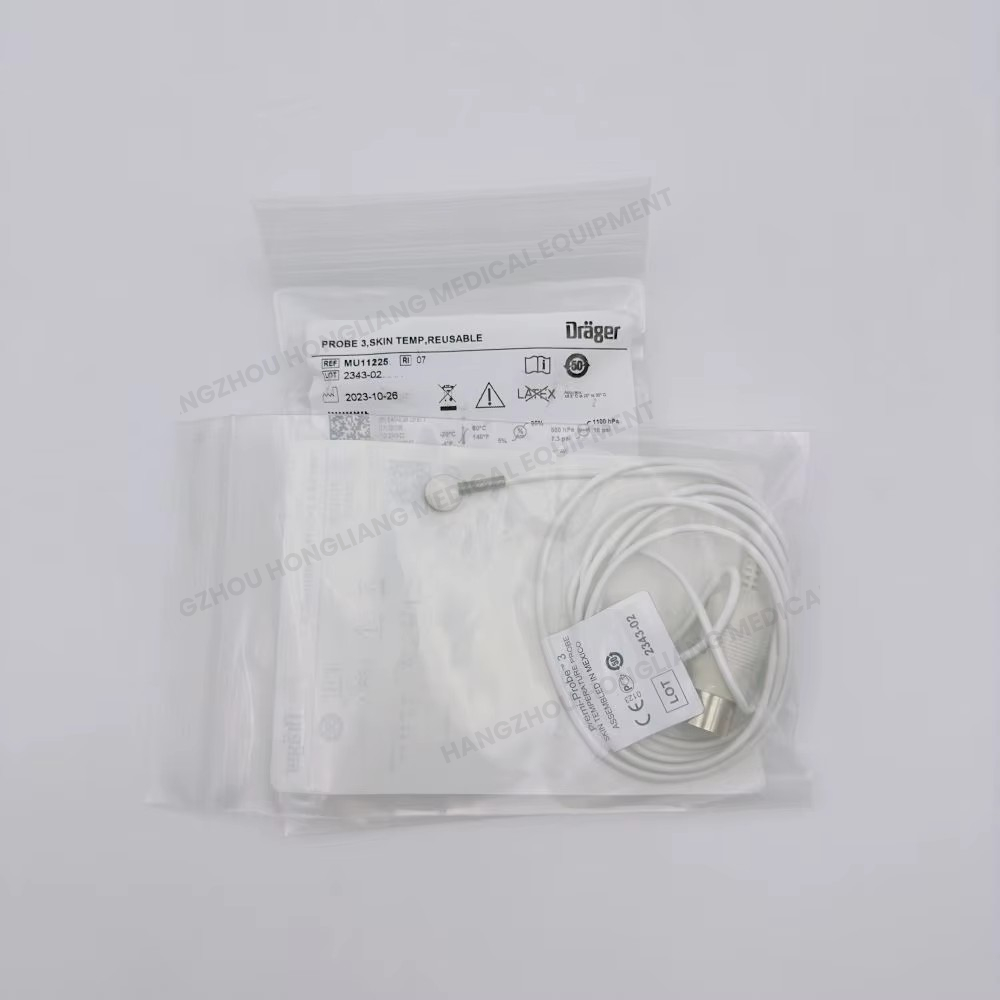
Hospitals frequently weigh the technical and financial trade-offs between purchasing OEM probes and third-party alternatives. For instance, integrating a specific Drager skin temperature probe ensures guaranteed compatibility but often limits supply chain flexibility. The primary risk with aftermarket sensors is thermistor resistance mismatch. Standard YSI 400 series, YSI 700 series, and proprietary curves operate on different resistance profiles. Connecting a mismatched probe causes systemic temperature offsets on the patient monitor, directly compromising patient safety.
Thermistor Type | Resistance at 37°C | Characteristics | Common Applications |
|---|---|---|---|
YSI 400 Series | 1354.6 Ohms | Single thermistor, standard negative temperature coefficient (NTC) curve. | General patient monitoring, widely adopted across various brands. |
YSI 700 Series | 6000 Ohms / 30000 Ohms | Dual thermistor, higher accuracy over a broader range. | Specialized monitoring requiring precise extended temperature ranges. |
Proprietary OEM | Variable | Custom resistance curves specific to the manufacturer. | Specific monitor brands requiring exact OEM or validated aftermarket matches. |
You must physically verify the pinout configuration on the monitor's front panel. A standard 2-pin connector might physically accept a YSI 400 probe, but if the monitor's internal software expects a proprietary 10k Ohm thermistor, the displayed temperature will be off by several degrees. Always consult the monitor's service manual to confirm the exact thermistor specification required before authorizing any aftermarket purchases.
Pre-purchase validation is non-negotiable to prevent equipment damage or clinical errors. You must verify that the sensor's electrical characteristics perfectly match the monitor's input requirements. Robust temperature probe compatibility support from a supplier includes comprehensive cross-reference charts and physical adapter availability. A reliable vendor provides direct engineering and technical support to assist clinical engineering teams during the evaluation phase.
This support ensures seamless integration and prevents costly procurement mistakes that could sideline critical monitoring equipment. When testing a new vendor's compatibility, require them to provide a sample lot. Connect these samples to your specific monitor models using a biomedical simulator set to output exactly 37.0 °C. If the monitor displays anything other than 37.0 °C (±0.1 °C), the vendor's compatibility claim is false. Do not rely solely on marketing brochures; demand empirical testing data and conduct your own verification on the bench.
Selecting a reliable patient monitor temperature probe supplier requires strict evaluation criteria. You must verify ISO 13485 certification, ensuring the manufacturer adheres to medical device quality management standards. Confirm FDA registration or CE marking to guarantee regulatory compliance. Lot traceability is essential for managing potential recalls and tracking manufacturing defects.
Assess the supplier's supply chain resilience. They must maintain adequate safety stock and offer reliable lead times to support bulk hospital procurement without interruption. Ask for their raw material sourcing documentation. If they rely on a single overseas factory for their thermistor beads, a minor supply chain disruption will leave your hospital without critical sensors. A robust supplier maintains redundant manufacturing lines and holds at least a three-month buffer stock of finished goods in a domestic warehouse.
Standard off-the-shelf sensors do not always meet specialized clinical needs. Hospitals often require custom patient monitor accessories to address unique operational challenges. Scenarios requiring custom solutions include unique cable lengths for specific room layouts, specialized connectors for legacy monitors, or specific adhesive formulations for highly sensitive skin.
Evaluate the supplier's rapid prototyping and custom engineering capabilities. They must demonstrate the ability to design, manufacture, and conduct rigorous safety testing for custom accessories, ensuring they meet the same clinical standards as standard products. If your transport teams need a ruggedized sensor with a 90-degree connector to prevent cable strain during patient transfers, the supplier should be able to produce a CAD drawing within a week and deliver functional prototypes within a month.
Sensor drift over time presents a significant clinical risk. This drift is particularly prevalent in reusable models subjected to repeated chemical cleaning and mechanical stress. Clinical engineering teams must implement a robust preventive maintenance schedule. Use biomedical simulators to conduct routine testing and verify sensor accuracy against known standards.
Establish clear protocols for retiring sensors that fail calibration checks. Proactive maintenance prevents degraded sensors from reaching the clinical floor and compromising patient data. Create a tagging system for all reusable probes. Every time a probe passes its annual calibration check, affix a new inspection tag. If a nurse finds a probe without a current tag, they must route it immediately to the biomedical department. This strict chain of custody prevents faulty equipment from circulating in the ICU.
Even the most accurate sensor fails if applied incorrectly. Improper application by clinical staff, such as placing the sensor over bone instead of highly vascularized tissue like the RUQ, severely degrades measurement accuracy. Mitigate this risk through comprehensive vendor-provided training materials. Distribute clinical charts and clear Instructions for Use (IFUs) to all nursing stations.
Regular in-service training ensures staff understand the critical importance of proper site selection, skin preparation, and secure sensor attachment. Teach the staff to clean the application site with an alcohol prep pad and let it dry completely before applying the sensor. This removes skin oils that degrade the adhesive and create microscopic air pockets in the thermal path. Proper site preparation extends the wear time of disposable sensors and guarantees a tighter thermal bond.
Selecting the right surface temperature sensor requires balancing thermal design accuracy, monitor compatibility, and appropriate form factors for specific clinical settings. Prioritize YSI 400 or specific OEM compatibility first to prevent resistance mismatches. Select between reusable and disposable architectures based strictly on infection control requirements and patient acuity. Always verify accuracy tolerances of less than 0.3 °C using comprehensive validation data.
Audit your current patient monitor fleet to identify all required connector types and resistance curves.
Request detailed compatibility matrices and validation documentation from your prospective suppliers.
Initiate a controlled clinical trial with sample probes to evaluate adhesive performance and workflow integration.
Establish a routine biomedical testing schedule to monitor sensor drift and maintain clinical accuracy.
A: Industry standards require the measurement variance on a Device Under Test (DUT) to be no more than 0.3 °C. Additionally, the testing uncertainty must remain ≤0.05 °C during biomedical calibration procedures.
A: Yes, third-party probes function correctly if they precisely match the specific thermistor resistance curve, connector type, and calibration profiles required by the Drager monitoring system.
A: The YSI 400 series utilizes a single thermistor design with a standard resistance curve. The YSI 700 series uses a dual thermistor design, offering different resistance profiles often used for broader temperature range accuracy.
A: Lifespan depends on usage frequency, the harshness of sterilization methods, and cable strain relief durability. Routine biomedical testing is required to detect calibration drift and determine exact replacement intervals.
A: Common causes include poor thermal path contact, exposure to ambient air, incorrect placement over bony prominences instead of vascularized areas like the RUQ, or a resistance mismatch between the probe and monitor.
A: Standard thermistor probes pose severe RF heating risks and are not MRI safe. You must use specialized fiber optic temperature sensors and compatible MRI monitoring systems in these environments.