




Phone:
+86-187-5829-6389

Views: 0 Author: Site Editor Publish Time: 2026-08-19 Origin: Site
Continuous, non-invasive patient temperature monitoring drives clinical decision-making across multiple hospital departments. Even minor thermal variances can indicate severe physiological changes, making accurate data collection non-negotiable. A skin temperature probe serves as the primary sensor for this task, placed directly on a patient's body to measure surface temperature and estimate core thermal values. Inaccurate contact thermometry poses significant risks to patient safety. Compromised neonatal care and skewed perioperative data often stem from poor sensor quality or degraded cables. Operational friction also arises from incompatible or unreliable hardware triggering monitor error codes. Understanding probe mechanics is essential for clinical engineering teams tasked with maintaining hospital fleets. Evaluating disposable versus reusable form factors ensures proper infection control while managing inventory. Establishing strict criteria for selecting a reliable manufacturing partner prevents equipment failure, guarantees exact electrical compatibility, and ensures accurate patient data transmission.
Mechanism of Action: Skin temperature probes rely on contact thermometry, utilizing thermistors or thermocouples to measure conductive heat exchange and estimate core body temperature.
Form Factor Trade-Offs: The choice between disposable and reusable models dictates infection control protocols and ongoing procurement volumes.
Compatibility is Critical: Integrating third-party or custom sensors requires exact impedance matching with existing capital equipment (e.g., patient monitors, radiant warmers).
Supplier Evaluation: A qualified medical temperature probe supplier must provide verifiable testing data, regulatory compliance (ISO/FDA), and robust medical equipment technical support.
Contact thermometry relies on direct physical contact with the skin to measure conductive heat exchanges. The sensor must maintain flush contact with the epidermis to capture thermal data accurately without ambient air interference. Two primary sensor types dominate the medical market: NTC (Negative Temperature Coefficient) thermistors and thermocouples. NTC thermistors serve as the absolute industry standard for medical skin probes. They offer exceptionally high sensitivity and rapid response times within the narrow human body temperature range of 30°C to 45°C. Thermocouples, while durable, are less common in standard patient monitoring due to lower resolution at these specific physiological temperatures.
The electrical resistance principle governs how NTC thermistors function. As the patient's skin temperature rises, the sensor's internal electrical resistance decreases proportionally. The connected patient monitor sends a continuous, low-voltage electrical current through the sensor circuit. It measures the resulting resistance and translates this electrical signal into a readable temperature value using pre-programmed algorithms based on the Steinhart-Hart equation. Precision is paramount during this conversion process, as a resistance deviation of just a few ohms can result in a clinically significant temperature display error.
Sensor Technology | Operational Mechanism | Clinical Sensitivity (30°C - 45°C) | Primary Medical Application |
|---|---|---|---|
NTC Thermistor (400 Series) | Resistance decreases as temperature rises (2252 ohms at 25°C) | Extremely High (±0.1°C) | Continuous patient monitoring, incubators, radiant warmers |
NTC Thermistor (700 Series) | Dual thermistor network for linear output | High (±0.15°C) | Specialized multi-parameter monitors |
Type T Thermocouple | Voltage generated by dissimilar metals (Copper/Constantan) | Moderate (±0.5°C) | Specialized laboratory research, extreme temperature ablation |
A distinct physiological difference exists between skin surface temperature and core body temperature. Skin temperature fluctuates constantly based on environmental exposure, ambient room drafts, and peripheral blood flow vasoconstriction. Core temperature remains tightly regulated by the hypothalamus to protect vital organs. Advanced miniaturized sensors bridge this measurement gap. They use proprietary algorithms programmed into the monitor to calculate thermal energy transfer from inside the body to the skin. This calculation provides a highly accurate estimation of core temperature without requiring invasive esophageal or pulmonary artery catheters.
Certain limitations and environmental variables can impact reading accuracy in the field. Ambient room temperature directly affects the exposed side of the sensor if not properly insulated. Diaphoresis, or heavy sweating, introduces evaporative cooling that artificially lowers surface readings. Clinicians must account for these variables when interpreting thermal data.
To mitigate environmental interference, clinical teams follow specific application protocols:
Clean and dry the application site thoroughly to remove oils and moisture.
Apply the sensor directly over a major vascular bed, such as the temporal artery or axillary region.
Cover the sensor completely with a reflective, insulated adhesive patch to block ambient room air.
Route the cable with a strain relief loop to prevent accidental dislodgement during patient movement.
The Neonatal Intensive Care Unit (NICU) represents a high-stakes clinical environment where temperature regulation dictates survival. Premature infants lack the brown body fat and metabolic capacity to regulate their own temperature. Skin probes attach directly to the neonate's body surface, typically on the right upper quadrant of the abdomen over the liver. This connection creates a vital, automated feedback loop with radiant warmers and closed incubators.
The warming system automatically adjusts its radiant heat output based on real-time sensor data. If the infant's skin temperature drops below the set point (usually 36.5°C), the warmer increases output to prevent cold stress and hypothermia. If the temperature rises, the warmer dials back immediately to avoid hyperthermia and increased insensible water loss. This automated servo-control regulation requires sensors with zero tolerance for calibration drift. A faulty probe reading just 0.5°C too low will cause the warmer to overheat the infant, leading to severe clinical complications.
General anesthesia significantly impairs the body's natural thermoregulatory defenses, causing vasodilation and a rapid redistribution of body heat from the core to the periphery. Skin probes monitor these anesthesia-induced changes during surgical procedures. Continuous monitoring alerts the anesthesia team to dangerous drops in body temperature. Early intervention with forced-air warming blankets prevents post-operative complications like surgical site infections, coagulopathy, and prolonged recovery times in the PACU.
Specialized clinical use cases extend beyond general surgery into outpatient procedures. Dermatologists and plastic surgeons use skin probes to evaluate skin condition and vascular reaction. They monitor surface temperatures before, during, and after laser treatments or cryotherapy. This targeted monitoring prevents thermal burns, ensures the tissue reaches the required therapeutic temperature, and guarantees optimal patient outcomes.
Wearable skin temperature probes are emerging rapidly in high-exertion environments outside the hospital. Athletes, military personnel, and industrial workers face severe heat stress risks in extreme climates. Traditional monitoring methods like rectal thermometers are entirely impractical in the field. Wearable sensors integrated into chest straps or adhesive patches provide continuous, non-invasive data collection during intense physical activity.
Monitoring continuous thermal energy transfer during exercise helps prevent heat exhaustion and exertional heat stroke. Coaches and safety officers track real-time physiological responses via wireless telemetry. This data optimizes athletic performance, dictates mandatory hydration breaks, and ensures strict adherence to occupational safety protocols in foundries or hazardous material suits.
Single-use probes offer one massive clinical advantage that drives their adoption in acute care settings. They completely eliminate the risk of cross-contamination and healthcare-associated infections (HAIs). Each patient receives a brand-new, sterile sensor straight from the packaging. This approach is highly favored in isolation wards, burn units, and surgical suites where infection control protocols are absolute.
Workflow efficiency improves significantly when sterilization processes are eliminated. Nurses and technicians spend less time wiping down cables with harsh chemicals and more time on direct patient care. However, hospitals must manage long-term supply chain dependencies. Recurring procurement requires careful budget forecasting, reliable inventory management, and adequate storage space in supply rooms to prevent stockouts during high census periods.
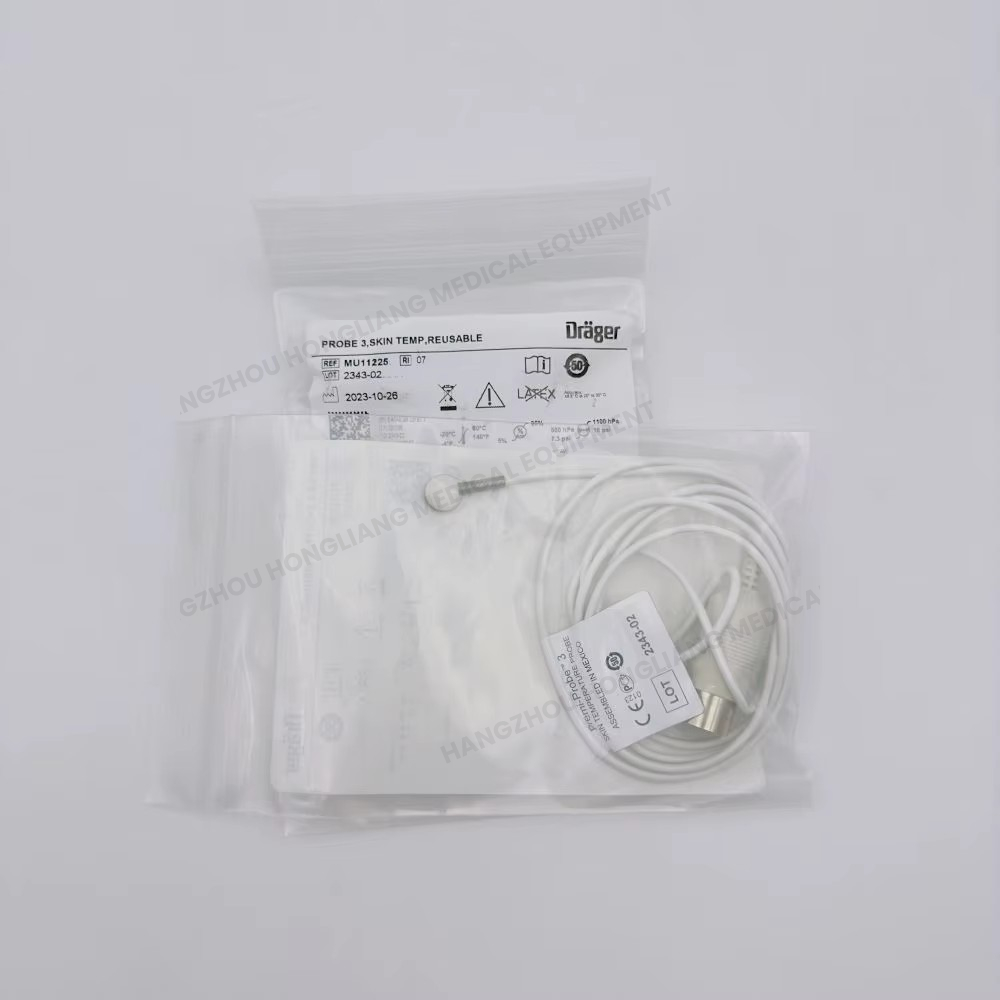
A reusable skin temperature probe provides distinct financial and operational advantages for high-volume departments like general medical-surgical floors. These probes are engineered for longevity and repeated application across hundreds of patients. Material requirements for reusability are stringent. Manufacturers use medical-grade silicone jackets, Kevlar-reinforced internal wiring, and durable strain reliefs at the connector junctions. These materials withstand repeated chemical disinfection with hospital-grade wipes and harsh autoclaving cycles without degrading the internal thermistor.
Implementation risks do exist with reusable models that clinical engineering must manage. Physical degradation over time can lead to calibration drift, causing inaccurate readings. Micro-tears in the cable jacket may harbor pathogens or expose internal wires, creating micro-shock hazards. Regular inspection and strict replacement schedules are mandatory to maintain clinical safety.
Inspection protocol for reusable probes:
Visually inspect the entire length of the cable for cuts, cracks, or exposed shielding.
Check the sensor disk for any separation from the cable housing.
Examine the connector pins for bending, corrosion, or pushed-in contacts.
Perform a resistance check using a calibrated multimeter at a known ambient temperature.
Acceptable clinical variance for medical thermometry is extremely tight. Sensors must maintain an accuracy of ±0.1°C to ±0.2°C within the 25°C to 45°C range. Rigorous skin temperature sensor testing methodologies guarantee this precision before the product leaves the manufacturing floor. Manufacturers utilize automated testing ovens and highly stable dry-well calibrators to verify the resistance output of every batch.
Industry testing standards, such as those outlined by Fluke Biomedical guidelines, dictate strict environmental controls during validation. Calibration environments must not vary by more than 0.3 °C. Ideally, variances remain within 0.03 °C to 0.1 °C. This strict control isolates sensor performance and eliminates human error during the validation process. Clinical engineering teams should request these validation certificates when evaluating new vendors.
Connector mismatch is a primary failure point in sensor procurement. Impedance incompatibility with existing hospital infrastructure triggers immediate error codes or, worse, displays inaccurate temperatures without warning. Sourcing a Drager temperature probe equivalent requires meticulous evaluation. Third-party alternatives must feature exact pin configurations, identical resistance curves (e.g., 400 series vs. 700 series), and proper keying on the plastic housing.
Patient monitors are programmed to recognize specific electrical signatures. If a generic probe deviates from the expected resistance curve by even a few ohms, the monitor will reject the sensor entirely. Engineering teams must validate compatibility by testing samples on the exact firmware versions running on their clinical floor before authorizing bulk purchases.
Patient safety relies heavily on the materials used for the probe housing and the adhesives used to secure them. Patient-contact surfaces must achieve ISO 10993 compliance for cytotoxicity, sensitization, and skin irritation. Prolonged skin contact, sometimes lasting days in the ICU, demands hypoallergenic materials to prevent contact dermatitis or chemical burns.
Reflective adhesive covers secure the probe to the patient. These covers serve a dual purpose. They insulate the sensor from ambient room air, ensuring it only reads skin temperature, and they secure the device firmly against accidental tugs. The adhesive must strike a balance: strong enough to hold during patient transport, yet gentle enough on compromised, elderly, or neonatal skin to prevent epidermal stripping upon removal.
Standard catalog probes suffice for most routine hospital applications. They offer quick deployment, proven compatibility with major monitor brands (Philips, GE, Mindray), and predictable lead times. However, specific scenarios require specialized engineering. A custom medical temperature probe is necessary for novel wearable devices, proprietary OEM equipment, or unique clinical workflows. Unique cable length requirements, specialized connector molding, or integration into multi-parameter harnesses also drive custom requests.
The custom engineering process involves several critical phases executed by the manufacturer:
Requirement Gathering: Defining the exact resistance curve, operating temperature range, and connector pinout.
Rapid Prototyping: Creating 3D-printed housings and hand-soldered cable assemblies for initial fit testing.
Electrical Validation: Testing impedance matching against the target monitor to ensure zero error codes.
Regulatory Documentation: Generating the necessary risk management files and testing reports for FDA or CE market clearance.
A tier-one medical temperature probe supplier operates under strict quality management systems. ISO 13485 certification and FDA facility registration are non-negotiable baselines for any hospital procurement contract. Transparent supply chain sourcing guarantees material consistency, preventing sudden changes in cable flexibility or adhesive quality that frustrate clinical staff.
Ongoing medical equipment technical support is equally critical. Clinical engineering teams require direct access to supplier engineers, not just sales representatives. This support assists with complex troubleshooting, integration testing during monitor fleet upgrades, and managing product lifecycle transitions. A reliable supplier acts as an extension of the hospital's engineering department.
Audit your current patient monitor fleet to document exact connector types, required resistance curves (400 vs. 700 series), and firmware versions.
Request comprehensive technical specification sheets, ISO 10993 biocompatibility reports, and accuracy validation data from potential suppliers before initiating clinical trials.
Contact your clinical engineering team to arrange hands-on sample evaluations for both disposable and reusable sensor models on the actual clinical floor.
Establish a strict, documented inspection protocol for reusable cables to identify physical degradation and calibration drift before they impact patient care.
A: Clinical-grade thermistors must maintain a standard accuracy of ±0.1°C to ±0.2°C. This strict tolerance is required within the human physiological temperature range of 25°C to 45°C to ensure safe patient monitoring and accurate servo-control of warming devices.
A: Testing requires highly stable precision water baths or specialized automated dry-well testing ovens. The testing medium's temperature variance must not exceed 0.3 °C. This strict environmental control prevents human error and verifies true sensor calibration against a reference thermometer.
A: While they physically measure surface temperature, advanced wearable sensors and modern patient monitors use complex thermal energy transfer algorithms. These algorithms calculate heat flow from the body's interior, providing a highly accurate estimation of core body temperature without invasive catheters.
A: Both utilize NTC thermistors. However, OEM probes are guaranteed to match the monitor's specific resistance curve and connector pins perfectly. High-quality generic alternatives must undergo rigorous electrical validation to match these exact specifications and prevent monitor error codes.
A: Lifespan depends heavily on clinical usage frequency and exposure to harsh chemical sterilization cycles. They typically last between 6 months and 2 years. Probes must be replaced immediately if physical damage, cable micro-tears, or resistance drift occurs.
A: Manufacturers utilize strict biocompatible materials. Common components include medical-grade silicone for housings, durable polyurethane or PVC for cables, gold-plated connector pins for signal integrity, and highly stable epoxy-encapsulated NTC thermistors.