




Phone:
+86-187-5829-6389

Views: 0 Author: Site Editor Publish Time: 2026-06-05 Origin: Site
Procurement professionals and clinical engineers actively source the OEM1407-7004-000 Absorbent Canister to maintain GE and Datex-Ohmeda anesthesia fleets. Balancing upfront component costs against strict clinical compliance poses a significant challenge. Exact equipment compatibility and long-term durability remain non-negotiable for patient safety. Sourcing these critical respiratory components often creates logistical headaches for hospital buyers.
This guide provides an objective framework for your purchasing decisions. We will evaluate OEM, compatible, and refurbished purchasing paths for this specific reusable CO2 canister. You will learn how to assess vendor reliability accurately. We also explore ways to bundle preventative maintenance efficiently. By the end, you will possess a clear strategy to optimize procurement while maintaining rigorous clinical standards. Ensuring uninterrupted surgical schedules depends on reliable parts. Sourcing smartly protects both hospital budgets and patient outcomes.
Verified Compatibility: The 1407-7004-000 part is engineered primarily for GE Datex-Ohmeda platforms (including Aespire 7100/7900), requiring precise fitment to prevent critical CO2 bypass leaks.
Cost vs. Workflow: Reusable canisters offer long-term consumable savings but require stringent, standardized sterilization workflows compared to single-use alternatives.
Sourcing Strategy: Evaluating vendors requires looking beyond unit price to assess warranty terms, ISO compliance (for third-party alternatives), and physical integrity validation (for refurbished units).
Maintenance Bundling: Procurement efficiency increases when sourcing the canister alongside concurrent replacement parts like flow and oxygen sensors.
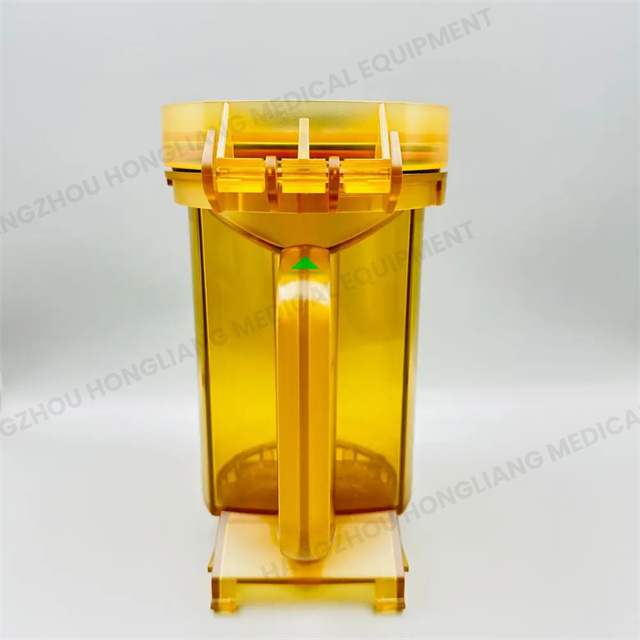
Anesthesia machines rely on precise pneumatic seals to function safely. The reusable canister acts as the primary housing for CO2 absorbent material. Clinical staff exchange this material frequently during long cases.
The "with handle" design offers critical ergonomic support. It allows technicians to safely remove the canister during active surgeries. Rapid intraoperative exchanges prevent dangerous CO2 accumulation in the breathing circuit. Dropping a canister during a swap disrupts the entire surgical workflow. The integrated handle significantly reduces this risk. It provides a secure grip even when staff wear surgical gloves. Fast, seamless replacements keep patient ventilation stable.
Material integrity plays an equally important role. Hospitals fill these canisters using loose soda lime. Soda lime remains highly caustic. Repeated exposure breaks down inferior plastics over time. Manufacturers utilize high-grade polymers to construct this specific canister. These specialized plastics withstand aggressive chemical environments effortlessly. They also resist micro-cracking during routine sterilization cycles. Even microscopic cracks cause severe pneumatic leaks. Such leaks compromise patient ventilation directly. High-quality materials ensure the canister survives daily clinical abuse.
Precise fitment dictates clinical safety. You must match the canister to specific anesthesia delivery systems. GE Datex-Ohmeda models require exact thread tolerances. Utilizing incorrect variants introduces massive clinical risks. Mismatched threads lead directly to seal failures. A failed seal allows exhaled CO2 to bypass the absorbent bed. This triggers patient hypercapnia. Always verify compatibility before authorizing a purchase.
Platform Series | Compatible Models | Primary Risk of Mismatch |
|---|---|---|
GE Datex-Ohmeda Aespire | 7100, 7900 | Thread binding, pneumatic bypass leaks |
GE Datex-Ohmeda Aestiva | Aestiva/5 | Improper seating, failure to pressurize |
Legacy Ohmeda Systems | Excel, Modulus (Select variants) | O-ring degradation, micro-fractures during locking |
Procurement teams face three distinct paths when sourcing this component. Each channel carries unique advantages and specific clinical risks. You must evaluate these options against your facility's budget and risk tolerance.
Purchasing direct OEM parts guarantees baseline compliance. You receive a component manufactured to exact factory tolerances. GE Healthcare backs these parts with a standard manufacturer warranty. This route eliminates compatibility guesswork entirely. However, direct OEM paths command the highest price premium. Centralized supply chains also face frequent shipping delays. Backorders from the manufacturer can leave your machines grounded for weeks. You must balance the guarantee of quality against premium pricing.
Third-party manufacturers offer compelling financial alternatives. You must strictly evaluate their manufacturing credentials. Always verify FDA or CE clearances before issuing a purchase order. Demand proof of ISO 13485 certification from the vendor. These credentials validate their medical quality management systems. Furthermore, demand explicit compatibility guarantees in writing. The lower initial cost must never compromise patient safety. The aftermarket canister must maintain a flawless pneumatic seal under peak pressure. Poorly engineered aftermarket parts introduce severe clinical liabilities.
The secondary market provides another viable procurement route. Used canisters undergo reconditioning to meet operational standards. Vendors must demonstrate highly transparent recertification processes. You should request documented pressure-testing results for every unit. The vendor must guarantee the unit against physical stress-wear. Inspect refurbished parts carefully for polymer clouding upon arrival. Clouding indicates chemical degradation or excessive heat exposure. Only partner with secondary market vendors who specialize in anesthesia equipment.
Transitioning to reusable canisters impacts hospital budgets significantly. You must compare these financial implications objectively against disposable alternatives.
Purchasing a reusable canister requires an upfront capital expenditure. Conversely, relying on pre-filled disposable cartridges spreads costs out over time. However, purchasing bulk absorbent material costs significantly less per surgical case. Over a 12-to-24-month cycle, the reusable model yields substantial consumable savings. High-volume surgical centers notice this financial difference almost immediately. The initial investment pays for itself rapidly through cheaper bulk refills.
Operational realities complicate this financial picture. Reusable systems carry hidden labor requirements. Clinical staff must physically empty the exhausted soda lime between cases. They must manually clean the polymer housing thoroughly. Technicians then sterilize the unit according to strict clinical protocols. You must account for these labor hours in your departmental workflow. If your facility suffers from staffing shortages, manual cleaning becomes a bottleneck. Disposable systems bypass this labor completely. You must weigh consumable savings against your available labor capacity.
Sustainability metrics strongly favor reusable designs. Hospitals increasingly implement aggressive green initiatives. Single-use plastic cartridges generate immense medical waste daily. Switching to reusable canisters offers a measurable reduction in plastic disposal. This simple change aligns clinical departments with overarching environmental goals. It helps facilities meet regional waste reduction mandates efficiently. Sustainable procurement improves the hospital's public profile while lowering disposal fees.
Strategic sourcing improves hospital efficiency drastically. Grouping routine maintenance orders offers massive logistical advantages. It minimizes equipment downtime across the surgical suite.
Consolidating orders reduces shipping overhead considerably. Procurement teams achieve better leverage through bundled purchasing. When you order multiple parts simultaneously, vendors often provide volume discounts. Grouping shipments also reduces the administrative burden on receiving departments. Engineers can service an entire anesthesia machine during a single downtime window. This approach maximizes machine availability for the operating room.
Clinical engineers routinely evaluate breathing circuit sensors during preventative maintenance. While you source the primary canister, review your sensor fleet. Accurate volume delivery requires fully functional flow sensors. You should replace the Datex-Ohmeda Flow Sensor simultaneously. This ensures the entire respiratory block performs optimally. Degraded sensors cause false alarms and erratic ventilation data. Bundling the canister and sensor guarantees a comprehensive system refresh.
Many facilities operate diverse, mixed-fleet environments. You might manage equipment from multiple manufacturers concurrently. Procurement teams can streamline operations by sourcing cross-platform components together. You can easily acquire a Drager Oxygen Sensor alongside your GE parts. You might also secure a Mindray Flow Sensor in the exact same order. This standardizes preventative maintenance schedules across different hospital departments. Working with a comprehensive vendor simplifies mixed-fleet management dramatically.
Do not overlook ancillary hardware during your audit. Minor mechanical wear items degrade silently over time. The GE Printer Roller Assembly frequently requires replacement. Paper jams in the operating room frustrate clinical staff. Bundle these smaller mechanical components into your main canister order. Proactive replacement prevents annoying mid-case equipment failures.
Selecting the right vendor protects your hospital from catastrophic equipment failures. You must vet potential suppliers using strict quality criteria. Use the following checklist to mitigate procurement risks effectively.
Quality Assurance Documentation: Demand Certificates of Conformance (CoC) for every batch. Review warranty periods transparently. You must know if the vendor offers a 90-day or 1-year guarantee. Short warranties on critical components indicate poor manufacturing confidence.
Return Policies: Verify policies on defective units explicitly. Fitment issues happen frequently with aftermarket parts. You need a vendor who accepts returns without excessive restocking fees. They must resolve physical tolerance issues immediately to keep your machines running.
Supply Chain Resiliency: Assess whether the vendor holds domestic inventory. Drop-shipping from overseas creates unpredictable delays. Surgical suites face critical Aircraft on Ground (AOG) equivalent scenarios when machines break. You require a vendor capable of overnight shipping from a local warehouse.
Common mistakes include prioritizing price over supply chain stability. A cheap canister offers zero value if it takes three weeks to arrive. Always prioritize vendors who demonstrate robust logistical capabilities.
Sourcing this specific reusable canister requires careful strategic planning. You must align your hospital policy regarding reusable versus disposable parts with capable vendors. The vendor must prove part integrity through documentation and warranties.
Prioritize suppliers who transparently document compatibility with GE Datex-Ohmeda platforms. Ensure they offer robust post-sale support and easy return policies. Group your purchases to include vital flow and oxygen sensors for maximum efficiency. By following these frameworks, you secure reliable clinical components while protecting your departmental budget.
A: The lifespan depends entirely on clinical volume and cleaning methods rather than a fixed chronological date. Manufacturers recommend visual inspections before every use. You must check for polymer clouding, micro-cracking, or thread damage. Discard the unit immediately if you observe any physical degradation or failing pneumatic seals.
A: You must strictly follow OEM guidelines for manual cleaning. Technicians typically use mild enzymatic detergents to remove caustic soda lime dust. Pay close attention to autoclavability limits. Exceeding recommended temperature thresholds during sterilization will warp the high-grade polymer, destroying the unit's threaded seal.
A: OEM policies generally state that using third-party components does not automatically void the entire warranty. However, if the aftermarket part directly causes a system failure, the OEM may deny coverage for that specific repair. Always verify that your aftermarket vendor provides indemnification and stands behind their product's safety.