




Phone:
+86-187-5829-6389

Views: 0 Author: Site Editor Publish Time: 2026-08-03 Origin: Site
Hospital procurement teams face a constant struggle managing consumable expenses while adhering to strict infection control standards. Standardizing non-invasive blood pressure (NIBP) monitoring across mixed-fleet hospital wards presents a massive operational challenge. Clinical engineers and supply chain managers constantly balance single-patient-use mandates in high-acuity settings with the budget realities of general medical-surgical wards. Every monitor requires a reliable connection to the patient. Evaluating a reusable blood pressure cuff requires looking past the initial purchase price. This technical evaluation guide helps clinical engineers assess reusable NIBP cuffs based on material durability, cross-compatibility, and hygiene protocols. We will break down the exact specifications you need to look for when outfitting your facility, ensuring your equipment fleet remains operational, compliant, and safe for patient use.
Cost vs. Lifespan: A quality reusable blood pressure cuff drastically lowers lifecycle expenses in low-acuity environments, provided it is constructed from high-denier nylon or durable TPU to withstand repeated chemical disinfection.
Fleet Compatibility: Standardizing connectors (e.g., universal 1-tube or 2-tube adapters) is critical to preventing monitor downtime and reducing inventory bloat across mixed fleets (Philips, GE, Mindray, etc.).
Infection Control Realities: The financial viability of reusable cuffs hinges entirely on ward-level compliance with validated, rapid-turnaround cleaning protocols to prevent Healthcare-Associated Infections (HAIs).
Supplier Reliability: Selecting a reputable reusable NIBP cuff supplier requires looking beyond unit price to evaluate medical accessory after-sales support, warranty terms, and regulatory compliance (ISO/FDA/MDR).
Defining the clinical and financial thresholds for switching from disposable to reusable cuffs requires a clear framework. Hospitals must analyze patient turnover rates, acuity levels, and internal sanitation capabilities. Reusable cuffs make sense when the clinical environment supports reliable between-patient cleaning workflows without compromising care speed. You cannot deploy reusable accessories in areas where nursing staff lack the time or resources to properly disinfect them. The decision relies heavily on mapping out the exact patient journey through different departments.
Financial modeling for NIBP cuffs involves comparing two distinct procurement paths. Single-use cuffs carry low upfront costs but generate continuous recurring procurement and medical waste disposal expenses. Reusable alternatives demand a higher initial investment. Their efficiency depends on their functional lifespan and the labor costs associated with manual cleaning. A durable reusable cuff lasting hundreds of inflation cycles quickly offsets its initial premium in the right clinical setting. You must factor in the hidden costs of waste management when evaluating disposable options, as medical waste disposal fees accumulate rapidly in high-volume facilities.
Major equipment manufacturers often publish data claiming single-patient-use cuffs are highly cost-effective because they mitigate infection risks. This disposable cost paradox assumes that reusable cuffs inevitably lead to cross-contamination. Robust sanitation protocols for reusable cuffs protect both patients and hospital budgets. When nursing staff follow validated wipe-down procedures using hospital-grade disinfectants, the infection risk drops significantly. You can maintain high safety standards while utilizing reusable equipment if your facility enforces strict compliance with environmental services guidelines.
Clinical stratification dictates deployment strategies. Outpatient clinics, general medical-surgical wards, and ambulatory care centers serve as ideal environments for reusable cuffs. These areas feature lower cross-contamination risks and stable patient populations. Conversely, isolation wards, burn units, and Neonatal Intensive Care Units (NICU) demand single-use cuffs. The extreme vulnerability of patients in these high-acuity zones overrides any potential savings from reusable accessories. Mapping your hospital by acuity level allows you to deploy the right cuff type to the right department, optimizing both safety and expenditure.
Procuring hospital patient monitor accessories requires a detailed technical assessment. Material choices directly impact clinical accuracy, patient safety, and product longevity. You cannot treat all cuffs as commodities. The engineering behind the fabric, the bladder, and the connectors determines how the product will perform on the floor.
Cuff exterior materials dictate both comfort and cleaning efficiency. Traditional woven nylon offers high durability and patient comfort. It breathes well but requires thorough drying after chemical disinfection to prevent fabric degradation. Coated TPU (thermoplastic polyurethane) provides a fluid-resistant barrier. TPU cuffs are easier to wipe down and dry instantly, though they may feel less breathable against the patient's skin during extended monitoring. Clinical engineers must weigh the benefits of rapid disinfection against patient comfort, especially for bedridden individuals requiring continuous monitoring.
Structural integrity varies between bladder and bladderless designs. Integrated bladderless cuffs feature fewer failure points. They are easier to clean because fluids cannot become trapped between the bladder and the outer shell. Traditional removable-bladder cuffs allow for localized repairs. If the outer nylon tears, technicians can replace the shell while keeping the pneumatic bladder. However, removable bladders carry a higher risk of fluid ingress during aggressive cleaning. Water or cleaning solutions trapped inside the sleeve can harbor bacteria and degrade the rubber bladder over time.
Velcro lifecycle determines the functional end of a cuff. Hook-and-loop closures degrade over time through repeated tearing and chemical exposure. Worn Velcro causes the cuff to pop open during inflation, leading to false readings and repeated pump cycles. Seam construction also matters. RF-welded seams fuse the material at a molecular level, offering superior structural longevity compared to stitched borders, which can fray and harbor bacteria. When evaluating samples, inspect the stitching density and the quality of the RF welds around the hose insertion points.
Comparison of Reusable Cuff Materials and Construction | ||||
Material / Design | Durability Profile | Cleaning Efficiency | Primary Failure Mode | Best Clinical Use Case |
|---|---|---|---|---|
Woven Nylon (Removable Bladder) | High abrasion resistance | Moderate (requires drying time) | Fluid ingress, Velcro wear | General wards, low-fluid environments |
Coated TPU (Bladderless) | Very High chemical resistance | Excellent (wipe and go) | Puncture, seam delamination | High-turnover clinics, emergency triage |
Polyurethane Blend | Moderate flexibility | Good (resists staining) | Material stiffening over time | Ambulatory care, step-down units |
Mismatched connectors create operational hazards. When nurses cannot connect a cuff to a wall-mounted monitor, vitals acquisition is delayed. Standardizing connections across a facility prevents these bottlenecks. You must audit your existing fleet to understand the variety of bayonet, slip-fit, and threaded connectors currently in use. Replacing proprietary connectors with universal quick-disconnect fittings streamlines workflow and reduces the frustration of bedside staff.
Hose configurations generally fall into 1-tube or 2-tube systems. Traditional setups require dedicated hose connections for each monitor type. Advanced modular port systems allow a single cuff to serve both 1-tube and 2-tube systems. These rotatable ports reduce inventory skew counts and prevent hose twisting during patient movement. A modular approach ensures that a cuff traveling with a patient remains compatible with different monitors across various departments. This eliminates the need to swap cuffs when a patient transfers from the ER to the ICU.
Matching third-party accessories with specific OEM hardware requires technical precision. Ensuring accurate pneumatic calibration is critical when deploying a Drager reusable NIBP cuff or a Philips-compatible alternative. The internal volume of the cuff and the resistance of the tubing must match the monitor's algorithm expectations to prevent systemic measurement errors. Clinical engineering teams should perform side-by-side simulator testing using a calibrated NIBP analyzer to verify that third-party cuffs perform identically to OEM versions across all pressure ranges.
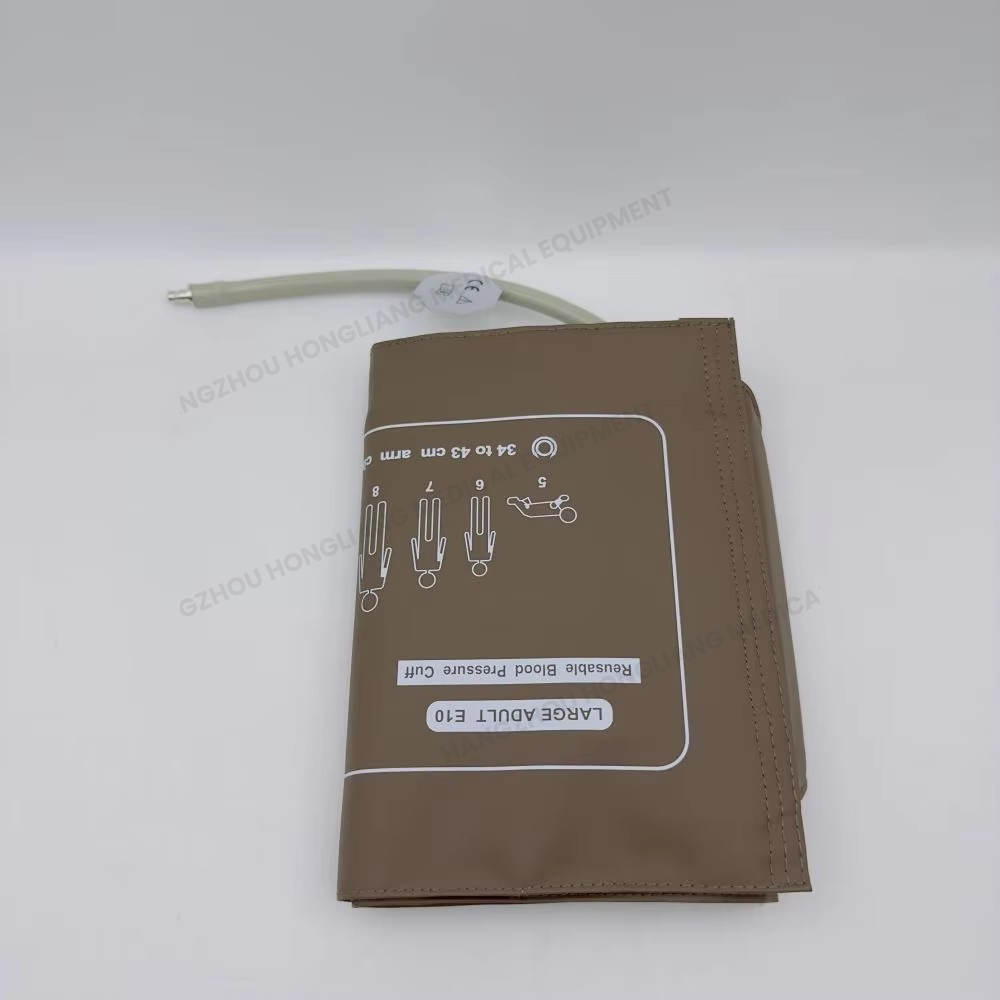
Anatomical alignment guides ensure consistent clinical technique. Clear, printed artery index markers and range guides help nurses position the cuff correctly. Consistent placement across different shifts guarantees accurate readings. Faded or missing markers lead to improper positioning, which skews systolic and diastolic values. You should reject any cuff where the ink easily rubs off during standard alcohol wipe tests.
Sizing accuracy directly impacts patient safety. The American Heart Association (AHA) guidelines warn against over-cuffing or under-cuffing. Using a cuff that is too small artificially elevates blood pressure readings, potentially leading to unnecessary medication administration. Highly visible, color-coded sizing indicators on the cuff exterior allow clinicians to verify correct sizing instantly. Standardizing color codes across your facility prevents confusion and speeds up the selection process during emergencies.
Edge construction affects patient comfort during repeated automated NIBP cycles. Tapered or soft-edge designs mitigate skin shear. Elderly or fragile patients are prone to bruising from rigid cuff edges. Softened borders distribute pressure more evenly across the arm, reducing tissue trauma during high-pressure inflations. Inspect the physical samples for sharp plastic burrs near the seams or stiff nylon edges that could cause friction burns.
Blood pressure cuffs can act as vectors for pathogens like MRSA and Clostridioides difficile if hygiene protocols fail. The economic impact of a single outbreak far exceeds the savings generated by reusing accessories. Proper hygiene management is non-negotiable. You must establish clear, written protocols detailing exactly who is responsible for cleaning the cuffs and what chemicals they are authorized to use.
Chemical resistance dictates how well a cuff survives the hospital environment. Different cuff materials respond uniquely to hospital-grade disinfectants. Quaternary ammonium compounds, bleach wipes, and isopropyl alcohol are standard cleaning agents. The cuff material must withstand these chemicals without degrading the fabric, stiffening the pneumatic tubing, or obscuring the printed index lines. Faded index lines render the cuff clinically useless even if the bladder remains intact. Conduct a soak test with your facility's primary disinfectant to observe material degradation over a 48-hour period.
Integrating cleaning into the clinical workflow requires realistic expectations. Wiping down a TPU cuff between patients takes seconds and fits seamlessly into triage routines. Deep-cleaning or laundering nylon cuffs requires dedicated processing time and backup inventory. Hospitals must align their cuff material choices with their actual, enforceable cleaning workflows. If environmental services cannot guarantee a 24-hour turnaround for laundered cuffs, you must opt for wipeable TPU models to maintain adequate stock levels on the floor.
Consolidating NIBP accessory inventory reduces procurement complexity. Clinical engineering teams should audit their current inventory to identify redundant stock. Implementing universal connector systems standardizes cuffs across disparate monitor brands. This allows supply chain managers to order fewer SKUs in larger volumes. You can negotiate better volume discounts when you consolidate your purchasing around a single, standardized cuff design equipped with interchangeable adapters.
Specialized clinical scenarios often require tailored solutions. A hospital might require a custom reusable medical cuff for unique patient populations. Bariatric sizing, extended hose lengths, or specific tubing configurations for specialized surgical tables fall outside standard catalog offerings. Partnering with a manufacturer capable of custom fabrication ensures all clinical needs are met without compromising monitor compatibility. You should identify these niche requirements during your initial fleet audit to ensure your chosen supplier can accommodate them.
Selecting a reusable NIBP cuff supplier demands rigorous vetting. Quality and regulatory baselines are non-negotiable. A reliable supplier must hold ISO 13485 certification, demonstrating a comprehensive quality management system for medical devices. FDA 510(k) clearance and CE marking under the Medical Device Regulation (MDR) verify that the cuffs meet strict safety and efficacy standards. Request copies of these certificates and verify them with the issuing regulatory bodies before signing any procurement contracts.
Supply chain resilience prevents hospital stock-outs. Evaluate the supplier's ability to maintain consistent stock levels and manage raw material shortages. A supplier with diversified manufacturing capabilities and robust logistics networks ensures that critical accessories arrive on time, regardless of global shipping disruptions. Ask potential vendors about their safety stock policies and their average lead times for bulk orders.
Post-purchase support defines the true value of a supplier partnership. Evaluate the warranty structures and defective product replacement policies. Access to reliable medical accessory after-sales support is essential for troubleshooting pneumatic leak issues or calibration drift. A supplier that stands behind their product reduces long-term maintenance burdens for clinical engineering teams. Ensure the vendor provides direct access to technical specialists rather than routing calls through generic customer service centers.
Reusable blood pressure cuffs offer superior return on investment and environmental sustainability compared to disposables. Their success is strictly bound to material quality, adapter compatibility, and rigorous infection control compliance. Hospitals must align their accessory procurement with their internal hygiene workflows to realize these benefits safely.
Execute the following steps to optimize your NIBP cuff procurement:
Audit your current patient monitor fleet to document all hose configurations and connector types in use.
Define the specific hygiene capabilities and cleaning chemical compatibilities for each hospital department.
Request physical samples and universal adapter kits from a specialized supplier to conduct a hands-on clinical trial.
Establish a standardized cleaning protocol and train nursing staff before rolling out new reusable cuffs facility-wide.
A: A high-quality reusable cuff typically lasts between 10,000 and 50,000 inflation cycles. Lifespan depends heavily on material degradation from chemical disinfectants and the wear rate of the Velcro hook-and-loop closures. Most reputable manufacturers provide a warranty ranging from six months to one year for reusable models.
A: Yes. By utilizing universal adapters, quick-release valves, or modular port systems, a single cuff can connect to monitors from Philips, GE, Mindray, and others. This connector swapping eliminates the need to stock brand-specific cuffs for every monitor in the facility.
A: Use EPA-registered hospital wipes to thoroughly wipe the interior and exterior surfaces. For bladderless TPU cuffs, wipe-downs are sufficient. For traditional nylon cuffs, ensure the material dries completely to prevent fluid ingress and bacterial growth.
A: Look for mandatory regulatory certifications, including ISO 13485 and FDA 510(k) clearance. A reliable supplier will also provide documented clinical validation data proving measurement accuracy and offer robust medical accessory after-sales support with clear warranty terms.
A: Inaccurate readings usually stem from incorrect sizing, improper placement ignoring artery index markers, or worn Velcro that shifts during inflation. Mechanical issues like micro-leaks in the bladder, kinked pneumatic tubes, or degraded O-rings in the connector also cause calibration drift.
A: Bladderless cuffs are generally better for infection control because they lack internal spaces where fluids and bacteria can accumulate. They are easier to wipe down. However, cuffs with removable bladders offer better long-term repairability, as the outer shell can be replaced independently.