


Phone:
+86-187-5829-6389

Views: 0 Author: Site Editor Publish Time: 2025-11-12 Origin: Site
General anesthesia is essential for safe surgeries, rendering patients unconscious and pain-free. It requires a range of specialized equipment to manage the delivery of gases, drugs, and monitor vital functions. In this article, we will explore the key equipment used, including the critical role of the Anesthesia Machine.
An anesthesia machine is the cornerstone of any anesthetic setup. It is responsible for delivering a precise mixture of anesthetic gases and oxygen to the patient. The machine is equipped with essential components that enable the precise administration of volatile anesthetic agents, such as isoflurane, sevoflurane, and nitrous oxide. These machines are integrated with multiple systems, including flow meters, vaporizers, ventilators, and monitoring systems, which work together to ensure the patient’s safety during the procedure.
The anesthesia machine delivers anesthetic drugs by first mixing medical gases like oxygen and nitrous oxide. It then passes the mixture through vaporizers that convert liquid anesthetic agents into vapor. This vapor is precisely mixed with the fresh gas flow and delivered to the patient through the breathing circuit. The machine also ensures that the delivery is continuously monitored, adjusting the flow to maintain the required anesthetic depth.
Precision in the delivery of anesthesia is crucial for patient safety. Too little anesthetic can result in the patient waking up during the procedure, while too much can lead to complications like overdose or respiratory failure. The anesthesia machine plays a vital role in ensuring the correct dosage of anesthetic agents is delivered continuously and safely throughout the procedure.
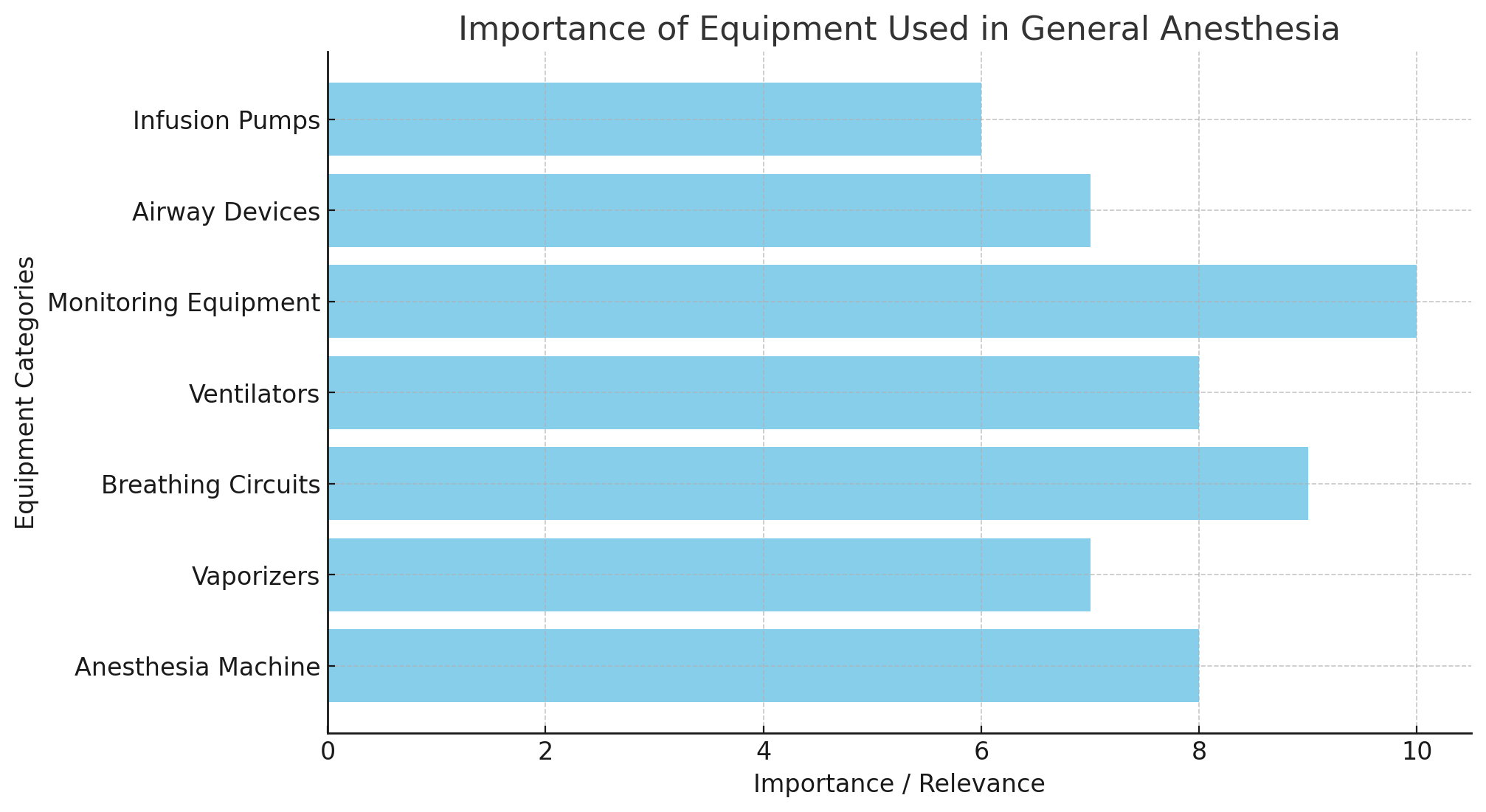
Breathing circuits, also known as the anesthesia breathing system, are essential for delivering oxygen and anesthetic gases to the patient. There are two primary types of breathing circuits: open and closed. In most surgeries, closed circuits are preferred because they are more efficient and allow for the rebreathing of exhaled gases, which reduces the waste of anesthetic agents. These systems often include a reservoir bag to monitor the patient's respiration and maintain pressure within the system.
Airway management is another crucial aspect of general anesthesia. It ensures that the patient’s airway is secured and open throughout the procedure.
● Laryngoscopes: These devices help visualize the vocal cords and facilitate the insertion of an endotracheal tube (ET tube), securing the airway for mechanical ventilation.
● Endotracheal Tubes (ETTs): These are inserted into the trachea to maintain the airway and allow for ventilation.
● Laryngeal Mask Airways (LMAs): LMAs are an alternative to ET tubes and are used for short procedures where intubation is not necessary.
● Bag-Valve Masks (BVMs): These masks are used in emergency situations or during induction to provide manual ventilation to patients who are not breathing adequately.
A vaporizer is a device attached to the anesthesia machine that converts liquid anesthetics into vapor, which is then delivered to the patient. This process is essential because most anesthetics, like isoflurane and sevoflurane, are liquids at room temperature. Vaporizers ensure the precise delivery of these anesthetic agents by controlling the concentration of the vapor mixed with the fresh gas flow.
The vaporization process in the anesthesia machine works by heating the liquid anesthetic to its boiling point. The liquid then turns into vapor, which is subsequently mixed with gases like oxygen and nitrous oxide. The vaporizer allows anesthesiologists to control the exact concentration of anesthetic agent that the patient receives, ensuring the patient remains in the desired state of anesthesia.
There are different types of vaporizers used in anesthesia machines, including:
● Isoflurane Vaporizers: Typically used in surgeries requiring a stable and controlled depth of anesthesia.
● Sevoflurane Vaporizers: Preferred for their quick onset and recovery times, making them ideal for outpatient surgeries.
● Desflurane Vaporizers: Known for their rapid onset and quick recovery, though they require more sophisticated vaporizer systems due to their low boiling point.
Ventilators are critical for patients who are unable to breathe independently under general anesthesia. These devices provide mechanical ventilation to maintain proper oxygenation and ventilation. Ventilators can be pressure-controlled or volume-controlled, allowing anesthesiologists to adjust the mode based on the patient’s needs.
● Pressure-Controlled Ventilation: This mode delivers a set pressure with each breath, allowing for more precise control of airway pressure.
● Volume-Controlled Ventilation: In this mode, a set volume of air is delivered with each breath, providing more consistent tidal volumes.
Suction devices are used to clear any obstruction in the airway, such as mucus, blood, or other secretions. These devices are crucial for maintaining a clear airway, ensuring that the patient can breathe adequately and preventing aspiration during the procedure.
Continuous monitoring of a patient’s vital signs is crucial during general anesthesia. Several types of monitoring equipment are used to track the patient's condition and adjust anesthesia delivery accordingly.
These monitors track critical parameters like heart rate, blood pressure, respiratory rate, and oxygen saturation. This real-time data allows anesthesiologists to detect any changes in the patient’s condition and make timely adjustments to the anesthesia regimen.
Capnography measures the concentration of carbon dioxide (CO2) in exhaled air, providing valuable insights into the patient's ventilation status. It helps identify issues like hypoventilation or airway obstruction early, allowing for immediate intervention.
Maintaining a stable body temperature is vital during anesthesia. Temperature monitors track the patient's body temperature to prevent hypothermia or hyperthermia, which can affect drug metabolism and recovery time.
IV pumps control the delivery of anesthetic medications and fluids during surgery. These pumps provide precise control over the administration rate, ensuring that the correct dosage is delivered to the patient over time.
Syringe pumps are used to deliver medications like propofol or opioids in a controlled and precise manner. They allow anesthesiologists to titrate doses based on the patient’s response.
Fluid warmers are used to warm intravenous fluids and blood products before they are administered to the patient, preventing hypothermia and ensuring patient safety during longer surgeries.
Anesthesia scavenging systems capture excess anesthetic gases that escape into the operating room environment, preventing healthcare workers from exposure to potentially harmful gases.
Sterilization equipment like autoclaves is used to disinfect surgical instruments and airway management tools before and after procedures. Personal protective equipment (PPE) also plays a key role in maintaining a sterile and safe environment for both patients and healthcare providers.
General anesthesia depends on specialized equipment for safe and effective sedation during surgeries. Key devices include anesthesia machines, vaporizers, airway tools, and monitoring systems, all essential for patient safety. With advancing technology, these tools provide greater precision. Companies like Hangzhou Hongliang Medical Equipment offer high-quality equipment, ensuring safer anesthesia delivery.
A: An anesthesia machine is a vital piece of equipment used to deliver anesthetic gases and drugs during surgery. It ensures that patients are kept unconscious and pain-free.
A: The anesthesia machine mixes medical gases and vaporizes anesthetic agents. It delivers a controlled mixture to the patient to maintain appropriate anesthesia levels.
A: Precision is critical for safe anesthesia delivery, ensuring the correct dosage of anesthetic gases and preventing overdose or underdose during surgery.
A: Key components include vaporizers, flowmeters, ventilators, and breathing circuits. Each plays a crucial role in delivering and monitoring anesthesia.
A: Vaporizers convert liquid anesthetic agents into vapor. They control the concentration of anesthetic gases delivered to the patient, ensuring precise dosing.
A: The anesthesia machine uses breathing circuits and airway devices like laryngoscopes and endotracheal tubes to secure and maintain the patient's airway during surgery.
A: Monitoring equipment tracks vital signs, such as heart rate, oxygen levels, and carbon dioxide, ensuring the patient remains stable during the procedure.