


Phone:
+86-187-5829-6389

Views: 0 Author: Site Editor Publish Time: 2025-11-06 Origin: Site
Anesthesia is essential in modern medical procedures, allowing patients to undergo surgery pain-free. But what is the main drug used in anesthesia? This question can be tricky, as it varies depending on the procedure. In this article, we’ll explore the main drugs used in anesthesia, including their roles and how the Anesthesia Machine delivers them safely to ensure effective surgery. You’ll learn about general anesthetics, pain management drugs, and the future of anesthesia drug development.
Anesthesia drugs are primarily divided into three categories: general anesthesia, local anesthesia, and regional anesthesia. Each type of anesthesia serves a different purpose and uses specific drugs to manage pain and ensure patient safety during procedures.
General anesthesia is used for major surgeries and procedures where the patient must be completely unconscious. These drugs induce a state of deep sedation and prevent any pain sensations during surgery.
● Some of the most commonly used drugs in general anesthesia include:Propofol: The standard choice for inducing and maintaining anesthesia. It has a rapid onset and short recovery time, making it ideal for many surgeries. Propofol works by enhancing the effects of GABA, a neurotransmitter that inhibits brain activity, thus leading to sedation.
● Sevoflurane: An inhalational anesthetic used to induce and maintain general anesthesia, especially in pediatric and outpatient procedures. Sevoflurane is favored due to its rapid onset and minimal irritation to the airways.
● Isoflurane: A volatile anesthetic used for long surgeries. It offers stable anesthesia but can irritate the respiratory system, requiring careful management.
These drugs work together to ensure the patient remains unconscious and free from pain during the procedure. The use of Anesthesia Machine is crucial here to administer the appropriate dosage and monitor the patient's vitals.
Local anesthesia is used to numb specific parts of the body for minor procedures. This type of anesthesia allows the patient to remain conscious while the surgical area is numbed.
● Lidocaine: A fast-acting local anesthetic commonly used for minor surgeries and dental procedures.
● Bupivacaine: Often used for longer procedures, providing prolonged numbness. It's frequently used in epidural anesthesia.
These local anesthetics block nerve signals in the targeted area, preventing pain while allowing the patient to remain alert and aware.
Regional anesthesia involves numbing a larger area of the body, such as a limb or the lower half of the body. This type of anesthesia is often used during childbirth or for surgeries involving the limbs.
● Ropivacaine: A popular drug for spinal and epidural anesthesia, especially during labor or lower-body surgeries.
● Chloroprocaine: A short-acting local anesthetic used in regional blocks for fast-acting pain relief.
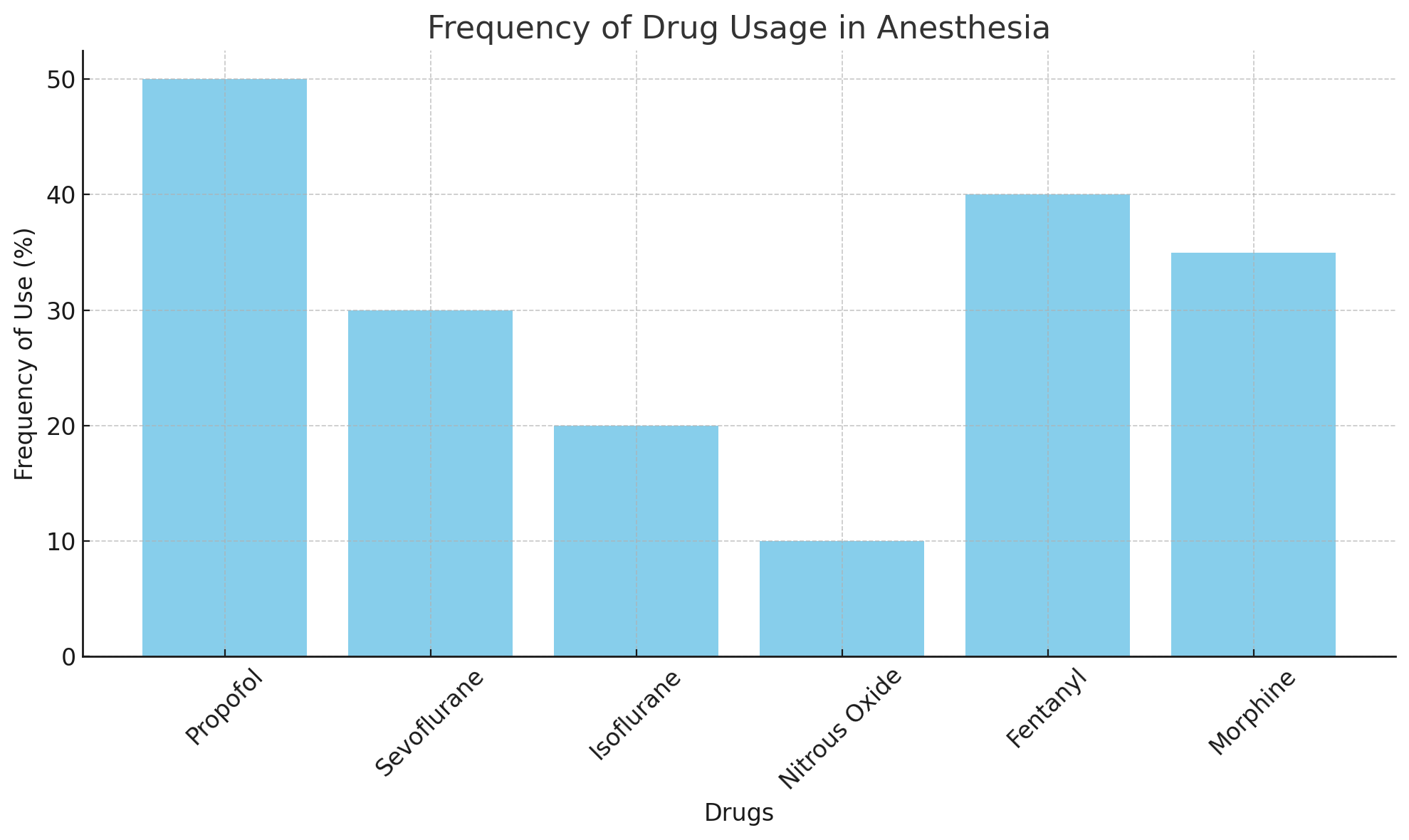
The main drug used for general anesthesia is typically Propofol. It is the preferred intravenous (IV) anesthetic due to its rapid onset and short duration of action. Propofol is commonly used in both induction and maintenance of anesthesia. It is especially effective for surgeries that require quick recovery times.
Propofol is known for its smooth induction and emergence from anesthesia. It is easy to control, which allows anesthesiologists to precisely adjust the dosage based on the patient's needs.
● Quick onset and short duration
● Less "hangover" effect (fewer after-effects such as nausea or dizziness)
● Easy to administer and control with the Anesthesia Machine
Propofol works by enhancing the effects of GABA in the brain, leading to sedation. Despite its many benefits, it must be used carefully, as it can cause hypotension (low blood pressure) or respiratory depression, especially if administered too quickly.
● Etomidate: Used for patients with compromised cardiovascular function as it causes less cardiovascular depression.
● Ketamine: Known for its unique dissociative properties, ketamine is sometimes used in trauma surgeries or when pain relief is required along with sedation.
Inhaled anesthetics are gases that are administered through a mask or breathing tube. They are often used to maintain anesthesia during surgery after induction with an IV anesthetic like Propofol.
● Sevoflurane: Often used in pediatric and outpatient surgeries due to its rapid onset and quick recovery time.
● Desflurane: Known for its rapid onset and recovery, making it ideal for outpatient procedures.
Both of these anesthetics are delivered through the Anesthesia Machine and allow anesthesiologists to precisely control the depth of anesthesia.
Nitrous oxide, also known as "laughing gas," is often used in combination with other anesthetics for pain relief and sedation. It is commonly used in dental procedures and minor surgeries. Nitrous oxide has anxiolytic (anxiety-reducing) and analgesic (pain-relieving) properties.
Managing pain is a crucial aspect of anesthesia. Opioids and non-opioids are commonly used in combination with anesthetic agents to ensure that patients remain pain-free during and after surgery.
Opioid analgesics, such as Fentanyl and Morphine, are often used during surgeries to provide powerful pain relief. They are administered through an IV or epidurally and can be combined with other anesthetics for balanced anesthesia.
● Acetaminophen: Often used post-surgery to manage mild pain and reduce the need for opioids.
● Ketorolac: A non-steroidal anti-inflammatory drug (NSAID) used for post-operative pain.
Before and during procedures, patients may be given sedatives and anxiolytics to relieve anxiety and promote relaxation.
● Midazolam: Often used to relax patients and induce amnesia before surgery. It is commonly administered via an IV.
● Diazepam: Used for longer sedation, often during more invasive procedures.
These drugs work by depressing the central nervous system, allowing patients to feel calm and relaxed before undergoing surgery. They are often used alongside general anesthetics to reduce the amount of anesthesia required.
The safety of anesthesia drugs is of utmost importance. Anesthesiologists carefully monitor the patient's vitals, including heart rate, blood pressure, and oxygen levels, to adjust the drug dosages as necessary. The Anesthesia Machine plays a crucial role in this process by allowing for real-time monitoring and adjusting the amount of anesthetic being delivered.
Anesthesia drugs can interact with other medications, so anesthesiologists must carefully review the patient’s medical history. Some common side effects of anesthesia drugs include respiratory depression, nausea, and dizziness. However, advancements in monitoring technology have significantly reduced these risks.
The field of anesthesia is constantly evolving. New drugs and technologies are emerging to improve patient safety, minimize side effects, and enhance recovery times.
● Target-Controlled Infusion (TCI): This system allows for precise control of anesthetic drug levels in the bloodstream, ensuring optimal dosage and safety.
● Processed EEG Monitoring: Used to monitor the depth of anesthesia, ensuring that the patient remains appropriately sedated during surgery.
The main drug used in anesthesia varies based on the procedure, patient condition, and desired effects. Propofol is the standard for general anesthesia, while other drugs manage pain, anxiety, and sedation. Ongoing advancements in anesthesia technology enhance patient safety and surgical outcomes. The Anesthesia Machine plays a key role in delivering and monitoring these drugs during surgery. At Hangzhou Hongliang Medical Equipment, our cutting-edge equipment supports anesthesiologists in ensuring efficient and safe procedures for patients.
A: Propofol is the most commonly used drug for general anesthesia, providing fast onset and quick recovery. It is often administered through the Anesthesia Machine to ensure precise control during surgery.
A: The Anesthesia Machine delivers anesthetic drugs like propofol, sevoflurane, and nitrous oxide through controlled flow and dosage, ensuring a safe and balanced anesthetic state.
A: Propofol is preferred for its rapid onset, minimal side effects, and fast recovery. It is typically administered using an Anesthesia Machine for precise control during surgical procedures.
A: Yes, the Anesthesia Machine can deliver a combination of drugs, including analgesics and muscle relaxants, to provide comprehensive anesthesia tailored to the procedure.
A: The Anesthesia Machine monitors the patient's vital signs and drug delivery, ensuring the appropriate depth of anesthesia is maintained throughout the procedure.