


Phone:
+86-187-5829-6389

Views: 0 Author: Site Editor Publish Time: 2025-06-30 Origin: Site
In the rapidly evolving field of medical technology, precision and reliability are paramount. Among the many critical components of medical devices, flow sensors play a vital role in ensuring accurate monitoring and control of gases and liquids that patients rely on. Whether in ventilators, anesthesia machines, or spirometers, the ability to measure flow accurately can directly impact patient safety and therapeutic outcomes.
Selecting the right flow sensor is more than just picking a component—it's about ensuring that the entire medical device functions optimally. The wrong sensor choice could lead to inaccurate readings, delayed responses, or even device failure, which may jeopardize patient health.
Before diving into the technical specifications of flow sensors, it is essential to first thoroughly understand the application context in which the sensor will operate. Medical devices vary widely in their flow measurement needs, and no single sensor fits all situations.
Different medical devices measure flow for distinct purposes:
Ventilators: Measure airflow to assist or control patient breathing, monitoring both inhalation and exhalation.
Anesthesia Machines: Deliver and monitor precise mixtures of anesthetic gases.
Spirometers: Assess lung function by measuring the volume and flow of air inhaled and exhaled.
Infusion Pumps: Measure liquid flow rates to ensure accurate drug delivery.
Oxygen Concentrators: Regulate oxygen flow to patients requiring supplemental oxygen.
Each device demands specific sensor capabilities aligned with the nature of the flow (gas or liquid), flow rate range, and accuracy needed.
Flow sensors in medical devices often need to detect different flow patterns:
Unidirectional Flow: Flow occurs in a single direction. Common in devices like infusion pumps.
Bidirectional Flow: Flow reverses direction, such as in respiratory devices where inhalation and exhalation occur.
Accurately defining the flow range is crucial. For example, ventilators require sensors that can detect very low flow rates during patient-triggered breaths and much higher flows during mechanical ventilation. Failure to correctly specify these ranges can result in inaccurate measurements or sensor saturation.
Medical devices often operate in challenging environments. Sensors must maintain performance despite:
Humidity: Respiratory devices involve moist air, which can cause sensor drift or corrosion.
Temperature Fluctuations: Devices used in different climates or near patient bodies require sensors tolerant of temperature changes.
Pressure Variations: Pressure swings in anesthesia circuits or respiratory systems impact sensor accuracy.
Understanding these environmental factors helps in selecting sensors that remain stable and reliable throughout the device's usage.
Once application requirements are clear, the next step is to understand the available flow sensor technologies and their suitability for medical devices.
Thermal mass flow sensors operate by measuring the heat transfer from a heated element to the flowing gas. The amount of heat lost correlates directly with the mass flow rate.
Advantages:
High sensitivity to low flow rates, ideal for respiratory monitoring.
No moving parts, reducing mechanical wear and maintenance.
Can measure mass flow directly without needing pressure or temperature compensation.
Limitations:
Sensitive to humidity and condensation, which may require protective measures.
Typically used for gas flow measurement, not liquids.
These sensors measure the pressure difference across a flow restriction (like an orifice or Venturi tube) to infer flow rate.
Advantages:
Well-established technology with proven accuracy.
Suitable for a wide range of flow rates.
Can measure both gases and liquids.
Limitations:
Requires insertion of a flow restriction, causing some pressure drop.
Moving parts or narrow channels can clog or wear over time.
May need temperature and pressure compensation for accuracy.
Ultrasonic sensors use sound waves to measure the velocity of the fluid moving through a pipe or channel.
Advantages:
Non-invasive and can be clamp-on or inline.
No moving parts and minimal pressure drop.
High accuracy and fast response time.
Suitable for both liquids and gases.
Limitations:
Can be more expensive than other sensor types.
Performance affected by the presence of bubbles or particulates in liquids.
Turbine flow sensors: Use a spinning rotor to measure flow; less common due to moving parts.
Electromagnetic sensors: Used mainly for conductive liquids.
Coriolis flow sensors: Highly accurate, measuring mass flow but typically larger and costlier.
Each technology has trade-offs, so understanding device requirements is critical in matching the sensor technology to the application.
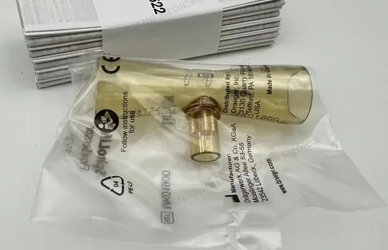
When comparing flow sensors, a number of key technical specifications need to be carefully evaluated to ensure the sensor meets the medical device's demands.
Medical devices require sensors that deliver precise and reliable readings, often within tight tolerances. Accuracy refers to how close the sensor measurement is to the true flow, while sensitivity indicates the sensor's ability to detect small changes in flow.
For example, ventilators may require accuracy within ±2% of reading or better, especially at low flows critical for patient-triggered breaths.
The sensor must react quickly to changes in flow to provide real-time data. A fast response time (milliseconds range) is essential in devices like ventilators where delayed feedback could cause improper ventilation or alarm delays.
Choosing a sensor with an appropriate flow range is essential to avoid saturation or under-range readings. The sensor should cover the full expected flow spectrum, including:
Minimum flow rates (to detect small breaths)
Maximum flow rates (during forced ventilation or coughing)
Medical devices often have strict size constraints, particularly portable or handheld devices. Compact sensors that fit easily without compromising functionality are preferred.
Battery-powered or portable devices benefit from sensors with low power consumption to extend device operational time without frequent recharging or battery replacement.
Medical sensors must withstand repeated sterilization, cleaning, or exposure to disinfectants without degradation. Materials and sensor construction should be compatible with:
Autoclaving
Chemical sterilization (e.g., alcohol, hydrogen peroxide)
Ultrasonic cleaning
This is especially important for reusable sensors.
Medical device manufacturers face the choice between disposable and reusable flow sensors, each with pros and cons.
Disposable sensors are designed for single-use and then discarded. They are often made of lower-cost materials and are pre-sterilized.
Advantages:
Eliminates risk of cross-contamination between patients.
No need for sterilization processes, saving time and labor.
Regulatory approval can be simpler for single-use devices.
Limitations:
Generates medical waste, raising environmental concerns.
Long-term cost may be higher due to continuous purchasing.
Performance may be lower compared to high-end reusable sensors.
Reusable sensors are built to endure multiple sterilization cycles and long-term use.
Benefits:
Cost-effective over many uses.
Often have higher precision and durability.
Suitable for devices requiring consistent high performance.
Considerations:
Require validated cleaning and sterilization protocols.
Potential risk of contamination if sterilization is not thorough.
Higher upfront cost.
Hospitals and clinics weigh the trade-off between cost, safety, and environmental impact when choosing disposable vs reusable sensors. Sometimes, clinical preference or regulatory guidance influences the choice. For instance, during infectious outbreaks, disposables may be favored to prevent cross-infection.
A flow sensor's value is maximized when it integrates smoothly into the medical device system.
Sensors must support compatible electrical interfaces (analog voltage/current, digital outputs like I2C, SPI, UART) for seamless connection with device controllers.
Advanced sensors may also offer:
Calibration data storage on-chip
Digital communication protocols for diagnostic data
Error detection and self-test functions
Selecting sensors that integrate without complex modifications reduces development time and cost. Compatibility with existing firmware, software algorithms, and user interfaces is critical for rapid product deployment.
For medical devices used in clinical settings, ease of sensor installation and replacement saves time and reduces error. Features like plug-and-play connectors, minimal wiring, and clear polarity markings improve usability.
Selecting the right flow sensor for your medical device is a multifaceted decision that demands a deep understanding of both the application needs and the sensor technologies available. Accuracy, response time, size, environmental resilience, and sterilization compatibility are just some of the factors that must be balanced to ensure reliable and safe device operation.
Whether opting for thermal, differential pressure, ultrasonic, or other sensor types, the best choice aligns precisely with your device’s functional requirements and clinical context. Additionally, the decision between disposable and reusable sensors involves considerations of cost, hygiene, and environmental impact.
To optimize your medical device’s performance and patient safety, partner with trusted sensor manufacturers and experts who can guide you in selecting the ideal flow sensor solution. Investing time in the right selection process can dramatically improve device reliability, regulatory compliance, and ultimately, patient outcomes.