


Phone:
+86-187-5829-6389

Views: 0 Author: Site Editor Publish Time: 2025-10-02 Origin: Site
Breathing may seem like a simple and automatic process, but behind every inhale and exhale lies a carefully coordinated system that ensures air flows properly in and out of the lungs. Whether in natural human respiration or in mechanical ventilation used in hospitals, one of the key components that regulates this process is the expiratory valve. Understanding when the expiratory valve is closed, why it closes, and how it affects breathing is important not only for medical professionals but also for students, engineers designing respiratory devices, and anyone curious about how the body or medical machines function.
In this article, we will explore the role of the expiratory valve, the timing of its closure, and its importance in both natural breathing and assisted ventilation systems. We will also look into common issues, clinical considerations, and why proper valve function is crucial for safe and efficient respiration.
To understand the expiratory valve, it helps to first review how breathing works. Breathing is made up of two main phases:
Inhalation (Inspiration): Air flows into the lungs as the diaphragm contracts and the chest expands.
Exhalation (Expiration): Air leaves the lungs as the diaphragm relaxes and the chest returns to its resting position.
In natural breathing, the body does not use mechanical valves. Instead, muscles and air pressure differences control airflow. However, in medical devices such as ventilators, anesthesia machines, and CPAP systems, valves are essential to direct air correctly. The inspiratory valve allows air to enter the lungs, while the expiratory valve controls the release of air out of the lungs.
Without valves, air could leak or flow in the wrong direction, leading to ineffective breathing or even dangerous complications.
The expiratory valve is a mechanical or electronic component designed to regulate the flow of air during exhalation in ventilatory systems. It opens when the patient exhales or when the ventilator switches to the expiratory phase, and it closes at specific times to allow proper inhalation to begin.
This valve is particularly important in:
Mechanical ventilators used in intensive care units.
Anesthesia circuits during surgeries.
Non-invasive ventilation devices like CPAP or BiPAP machines for sleep apnea.
In these systems, the valve ensures that exhaled air leaves safely and does not mix with incoming fresh gas, protecting the patient and maintaining the efficiency of ventilation.
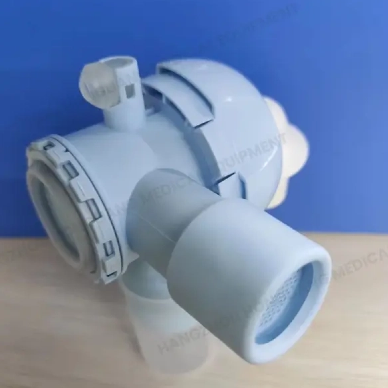
The closure of the expiratory valve depends on the breathing cycle and the type of ventilation system being used. Let’s break it down:
The expiratory valve is closed during inhalation. This closure is essential because if it stayed open, the positive pressure generated by the ventilator would escape instead of entering the lungs. By closing the expiratory valve at the start of inspiration, the system ensures that all the pressurized air or oxygen flows into the patient’s lungs.
There is a short but critical moment between exhalation and inhalation when the valve closes to prepare for the next breath. This prevents backflow of air and stabilizes airway pressure.
In patients receiving ventilatory support with PEEP (a setting used to keep alveoli open), the expiratory valve may partially close even during exhalation to maintain a minimum pressure inside the lungs. This helps prevent alveolar collapse, especially in patients with respiratory distress or conditions like ARDS (acute respiratory distress syndrome).
The timing and effectiveness of expiratory valve closure serve several critical purposes:
Efficient Ventilation: Ensures that the lungs receive the full intended volume of air during inspiration.
Pressure Regulation: Maintains safe airway pressure, avoiding complications such as barotrauma (lung injury from high pressure).
Gas Exchange: Helps optimize oxygen delivery and carbon dioxide removal.
Safety: Prevents rebreathing of exhaled gases, which could lead to oxygen deprivation or carbon dioxide buildup.
In short, the expiratory valve must close precisely at the right time to balance comfort, safety, and efficiency.
To better understand, let’s consider a few real-world examples:
A critically ill patient on a ventilator receives controlled breaths. Each time the ventilator begins inspiration, the expiratory valve closes to ensure that oxygen-enriched air flows into the lungs under pressure. If the valve failed to close, the patient would receive less air, leading to hypoxia.
In anesthesia circuits, the expiratory valve closes during inhalation to make sure anesthetic gases reach the lungs instead of leaking out. Without proper closure, the depth of anesthesia could be unstable, putting the patient at risk.
In CPAP or BiPAP machines, expiratory valves close and open in coordination with the patient’s natural breathing. This helps maintain airway pressure, keeping the airways open during sleep. If the valve did not close properly, the treatment would be ineffective.
Like any mechanical component, expiratory valves can develop problems. Common issues include:
Valve Sticking: Caused by moisture, dust, or secretions, leading to improper opening and closing.
Leakage: If the valve does not seal correctly, pressure is lost.
Delayed Closure: Results in poor synchronization between the ventilator and the patient’s breathing.
Mechanical Failure: Rare but possible, requiring immediate replacement.
In clinical practice, monitoring systems detect these issues, and alarms alert caregivers if the valve is malfunctioning.
Although the human body does not use physical valves like a ventilator, we can think of natural structures that behave similarly. For example, the glottis in the larynx acts as a kind of “valve” during speech, coughing, or breath-holding. It closes at specific times to regulate airflow, much like how the expiratory valve operates in a machine. This comparison helps us understand why timing and closure are so vital.
Modern ventilators and medical devices use sophisticated electronics to control expiratory valve closure. Sensors detect pressure, flow, and patient effort, and the system adjusts accordingly. Advanced designs ensure smoother transitions between inspiration and expiration, improving patient comfort and reducing the risk of complications.
Some devices even use proportional valves that can fine-tune how much the expiratory valve closes, rather than simply being fully open or closed. This is particularly useful in advanced therapies like pressure support ventilation.
The closure of the expiratory valve is not random—it is precisely timed with the patient’s breathing pattern or the programmed ventilator cycle. A delay of even a fraction of a second can make breathing uncomfortable or unsafe. This highlights why medical staff carefully calibrate ventilators and why proper maintenance of valves is critical in healthcare settings.
The expiratory valve may seem like a small component, but it plays a central role in breathing support systems. It is closed during inspiration, at transition points between breaths, and sometimes partially during exhalation in PEEP settings. By closing at the right moments, it ensures that air flows correctly, pressures remain safe, and patients receive effective ventilation.
Whether in intensive care, surgery, or home treatment for sleep apnea, the function of the expiratory valve directly affects safety and outcomes. Understanding when and why this valve closes helps us appreciate the complexity of breathing support and the importance of precision in medical technology.
Ultimately, the expiratory valve is more than just a part of a machine—it is a life-supporting gateway that ensures every breath counts.